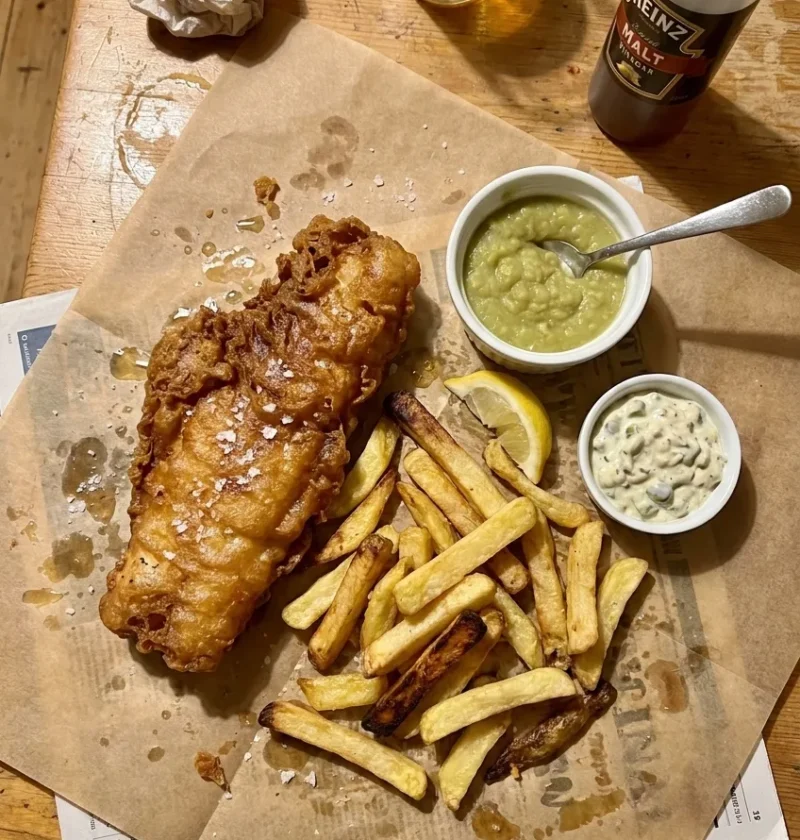
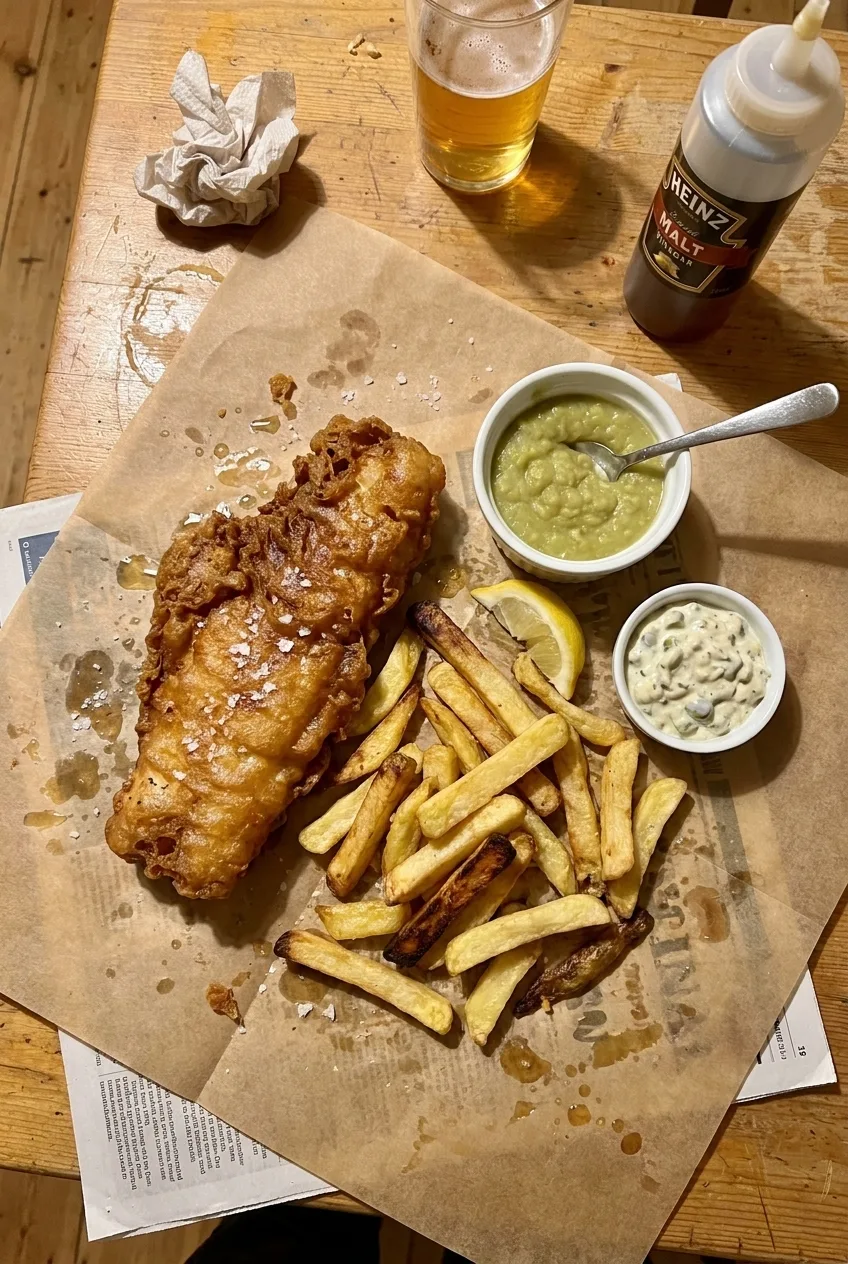
Gordon Ramsay’s fish and chips recipe is cod in a crispy ginger beer batter, deep fried until dark golden and served with double-cooked chips. From his Ultimate Home Cooking cookbook, the batter needs 30 minutes to rest but the fish fries in under 5 minutes.
I’ve had proper fish and chips at Poppies in Spitalfields and The Mayfair Chippy where you queue out the door for a table. Ramsay writes “fish and chips with peas has got to be the ultimate comfort food” and his ginger beer batter is the closest I’ve got at home to that chippy crunch.
The technique that separates good from great is salting the fish first. In his F Word demo Ramsay explains “season my fish first with salt, that extracts the moisture from the fish, which keeps the batter even more crispy.” Ten minutes in the fridge draws out surface water so the batter grips and stays crunchy.
Cooked this recipe? Send a photo or tell me what you changed at fans@gordonramsayrecipes.uk and I’ll share your experience live on this page.
Gordon Ramsay Fish and Chips
Course: DinnerCuisine: BritishDifficulty: Medium4
servings15
minutes15
minutes730
kcal60
minutesGinger beer-battered fish and chips from Gordon Ramsay’s Ultimate Home Cooking. Cod fillets seasoned and chilled, dipped in a cayenne-spiked ginger beer batter and fried dark golden. The batter is from the cookbook, the double-cook chip technique from his F Word demo. About 730 calories per serving.
Ingredients
- For the battered fish:
4 meaty fillets of white fish such as cod, pollock or haddock, trimmed
225g (8 oz) plain flour, plus extra for dusting
2 tsp baking powder
Pinch of cayenne pepper
1 tbsp flavourless oil such as groundnut
300ml (10 fl oz) ginger beer
Flavourless oil for deep frying
Sea salt and freshly ground black pepper
- For the chips:
4 large Maris Piper or King Edward potatoes, peeled
Flavourless oil for frying
Directions
- Season the fish: Place the fillets on a plate and season with salt and pepper. Cover with cling film and chill for 10 minutes. This draws moisture from the surface so the batter sticks.
- Make the batter: Sift the flour into a bowl and add the baking powder, cayenne pepper, a good pinch of salt and pepper. Add the oil and ginger beer, stirring until the mixture has the consistency of thick double cream. Leave to stand for 30 minutes.
- Blanch the chips: Cut the potatoes into 1cm thick chips. Heat oil in a deep pan to 160°C (320°F). Blanch the chips for 2 minutes with no colour. Remove and drain on kitchen paper.
- Fry the fish: Heat a one-third depth of oil in a large deep pan to 160°C (320°F). Dust the chilled fish in seasoned flour, shake off the excess, dip into the batter and let the excess drip off. Lower gently into the oil. Fry for 3-5 minutes depending on thickness, until dark golden and crisp. Drain on kitchen paper and season with salt.
- Crisp the chips: Crank the oil to 190°C (375°F). Return the chips and fry for 2-3 minutes until golden and crispy. Drain on kitchen paper, season with salt.
- Serve: Plate the fish with the chips, a wedge of lemon and mushy peas on the side.
FAQs
What fish should I use for fish and chips?
Ramsay says in the F Word “for me, fish and chips screams cod, highly sustainable, delicious.” In Ultimate Home Cooking he lists cod, pollock, haddock or coley as equal options. You want something thick and meaty that won’t fall apart when the batter puffs up around it.
Pollock is the budget option and holds up just as well as cod. Haddock has a slightly sweeter flavour that works beautifully in batter. Avoid anything thin like plaice or sole because the batter overwhelms the fish. For a completely different take on white fish, Ramsay’s spiced fish tacos from Fit Food coat cod in cumin and paprika flour instead of batter, fried and flaked into corn tortillas.
What’s the best batter for fish and chips?
Ramsay has three different batters across his books. The ginger beer version from Ultimate Home Cooking (this recipe) uses plain flour, baking powder, cayenne and ginger beer for a spiced, aerated batter. In Great British Pub Food he goes heavier: plain flour mixed with rice flour for extra crunch, light ale, a splash of vodka and a touch of honey. The vodka evaporates faster than water in the fryer, which creates steam pockets that make the batter shatter when you bite it.
His quickest version from Ramsay in 10 uses self-rising flour, beer and egg whites whisked to stiff peaks then folded in, plus a teaspoon of curry powder. He says the “curry powder gives that a really nice beautiful dark colour.” That one is shallow fried in a pan, not deep fried, and takes 3 minutes. Three batters, three techniques, all Ramsay.
Can you shallow fry instead of deep fry?
Yes. Ramsay does exactly this in his Ramsay in 10 video: “I’m not deep frying, big difference. Shallow frying, we take on less fat.” He uses about an inch of oil in “a Tesco special non-stick pan, 11 pound 99” and bastes the top of the fish with hot oil as it cooks.
The trade-off is an uneven crust since one side sits in oil and the other gets basted. Deep frying gives an all-over golden shell because the fish floats freely. If you shallow fry, flip the fish once and baste constantly. Either way, the fish cooks in about the same time.
What goes with fish and chips?
Ramsay calls tartar sauce “the Rolls Royce of sauces with fish and chips” in his F Word demo. His tartar sauce is homemade mayonnaise mixed with crème fraîche, chopped gherkins and capers. It’s sharper and chunkier than anything from a bottle.
The other essential is mushy peas. His chilli-minted mushy peas from the same cookbook use frozen peas crushed with butter, shallots, garlic and fresh mint. He says in the video “fish and chips would not be complete unless we’ve got peas.” A squeeze of lemon over the fish and malt vinegar over the chips finishes it.
Why rest the batter before frying?
Resting lets the gluten relax, which makes the coating lighter instead of chewy. In the F Word Ramsay says “the secret is to make that batter the night before, the more you let it rest it becomes so crispy.” Ultimate Home Cooking says 30 minutes minimum. Great British Pub Food says a full hour.
The carbonation also settles during the rest, leaving tiny bubbles trapped in the batter that expand when they hit hot oil. That’s what creates the puffed, craggy texture on proper chip shop battered fish. If you skip the rest, the batter clings flat and dense to the fish instead of puffing up.
Does fish and chips keep well?
No. The batter goes soggy within 20 minutes of leaving the fryer, and there’s no way to get it back. Reheating in the oven crisps the outside but dries out the fish inside. This is a cook-and-eat-now dish.
If you have leftover uncoated fish, flake it into a creamy fish pie with Noilly Prat cream sauce and cheesy champ topping the next day. Leftover chips reheat well in a hot oven at 200°C for 10 minutes. For the full standalone chip method, his triple-cooked french fries from Bread Street Kitchen are boiled then fried twice for the crispiest result. His oven chips are the lighter alternative with smoked paprika, or stuff them inside crusty bread for his chip butty or back in the fryer for a minute.