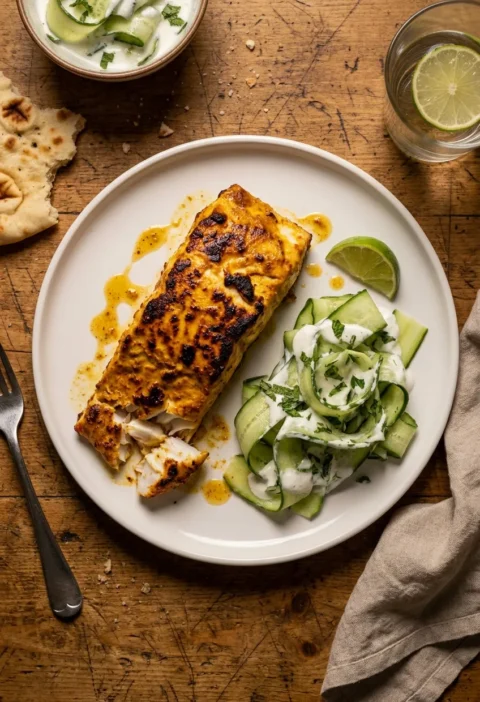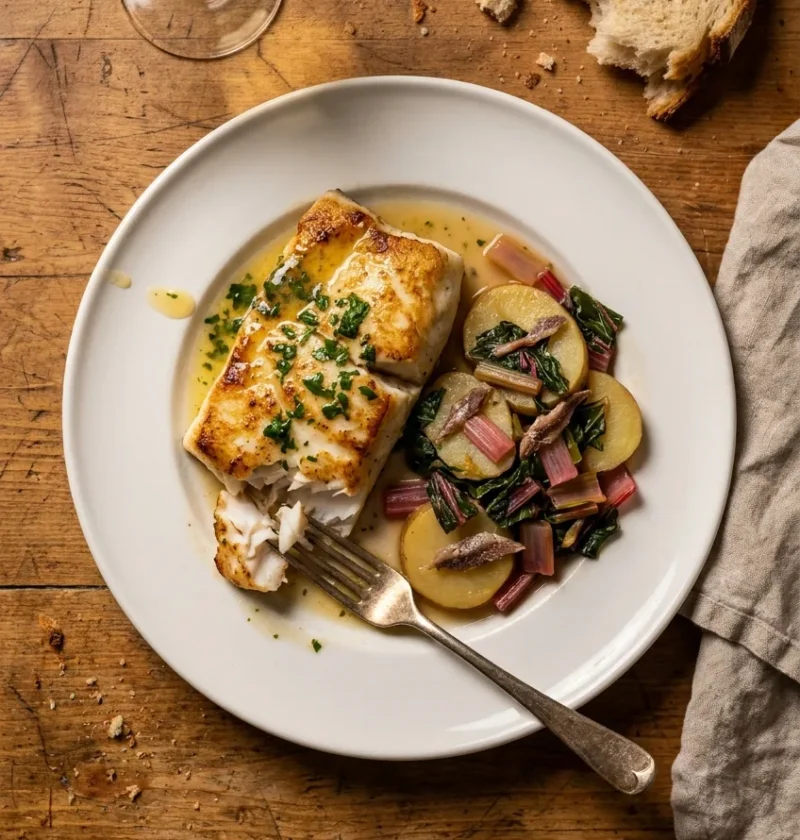
Gordon Ramsay’s pan seared halibut recipe is skinless fillets fried golden, then finished in a butter and fish stock emulsion that keeps every flake moist. Served with braised chard, potatoes and anchovies from his Bread Street Kitchen cookbook, the whole plate takes about 30 minutes.
Ramsay warns in Bread Street Kitchen that halibut “has a tendency to dry out.” His fix is whisking butter and fish stock around the fillets so the sauce and the cooking happen at the same time.
That emulsion is the technique that sets this apart. Flip the fillet after 30 seconds on the second side, then add the butter and stock. Whisk gently so it turns into a glossy sauce while the fish finishes cooking inside it.
Cooked this recipe? Send a photo or tell me what you changed at fans@gordonramsayrecipes.uk and I’ll share your experience live on this page.
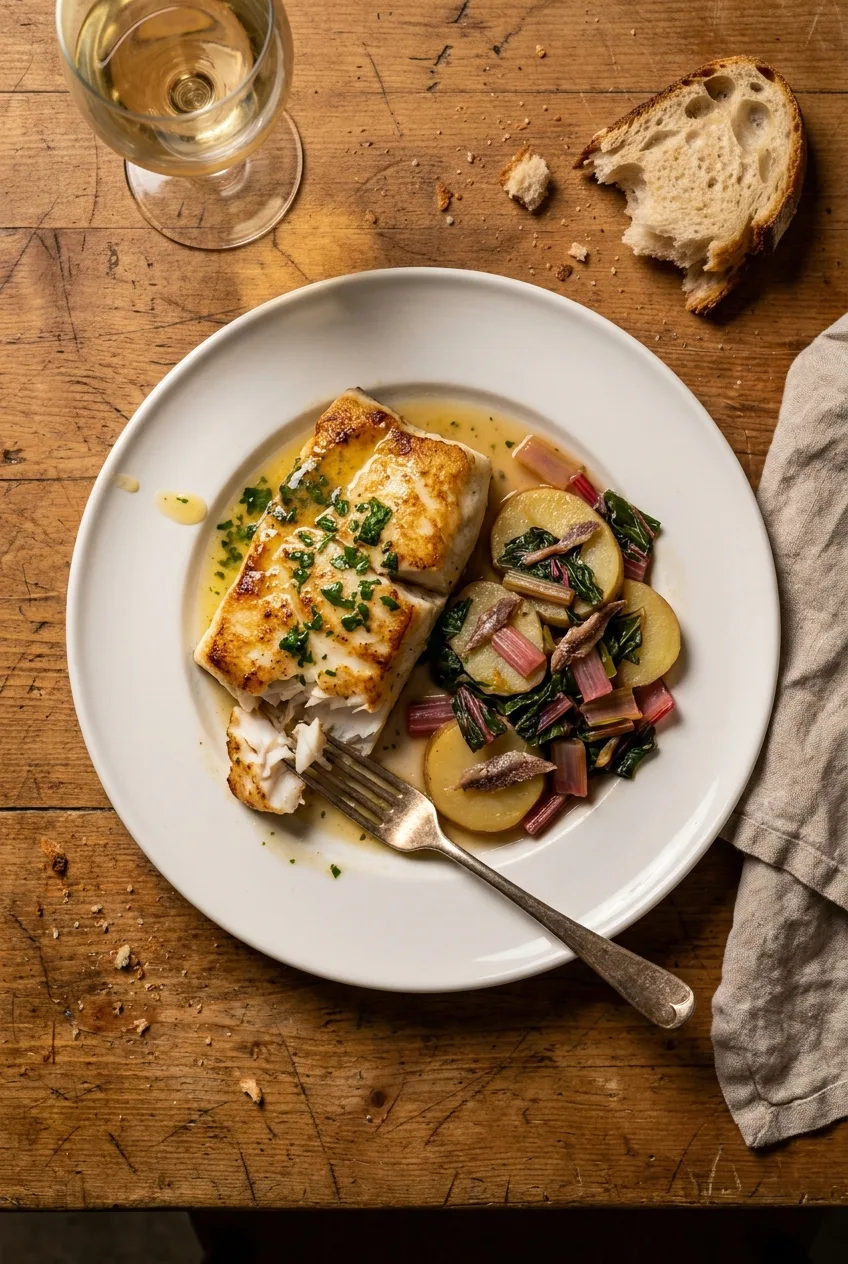
Gordon Ramsay Pan Seared Halibut
Course: DinnerCuisine: BritishDifficulty: Medium4
servings10
minutes20
minutes512
kcal30
minutesThe actual Bread Street Kitchen recipe: skinless halibut finished in a butter and stock emulsion with braised chard, potatoes and anchovies in Noilly Prat. Halibut is in season April to November, 512 calories per serving including the full plate.
Ingredients
- For the halibut:
4 halibut fillets, about 150g (5 oz) each, skin removed
Sea salt
1 tbsp vegetable oil
25g (1 oz) butter
100ml (3.4 fl oz) fish stock
Squeeze of lemon juice
1 tbsp fresh flat leaf parsley, chopped
1 tbsp fresh chervil, chopped (optional)
- For the braised potatoes and chard:
25g (1 oz) butter
3 shallots, finely chopped
3 garlic cloves, finely chopped
1kg (2.2 lb) potatoes (Desirée or Maris Piper), peeled and sliced
10 anchovies in salt, chopped
100ml (3.4 fl oz) Noilly Prat or dry vermouth
500ml (17 fl oz) fish stock
125g (4.4 oz) rainbow chard, stems sliced and leaves chopped
Freshly ground black pepper
Directions
- Braise the potatoes: Melt 25g butter in a large saucepan. Add shallots and garlic, cook over medium heat stirring constantly until soft but not coloured, 7-8 minutes. Add potatoes and stir for 2 minutes.
- Add the liquid: Stir in chopped anchovies, Noilly Prat and 500ml fish stock. Bring to the boil, cover, reduce heat and simmer until potatoes are tender, about 12 minutes.
- Wilt the chard: When potatoes are almost done, stir in rainbow chard. Season with salt and pepper, cover and cook 4-5 minutes until wilted but still bright.
- Sear the halibut: Meanwhile, season halibut fillets with salt. Heat vegetable oil in a large frying pan over medium-high heat. Add fillets and pan-fry for 3 minutes until pale golden underneath.
- Make the emulsion: Turn fillets and cook 30 seconds. Add 25g butter and 100ml fish stock, whisking gently around the fish to create an emulsion. Reduce heat and cook 1-2 minutes until a cocktail stick slides into the thickest part easily.
- Finish and serve: Add lemon juice and parsley to the pan. Transfer halibut to plates, spoon pan juices over the fish. Finish with chervil if using. Serve alongside the braised potatoes and chard.
FAQs
How do you know when halibut is done?
Ramsay’s test in Make It Easy is to press the flesh gently with your index finger. When it feels firm but gives slightly, he calls that “cuisson,” the exact moment where the fish is cooked through but not overdone.
In this recipe he also suggests pushing a cocktail stick through the thickest part of the fillet. If it slides in easily, pull the halibut off the heat straight away because white fish goes from silky to chalky in about a minute. I start checking at the 4-minute mark so I never miss the window.
Can you use halibut cheeks instead of fillets?
Ramsay calls the cheek “the oyster” of the halibut in his MasterChef filleting demonstration, a small dense piece of meat from just behind the gill plate. Ask your fishmonger to set them aside because most shops throw cheeks away with the carcass.
Cheeks cook faster than fillets because they’re thinner, so reduce the first sear to about 2 minutes and watch them closely. The butter and stock emulsion I mentioned above works the same way, you just need less time in the pan before testing with the cocktail stick.
Why does Ramsay add fish stock to the pan?
The stock and butter whisked around the fish create an emulsion, a thin glossy sauce that bastes the halibut as it finishes cooking. This is the Bread Street Kitchen technique for keeping white fish moist without pouring cream over everything.
The split matters here: 500ml of stock goes into the braised potatoes and the remaining 100ml goes into the frying pan with 25g butter. That small amount is enough to coat four fillets and build the sauce without drowning the sear you worked to get in the first place. This emulsion is just one of five moisture techniques Ramsay uses for halibut, and I cover all of them in the halibut cooking guide.
Can you cook halibut skin-on?
Ramsay cooks halibut skin-on in The F Word, where he sears tandoori-spiced fillets skin-side down first. For a plain pan-sear, pat the skin bone-dry and start skin-side down in hot oil for 3-4 minutes until it crackles.
This Bread Street Kitchen version removes the skin because the butter and stock emulsion replaces the need for a crispy barrier. Both methods work well, and the same medium-high sear Ramsay uses for his crispy skin salmon applies if you keep the skin on.
What goes well with pan-seared halibut?
This recipe already gives you a full plate with the braised chard, potatoes and anchovies in Noilly Prat. If you want something lighter, Ramsay’s buttery hollandaise spooned over the fillet with steamed asparagus is a classic pairing for white fish.
For a seafood dinner, pan-seared scallops make a natural starter before the halibut main. The mild sweetness of the scallops sets up the richer emulsion sauce without competing with it.
Does pan-seared halibut keep well?
I’ll be honest, this is best eaten straight from the pan because the emulsion sauce loses its gloss once it cools down. If you have leftovers, store them covered in the fridge for one day max and eat cold or at room temperature rather than reheating.
The good news is leftover halibut flakes beautifully into soup. Fold it into a smoky fish chowder the next day where the texture doesn’t need to hold up. The braised potatoes and chard reheat well on their own in a covered pan over low heat.