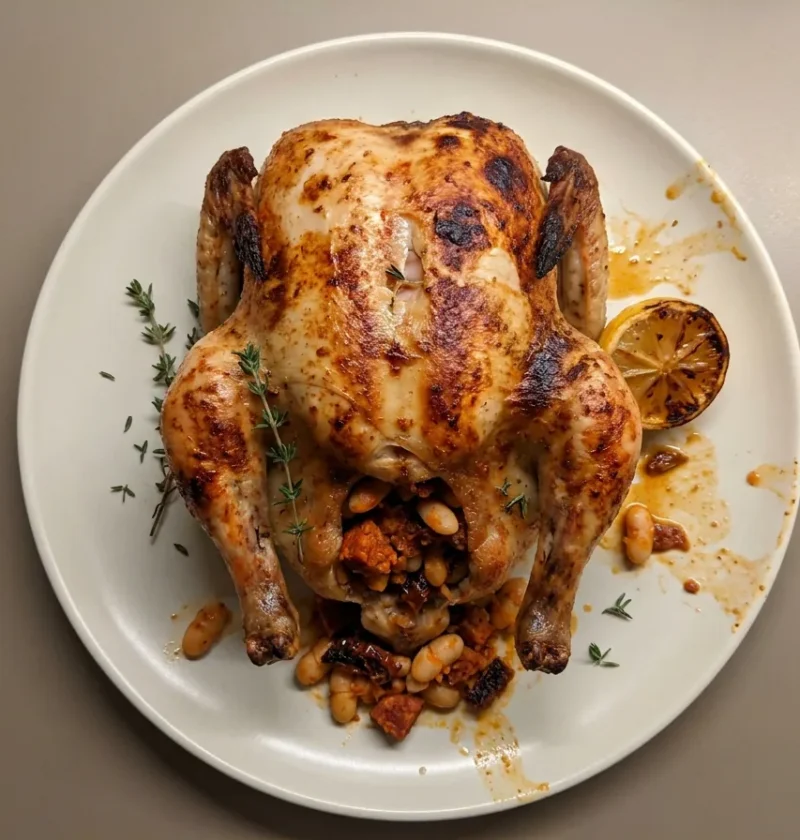
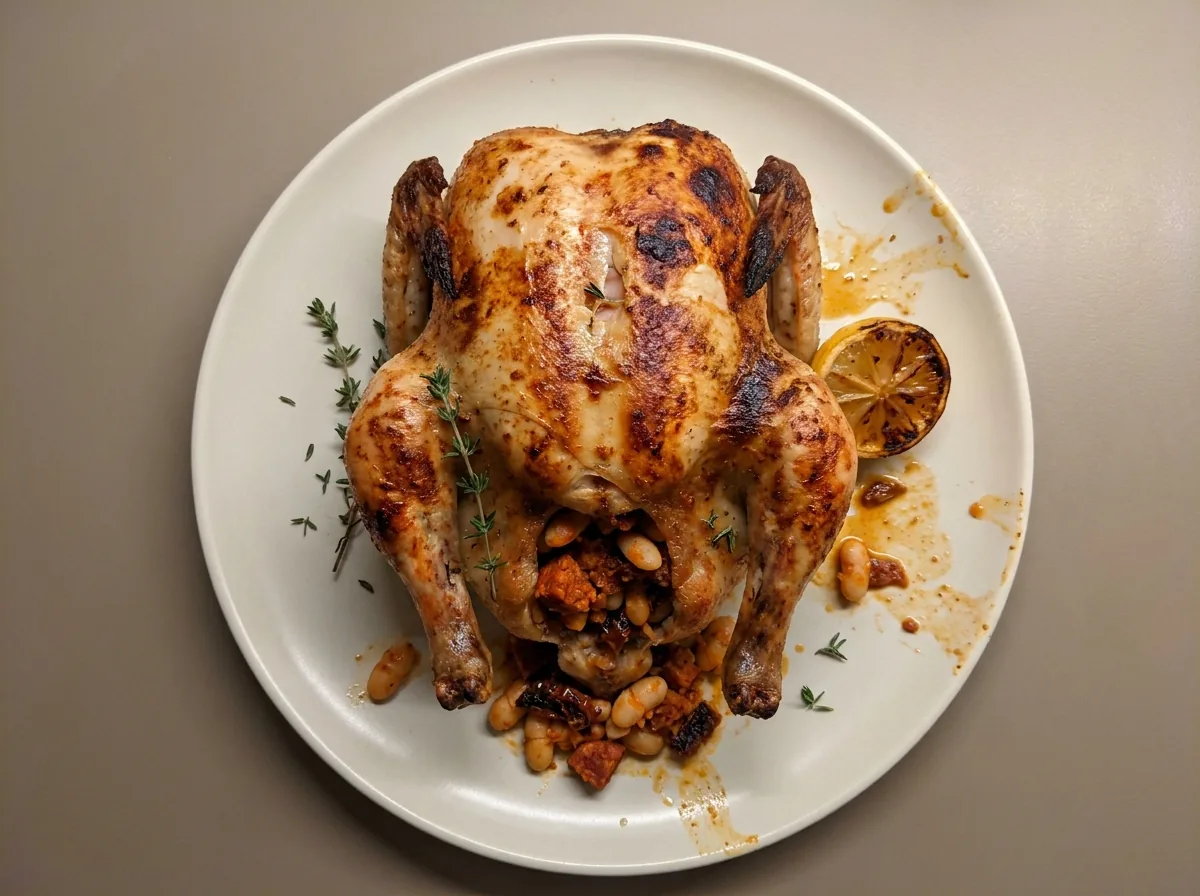
Gordon Ramsay’s stuffed roast chicken is a 2kg bird filled with a chorizo and cannellini bean stuffing, roasted in white wine until the skin crisps. It takes about an hour and a half, most of it hands-off in the oven.
It comes from his Ultimate Cookery Course, shown in this video, and is also on his restaurant site. He says it is amazing how exciting a stuffed roast chicken can be, because the stuffing keeps the bird incredibly moist.
The trick is to push the stuffing right into the cavity, which fills the empty space so the bird cooks evenly. Then the foil traps steam for an hour before it comes off to crisp the skin. That two-stage roast is the whole secret.
Cooked this recipe? Send a photo or tell me what you changed at fans@gordonramsayrecipes.uk and I’ll share your experience live on this page.
Gordon Ramsay’s Stuffed Roast Chicken
Course: MainCuisine: BritishDifficulty: Easy4-6
20
minutes1
minute650
kcal1 hr 50 min
Gordon’s stuffed roast chicken from his Ultimate Cookery Course, with a spicy chorizo and cannellini bean stuffing. Exact amounts from his own recipe, with the foil-then-crisp roast that keeps it moist. Serves 4 to 6.
Ingredients
- For the chicken:
1 large free-range chicken, about 2kg
1 lemon
Olive oil, for drizzling
1 heaped tsp paprika (sweet or smoked)
400ml white wine
- For the chorizo stuffing:
Olive oil, for frying
150-200g chorizo, skinned and cubed
1 onion, finely chopped
2 garlic cloves, finely sliced
Bunch of thyme sprigs
2 x 400g tins cannellini beans, drained and rinsed
200g semi-dried (sunblush) tomatoes in oil
Sea salt and freshly ground black pepper
Directions
- Make the stuffing: Fry the cubed chorizo in a little olive oil for 3 minutes until golden and the oils run. Add the onion, cook 1 to 2 minutes, then the garlic and the leaves from 3 thyme sprigs.
- Finish the stuffing: Stir in the cannellini beans and season well. Warm through, then add the tomatoes and a couple of tablespoons of their oil. Stir and take off the heat to cool.
- Stuff the bird: Season the cavity, then push the stuffing right inside. Tuck a whole lemon in at the opening and fold any excess skin over it.
- Season the skin: Drizzle the chicken with olive oil, sprinkle over the paprika, season, and rub it all into the skin.
- Roast covered: Pour the wine and 200ml water into the tray and season. Add the chicken and remaining thyme, cover with foil, and roast at 180°C (350°F) for 1 hour.
- Crisp the skin: Remove the foil, baste, turn up to 200°C (400°F) and roast 25 to 30 minutes more, until the skin is golden and the thigh juices run clear.
- Rest and serve: Rest 15 minutes. Squeeze the roast lemon into the pan juices and whisk into a light gravy.
FAQs
Is it safe to cook the stuffing inside the chicken?
Yes, because this stuffing is already cooked before it goes in. The chorizo is fried, the beans are warmed through, and it all cools before you fill the cavity, so there is no raw mixture inside.
Just roast until the thigh juices run clear and the stuffing is piping hot. If you would still rather play it safe, his roast chicken skips the stuffing altogether.
Can you use chickpeas instead of cannellini beans?
You can, but Gordon uses cannellini beans for a reason. He likes how robust they are: soft and creamy to eat, yet dense enough that nothing breaks down in the stuffing.
Chickpeas will work and hold their shape too, so swap them in if that is what you have. They sit a little firmer than cannellini, but the chorizo and tomatoes carry the flavour either way.
What does the chorizo do in the stuffing?
It is the engine of the whole dish. Frying the cubed chorizo first releases its spicy red oils, and the onions and beans then soak all of that flavour up.
Use a proper cured cooking chorizo, not the sliced sort, so it crisps and gives up its fat. That spiced fat is what makes the stuffing taste Spanish rather than plain.
How do you know when it is cooked, and why rest it?
Pierce the thickest part of the thigh: the juices should run clear, not pink. If you have a probe, you are looking for 75°C in the thigh, away from the bone.
Then rest it for a full 15 minutes before carving. The juices redistribute through the meat, so they end up in the chicken instead of running out onto the board.
What do you serve with it, and how do you finish the gravy?
Do not tip those roasting juices away. With the roast lemon squeezed in they make a light, lemony gravy on their own. Reduce them over a high heat for something richer.
It wants a proper roast around it. A tray of his roast potatoes is the natural partner, and for a fuller gravy his chicken gravy is the one to make.