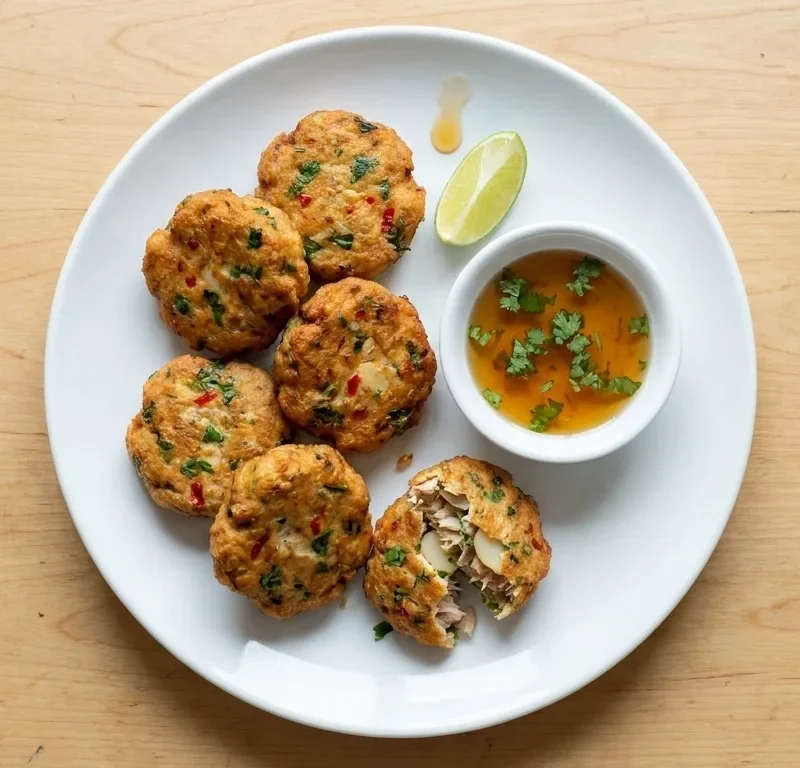
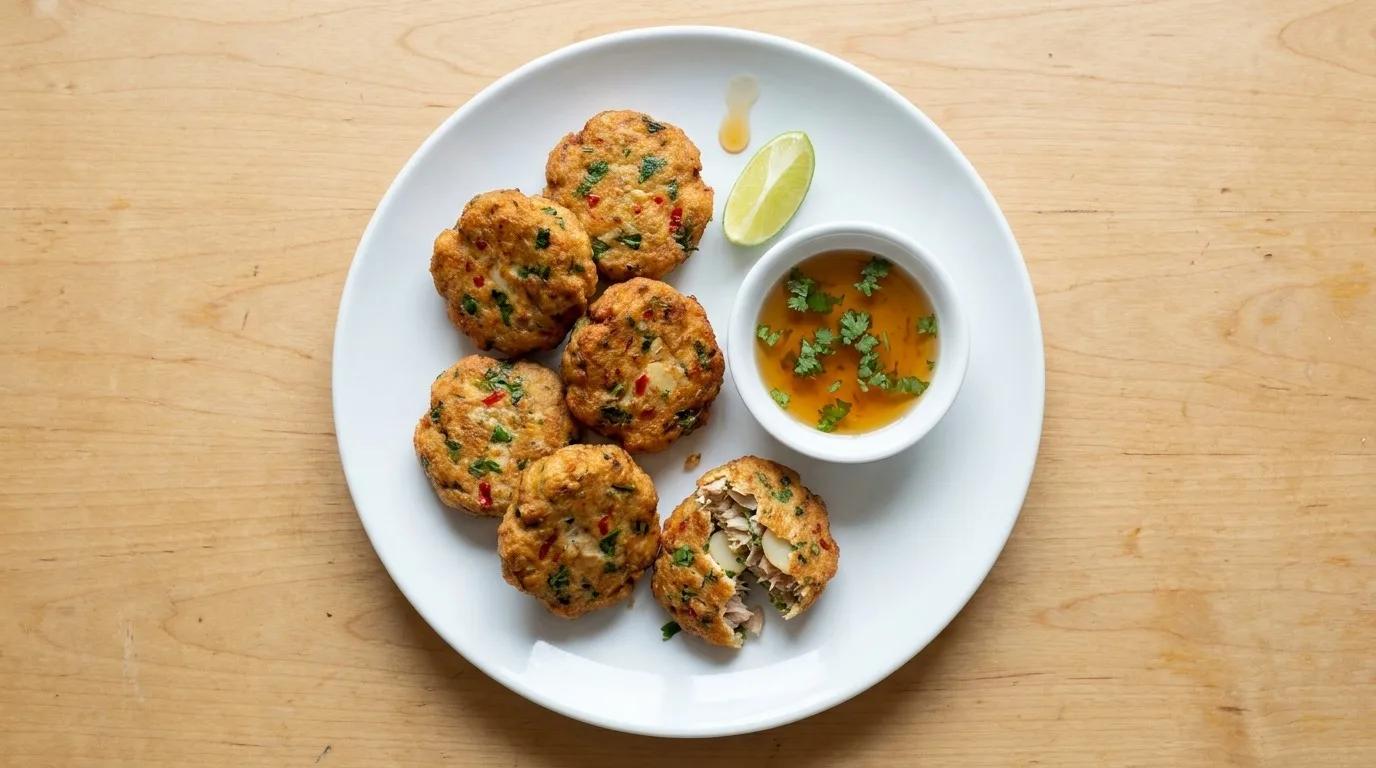
Gordon Ramsay’s tuna cakes are tinned tuna mixed with water chestnuts, spring onions, fresh ginger, coriander, red chilli and kaffir lime leaves, bound with eggs and fish sauce, shaped into golf balls, flattened and shallow-fried for 1 to 2 minutes each side. No breadcrumbs. No potato. Served with an Asian dipping sauce.
The recipe is from Ultimate Cookery Course, where Ramsay says “texture is always important in fishcakes, and the water chestnuts add a lovely light, pickled crunch.” In the video, he adds: “who would have thought something as delicious can come out of a can. Simple supper in minutes.”
The water chestnuts are the detail every competitor misses. Most tuna cake recipes online use breadcrumbs and mashed potato, which is not what Ramsay does. His version is gluten-free, lighter and crispier because the chestnuts stay crunchy even after frying.
Cooked this recipe? Send a photo or tell me what you changed at fans@gordonramsayrecipes.uk and I’ll share your experience live on this page.
Gordon Ramsay’s Tuna Cakes
Course: Dinner, AppetiserCuisine: Asian, BritishDifficulty: Easy8
cakes10
minutes4
minutes195
kcal14
minutesSpicy tuna fishcakes from Gordon Ramsay’s Ultimate Cookery Course, Episode 18. Tinned tuna with water chestnuts, kaffir lime leaves and ginger, no breadcrumbs or potato. Served with a fish sauce, lime and coriander dipping sauce. Approximately 195 kcal per fishcake.
Ingredients
- For the Fishcakes:
400g (14 oz) good-quality tinned tuna
6 tinned water chestnuts, drained and finely sliced
3 spring onions, trimmed and sliced
3cm piece of fresh root ginger, peeled and grated
3 tbsp chopped coriander
1 red chilli, deseeded and finely chopped
3 kaffir lime leaves, finely chopped (rehydrated for 5 min in boiling water if dried)
2 tsp Thai fish sauce
2 eggs, beaten
Vegetable or groundnut oil for frying
Sea salt and freshly ground black pepper
- For the Dipping Sauce:
Good pinch of caster sugar
2 tbsp Thai fish sauce
1 tbsp rice vinegar
Juice of ½ lime
2 tbsp chopped coriander
Directions
- Make the dipping sauce: Mix together the sugar, fish sauce, rice vinegar, lime juice and coriander, stirring until the sugar has dissolved. Taste and adjust. Set aside.
- Prepare the tuna: Drain the tuna into a sieve. Use a fork to separate the chunks. Do not press too hard or you will dry out the tuna.
- Mix the fishcakes: Add the water chestnuts, spring onions, ginger, coriander, chilli and kaffir lime leaves. Season with salt and pepper. Add the fish sauce and beaten eggs. Mix well with your hands.
- Shape: Squeeze the mixture to compress it tightly and get rid of any excess liquid. Shape into balls the size of golf balls and flatten them lightly into patties.
- Fry: Heat a frying pan over medium heat with a little oil. Shallow-fry the fishcakes for 1 to 2 minutes each side until golden all over and heated through.
- Serve: Serve with the dipping sauce on the side.
FAQs
Why does Ramsay use water chestnuts instead of breadcrumbs?
Every tuna cake recipe online uses breadcrumbs or mashed potato as filler. Ramsay uses neither. In the book he says “texture is always important in fishcakes, and the water chestnuts add a lovely light, pickled crunch.” They stay crisp even after frying, which breadcrumbs cannot do.
The water chestnuts also make these naturally gluten-free. The only binder is two beaten eggs and the fish sauce. No flour, no breadcrumbs, no panko. You can find tinned water chestnuts in any supermarket, usually in the Asian aisle near the coconut milk.
How do you drain the tuna without drying it out?
In the video, Ramsay says “just drain the tuna into a sieve, don’t press it too hard otherwise you’ll dry out the tuna.” That’s the opposite of what most recipes say. They tell you to squeeze every drop of liquid out, which turns the tuna into a dry paste.
Ramsay wants the chunks to stay flaky. He uses a fork to separate them, not to mash them. The eggs and fish sauce add enough moisture to bind everything. If you squeeze the tuna dry, you lose the texture and the fishcakes taste like cardboard.
How do you stop the fishcakes falling apart?
Two things. First, squeeze the mixed mixture to compress it tightly. Ramsay says “squeezing the mixture to tightly compress it and get rid of any excess liquid.” That sounds like a contradiction to the draining tip, but it’s not. You drain gently, mix, then compress once shaped.
Second, the clock method from the video: “at the face of a clock, go from 12 all the way around.” Put each fishcake in the pan in order so you know which one went in first. Turn them in the same order. Same shaping method as his lamb koftas: roll into golf balls, flatten lightly, and don’t touch them until the underside has a crust.
Why do they only cook for 1 to 2 minutes?
Because the tuna is already cooked in the tin. In the video Ramsay says “that crackling noise is something you always want because the tuna is already cooked, so we just lightly fry them to get a nice crisp outside.” You are crisping the surface, not cooking raw fish.
This is the opposite of his salmon and haddock fishcakes from The F Word, which use raw fish poached first, then mashed with potato, coated in breadcrumbs, and fried for much longer. Two completely different approaches to the same idea.
What should you serve with tuna fishcakes?
Ramsay serves them with the dipping sauce only in the book. For a fuller meal, his fried rice uses the same ginger and chilli flavour base, so the spices match across the plate. His tuna niçoise salad is the lighter option: same tin of tuna, flaked into a Dijon vinaigrette with eggs and green beans instead of shaped into fishcakes.
He calls these the lighter alternative to his fish and chips: same comfort food feeling, no batter, less than half the calories. If you want a Western dipping sauce instead of the Asian one, his mayonnaise with a squeeze of lime and chopped coriander stirred through works as a quick substitute. For fresh tuna instead of tinned, his sesame crusted tuna steak uses the same Asian flavour base with soy and sesame. His tuna tartare is the raw version: diced with chives, lime and avocado.