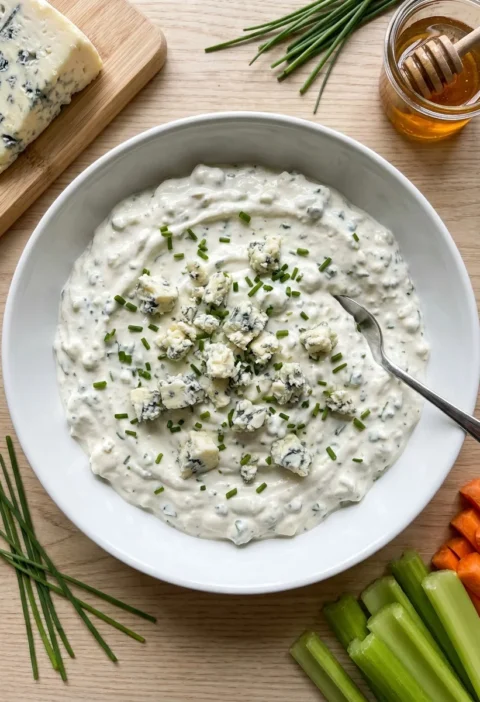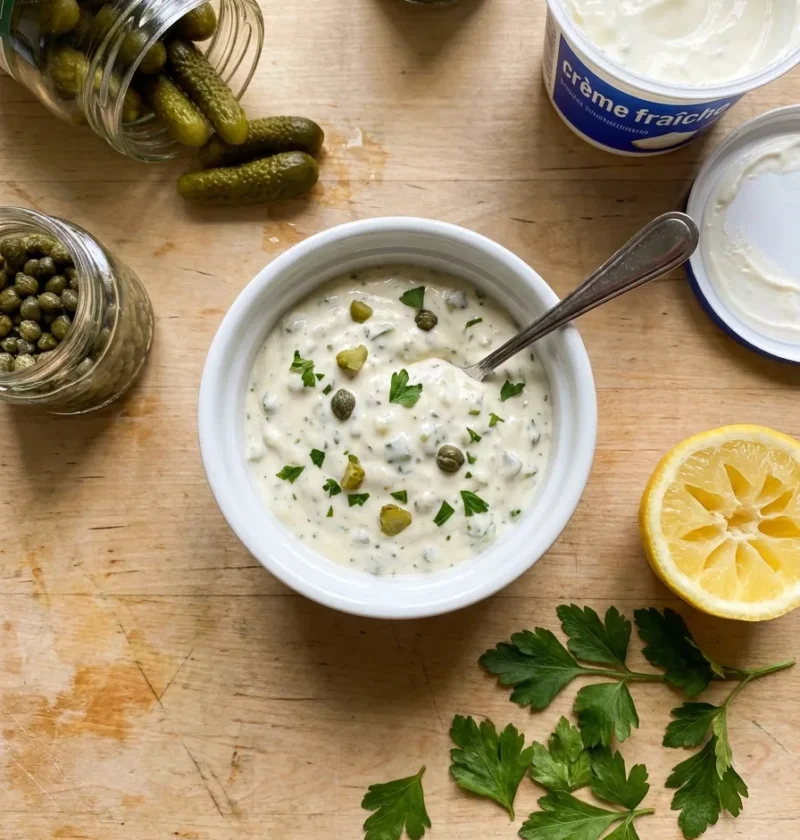
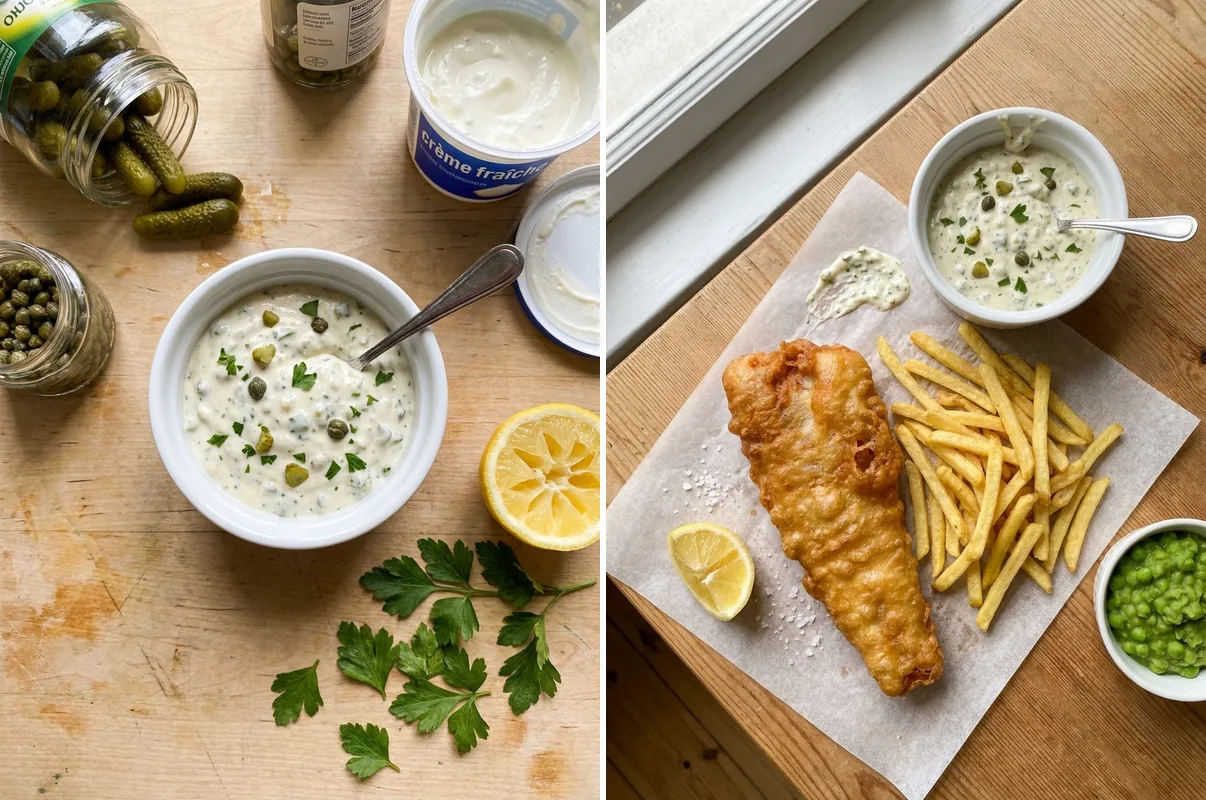
Gordon Ramsay’s tartar sauce is sharp, creamy and chunky, made with Dijon and lemon mayonnaise, crème fraîche, chopped gherkins, shallot, capers and lemon juice, ready in about 3 minutes with no cooking at all. On The F Word he calls it “the Rolls-Royce of sauces with fish and chips.”
The recipe appears across three sources. In Quick and Delicious he makes it for a fish finger sandwich, writing that “you could bung some frozen fish fingers in the oven and open a jar of shop-bought tartare sauce, but it wouldn’t taste even half as amazing.” In Great British Pub Food he serves it alongside grilled lemon sole. On his Ramsay in 10 YouTube show he adds crème fraîche to the mayo base, which is the twist that made this version famous online.
The crème fraîche ratio is the detail every other site gets wrong. Most articles claim he uses equal parts mayo and crème fraîche, but the official recipe on gordonramsay.com shows 200g mayo to 50g crème fraîche. That’s 4:1, not half and half. The crème fraîche adds tang and richness without thinning the sauce or turning it into a dip.
Cooked this recipe? Send a photo or tell me what you changed at fans@gordonramsayrecipes.uk and I’ll share your experience live on this page.
Gordon Ramsay Tartar Sauce Recipe
Course: SaucesCuisine: BritishDifficulty: Easy4
servings3
minutes210
kcal3
minutesGordon Ramsay’s tartar sauce combining his Ramsay in 10 crème fraîche base with the cookbook technique from Quick and Delicious. Three minutes, no cooking, sharper and chunkier than anything from a jar.
Ingredients
200g (7 oz, scant 1 cup) good-quality mayonnaise
50g (1¾ oz, 3 tbsp) crème fraîche
4 cornichons (or small gherkins), finely chopped
1 shallot, peeled and finely diced
2 tsp nonpareille capers, rinsed
1 tbsp finely chopped flat-leaf parsley
1 tsp lemon juice, or to taste
Sea salt and freshly ground black pepper
Dash of hot sauce (optional)
Directions
- Mix the base: Combine the mayonnaise and crème fraîche in a bowl and stir until smooth.
- Add the chunky ingredients: Stir in the chopped cornichons, diced shallot, capers and parsley.
- Season and sharpen: Add the lemon juice, salt, pepper and hot sauce if using. Taste and adjust the acidity. Ramsay says “you just want a really nice amount of acidity in there,” so don’t be shy with the lemon.
Notes
- Make it at least an hour before serving. The capers and cornichons need time to settle into the mayo.
FAQs
Why does Ramsay add crème fraîche to his tartar sauce?
Most tartar sauce recipes use mayo only. On Ramsay in 10 he stirs in crème fraîche alongside the mayo, calling it a way to keep the sauce “nice and clean.” The crème fraîche adds a mild tang and lighter texture that stops the sauce feeling heavy after a few bites of fried fish.
Every article online claims he uses equal parts. He doesn’t.
The gordonramsay.com recipe shows 200g mayo to 50g crème fraîche, which is 4:1. Enough to taste the difference, not enough to thin the sauce into a dressing.
Do his cookbook versions use crème fraîche too?
No, and that surprised me. Both the Quick and Delicious and Great British Pub Food versions use mayo only, no crème fraîche at all. The crème fraîche twist only appears in his Ramsay in 10 video and the gordonramsay.com recipe.
The recipe card above combines both approaches: the crème fraîche base from the video with the cornichons, nonpareille capers and parsley from the Q&D cookbook version. That gives you the best of both.
Why does Ramsay use cornichons instead of regular pickles?
Cornichons are smaller, sharper and crunchier than standard gherkins. They hold their shape when chopped instead of going soft and watery, so the sauce keeps its texture after sitting in the fridge.
In Quick and Delicious he specifies “nonpareille capers” too, which are the smallest size. He wants fine, sharp bursts of flavour distributed evenly through the sauce, not big chunks of pickle or caper that dominate a single bite.
Does tartar sauce keep well?
Yes. It keeps in a sealed jar in the fridge for up to a week.
The flavours actually improve after a few hours as the lemon and capers settle into the mayo. Make it in the morning and it’s better by dinner.
Don’t freeze it though. The mayo and crème fraîche both split when thawed, and the texture goes grainy. Fresh batches take 3 minutes so there’s no reason to freeze anyway.
What does Ramsay serve tartar sauce with?
On The F Word he pairs it with ginger beer battered fish and chips. In Quick and Delicious it goes inside a fish finger sandwich with watercress on a brioche bun. In Great British Pub Food he serves it alongside grilled lemon sole and again with deep-fried sprats as a starter.
It works with any fried or grilled fish, from skin-on pan-seared cod to a simple grilled fillet. Try it alongside potato and salmon fish cakes where the sharpness cuts through the richness, or as a dip for triple-cooked crispy fries if you want something more interesting than ketchup.