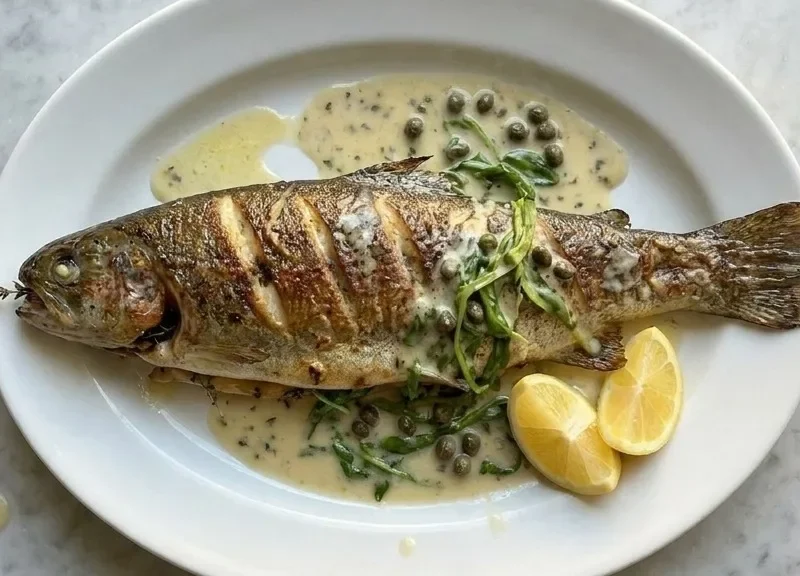
Gordon Ramsay’s rainbow trout is whole fish scored on the diagonal, stuffed with thyme, dotted with butter and baked at 180°C (350°F) for 15 to 20 minutes with a splash of white wine, then served with a warm caper butter sauce finished with sorrel. Flaky inside, golden outside. Done in half an hour.
The recipe is from Great British Pub Food, where Ramsay writes “the citrusy tang of fresh sorrel is an ideal match for oily fish like rainbow trout. To retain the sprightly flavour and vibrant colour of the leaves, add them to the buttery sauce at the last moment.” The sorrel wilts into the hot butter and turns the sauce bright green with a sharp, lemony bite that cuts the richness.
Scoring the skin is what changes everything. Three or four diagonal cuts on one side let heat reach the thickest flesh directly, so the backbone and the belly finish at the same speed. Without them, the outside dries out while the centre near the bone stays raw.
Cooked this recipe? Send a photo or tell me what you changed at fans@gordonramsayrecipes.uk and I’ll share your experience live on this page.
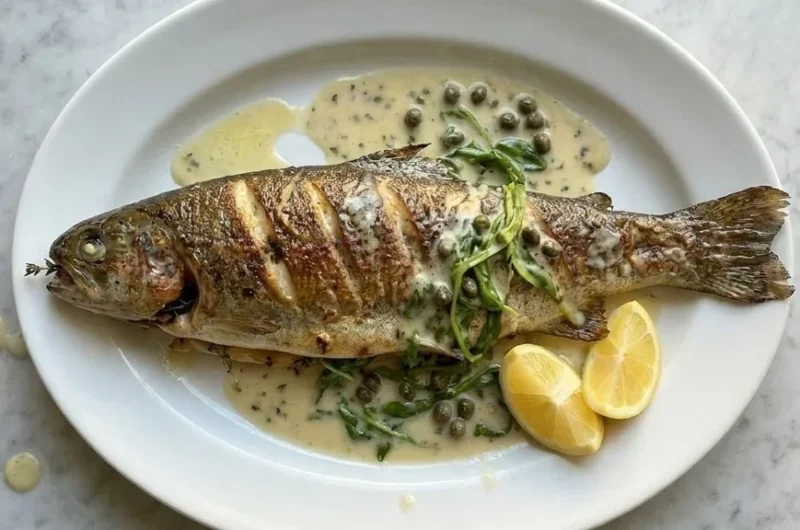
Gordon Ramsay’s Baked Rainbow Trout with Caper Butter Sauce
Course: DinnerCuisine: BritishDifficulty: Medium4
servings10
minutes20
minutes420
kcal30
minutesWhole baked rainbow trout from Gordon Ramsay’s Great British Pub Food with a warm caper and sorrel butter sauce. He also pan-fries sea trout fillets in Bread Street Kitchen, bakes crusted fillets in Healthy Lean and Fit, and makes confit of trout in Make It Easy. Four trout recipes across four books. 420 kcal per serving.
Ingredients
- For the Trout:
4 small whole rainbow trout, about 300 to 320g each, scaled and gutted
Sea salt and freshly ground black pepper
Handful of thyme sprigs
8 knobs of butter
Splash of dry white wine
- For the Butter Sauce:
1 small shallot, peeled and finely chopped
3 tbsp white wine or cider vinegar
3 tbsp water
200g (7 oz) unsalted butter, chilled and diced
About 20 caper berries, rinsed
Small bunch of sorrel leaves, finely shredded
Lemon wedges to serve
Directions
- Score and season: Preheat the oven to 180°C (160°C fan) / Gas 4. Pat the trout dry with kitchen paper. Score the skin several times on one side, on the diagonal. Rub all over with salt and pepper, including inside the cavity.
- Stuff and bake: Lay the trout in one large or two smaller oiled baking trays. Stuff thyme sprigs into each cavity, dot butter on top of each fish. Pour a splash of wine into the tray. Bake for 15 to 20 minutes until opaque and just firm. The flesh should come away from the bone easily.
- Make the sauce: Put the shallot, vinegar and water into a small pan. Boil until reduced by two-thirds, to about 2 tablespoons. Turn the heat to low and whisk in the cold butter a knob at a time until pale and creamy. Stir in the caper berries, season with pepper.
- Finish: Transfer trout to warm plates. Stir sorrel into the warm sauce and spoon over each fish immediately. Serve with lemon wedges.
Notes
- Score only one side of each fish. Both sides scored means the flesh falls apart when you lift it off the tray.
FAQs
Why score the skin before baking?
Whole trout is thicker near the backbone and thinner at the belly. Without scores, the outside dries out before the centre is done. Three or four diagonal cuts let heat reach the flesh directly, so everything finishes together in 15 to 20 minutes.
Push salt and pepper into the cuts so the seasoning goes deeper than the surface. The butter and wine from the tray seep in through those same cuts while the fish bakes. Between the thyme inside the cavity and the seasoned butter from outside, every layer carries flavour.
How do you stop the butter sauce splitting?
The vinegar reduction holds it together. Boil the shallot with vinegar and water until you’re left with about two tablespoons of concentrated liquid. That acidity is what keeps the butter in emulsion when you whisk it in, so it stays creamy instead of separating.
Cold butter, diced small, whisked in one knob at a time over low heat. Too hot and it melts instead of emulsifying.
The technique is the same as Ramsay’s tarragon béarnaise sauce, which uses tarragon vinegar and tarragon leaves where this one uses white wine vinegar and sorrel. Master one and you can make both.
If sorrel isn’t at your supermarket, watercress or baby spinach with extra lemon juice gets you close.
What if you only have fillets?
Ramsay cooks trout fillets three different ways across his books. In Bread Street Kitchen he pan-fries sea trout skin-side down for 3 minutes, adds garlic, thyme and butter, flips and bastes for 2 more. He says “the fish should be served pink in the middle.”
In Healthy Lean and Fit he bakes skinless fillets under a crust of breadcrumbs, sun-dried tomatoes, olives and basil at 200°C (400°F) for 10 to 12 minutes. For a gentler approach, the parchment-wrapped en papillote method steams fillets in a sealed parcel with wine and vegetables.
Then in Make It Easy he goes the opposite direction: trout poached in olive oil at 50°C (120°F) for 10 minutes, served cold with avocado. Pan-fried for weeknights, crusted when you want easy, confit when you want to show off.
Fillets cook faster than whole fish because there’s no bone insulating the centre, so check 5 minutes early.
What should you serve alongside trout?
The butter sauce is rich, so the side needs to absorb it or cut through it. Cheddar-layered dauphinoise soaks up every drop. A cumin-spiced couscous salad with preserved lemon and herbs goes the other direction: light, sharp, fresh against the buttery fish.
In Sunday Lunch he plates sea trout on a fennel and watercress salad, which is the simplest option. For something more filling, treat it like a whole grilled salmon side and serve with steamed asparagus and new potatoes. The trout is lighter than salmon though, so keep the sides simple or the fish disappears on the plate.