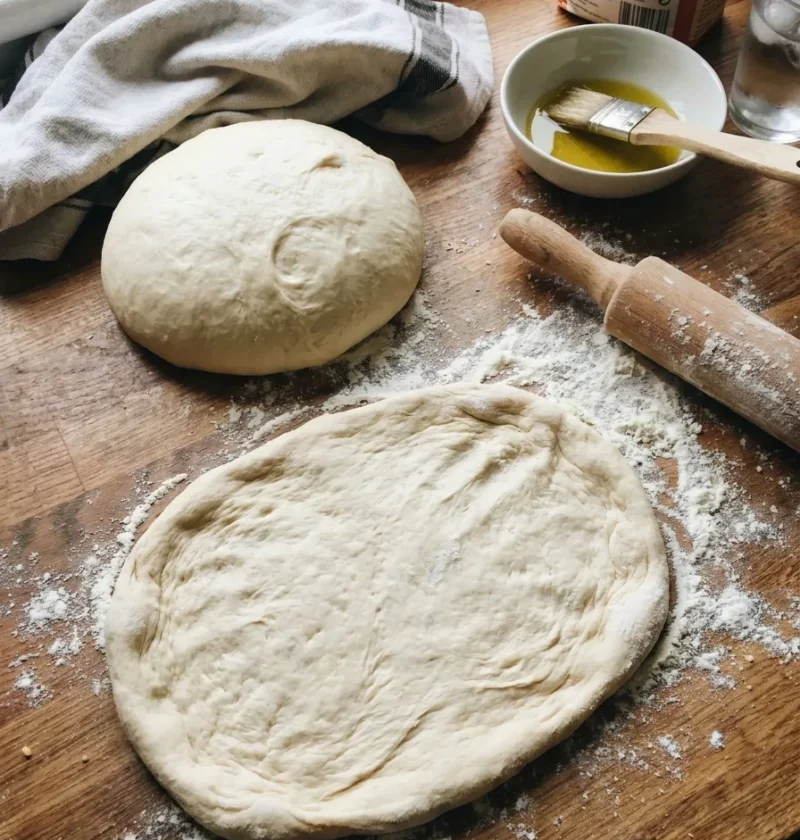
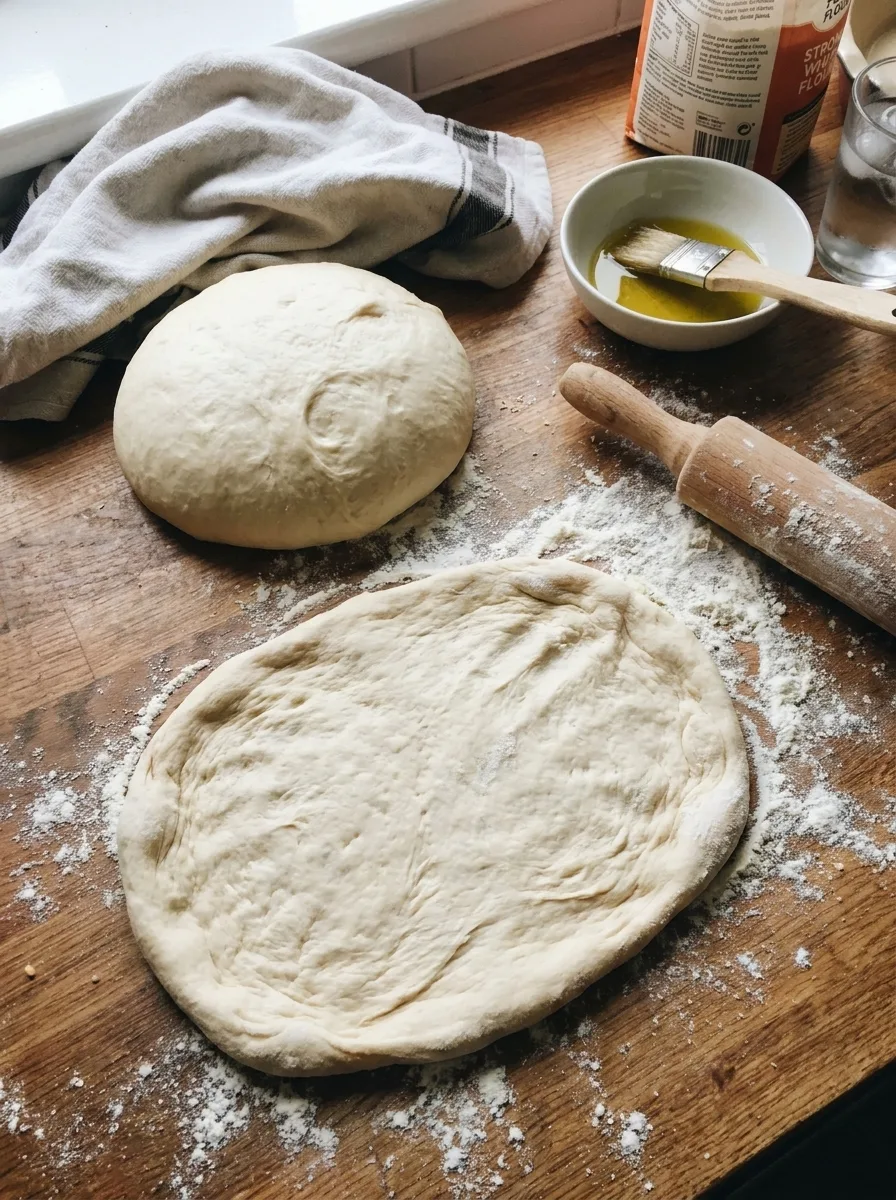
Gordon Ramsay’s pizza dough is made with just five ingredients: strong white flour, dried yeast, sea salt, warm water, and olive oil. It takes 10 minutes to knead and about an hour and a half to rise, giving you enough dough for two thick pizzas.
This is the Street Pizza recipe from Gordon Ramsay Restaurants. He also has a version in the Bread Street Kitchen cookbook and a frying pan method in his famous YouTube video with 6.6 million views, where he makes a full Margherita from scratch at home. The method across all his versions is the same: mix, knead until smooth, rise until doubled.
The detail that separates his dough from most home recipes is the kneading time. Ramsay says 8 to 10 minutes, not a quick 2-minute mix. That long knead develops the gluten properly so the dough stretches without tearing and gets that chewy, blistered crust you want from a good pizza.
Cooked this recipe? Send a photo or tell me what you changed at fans@gordonramsayrecipes.uk and I’ll share your experience live on this page.
Gordon Ramsay Pizza Dough Recipe
Course: DinnerCuisine: ItalianDifficulty: Easy2
pizzas15
minutes1
hour30
minutes480
kcal105
minutesGordon Ramsay’s Street Pizza dough from Gordon Ramsay Restaurants. Five ingredients, 10 minutes kneading, makes two thick homemade pizzas with a chewy, crisp crust.
Ingredients
400g (14 oz) strong white flour, plus extra for dusting
1 tsp fast-action dried yeast
2 tsp sea salt
250ml (8.5 fl oz) lukewarm water
2 tsp extra virgin olive oil
Directions
- Mix the dough: Put the flour into a mixing bowl and sprinkle in the yeast. Add the warm water and olive oil, mix together slightly, then add the salt. Ramsay adds the salt last because adding it too early can kill the yeast before it activates.
- Knead until smooth: Move to a clean work surface and knead for 8 to 10 minutes until the dough is smooth, elastic, and springs back when you press it. You can also use a stand mixer with a dough hook.
- Shape and rise: Divide the dough in half and roll into two balls. Place into a deep dish dusted with flour and lightly flatten each ball. Cover with cling film and leave to rise at room temperature for 1 hour 30 minutes, or until doubled in size.
- Roll out: Once risen, place each ball on a floured surface and roll or stretch into your desired shape, about 4 to 5mm thick for a thin crust or slightly thicker if you like it chewy.
Notes
- For an even better dough, let it prove in the fridge overnight. The cold, slow rise develops more flavour and a better texture. Ramsay’s restaurant version uses 00 flour and proves for 8 hours. If you can find 00 flour, use it for a lighter, crispier base. Strong white bread flour gives a chewier result.
FAQs
Why does Ramsay add salt after the yeast?
Salt kills yeast on direct contact. If you mix them together dry, the salt draws moisture out of the yeast cells before they’ve had a chance to activate.
Ramsay’s method in the Bread Street Kitchen cookbook is specific about this: he sprinkles the yeast on one side of the flour and the salt on the other, covering each with a little flour. He keeps them apart until the water goes in.
In practice, this means adding your yeast and water first, letting them combine, then adding the salt. It’s a small step that makes a real difference to how well the dough rises.
What is the difference between Ramsay’s four pizza dough versions?
He has four versions across his books and restaurants, each suited to different situations.
The Bread Street Kitchen version uses 200g flour with a 45-minute rise. It’s the quickest, designed for weeknight flatbreads. The Street Pizza version (this recipe) uses 400g flour with a 1.5-hour rise. It’s the best balance for home pizza. His Mozzarella and Rosemary Pizza adds sugar to the dough for a slightly sweeter crust and rises for 1 hour.
The restaurant version is the most serious: 975g of 00 flour, fresh yeast instead of dried, and an 8-hour prove. That long fermentation develops complex flavour you can’t get from a quick rise. If you have the time, it’s worth trying.
Should you use 00 flour or strong white flour?
Ramsay uses both depending on the recipe. His restaurant dough uses 00 flour. His Street Pizza and Bread Street Kitchen recipes use strong white flour.
00 flour is milled finer and has slightly less protein than strong bread flour. It gives a lighter, crispier crust that blisters well at high temperatures. Strong white flour has more gluten, which makes a chewier, more bread-like base.
For a home oven that maxes out at 250°C, strong white flour actually works better because the extra gluten helps the dough hold up during a longer bake. If you have a pizza oven or stone that hits 300°C plus, switch to 00.
Why does Ramsay cook pizza in a frying pan?
In his YouTube video he says “pizza is usually cooked in a really hot oven, but this method of cooking works really well.” He rolls the dough into the pan, cooks the base on the hob until golden and blistered, adds toppings, then finishes under a hot grill.
This works because you’re attacking the dough from both sides. The hob sears the bottom while the grill melts the cheese and crisps the top. It mimics the intense heat of a pizza oven without actually having one.
The whole thing takes about 8 minutes per pizza. If you’re making them for a group, his burger recipe uses the same cook-on-the-hob approach and the two work well as a make-your-own spread.
Can you make the dough ahead of time?
Yes, and it’s actually better if you do. Ramsay’s restaurant dough proves for 8 hours because the long, slow fermentation develops flavour that a quick rise can’t match.
At home, make the dough, shape it into balls, cover tightly with cling film and refrigerate overnight. Take it out 30 minutes before you want to cook so it comes to room temperature and relaxes enough to stretch.
The dough keeps in the fridge for up to 48 hours. After that the yeast over-ferments and the dough goes sour and sticky. You can also freeze dough balls for up to 3 months. Defrost in the fridge overnight.