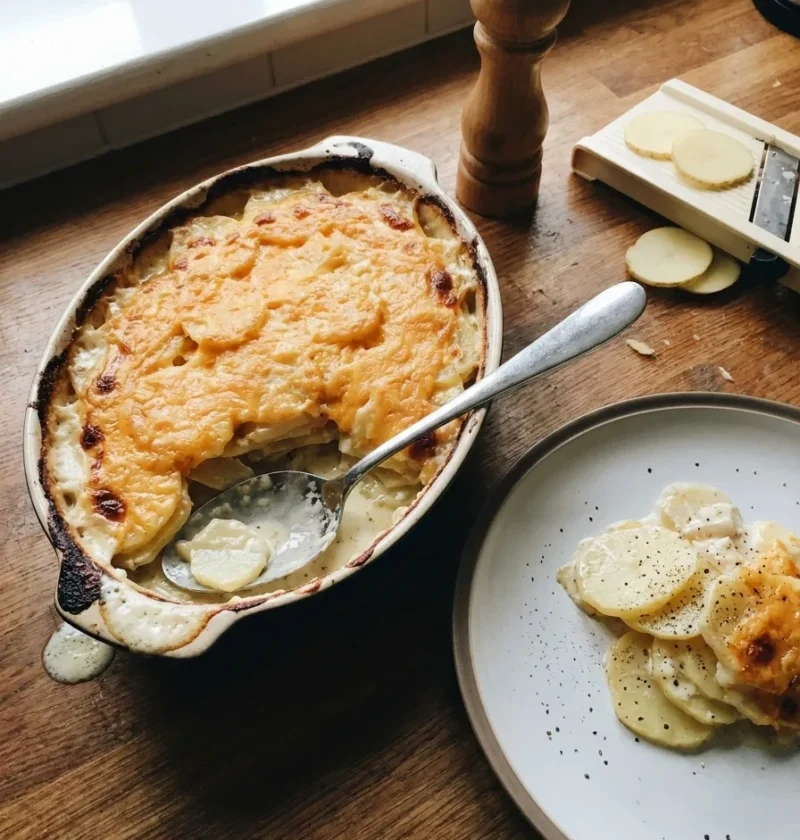
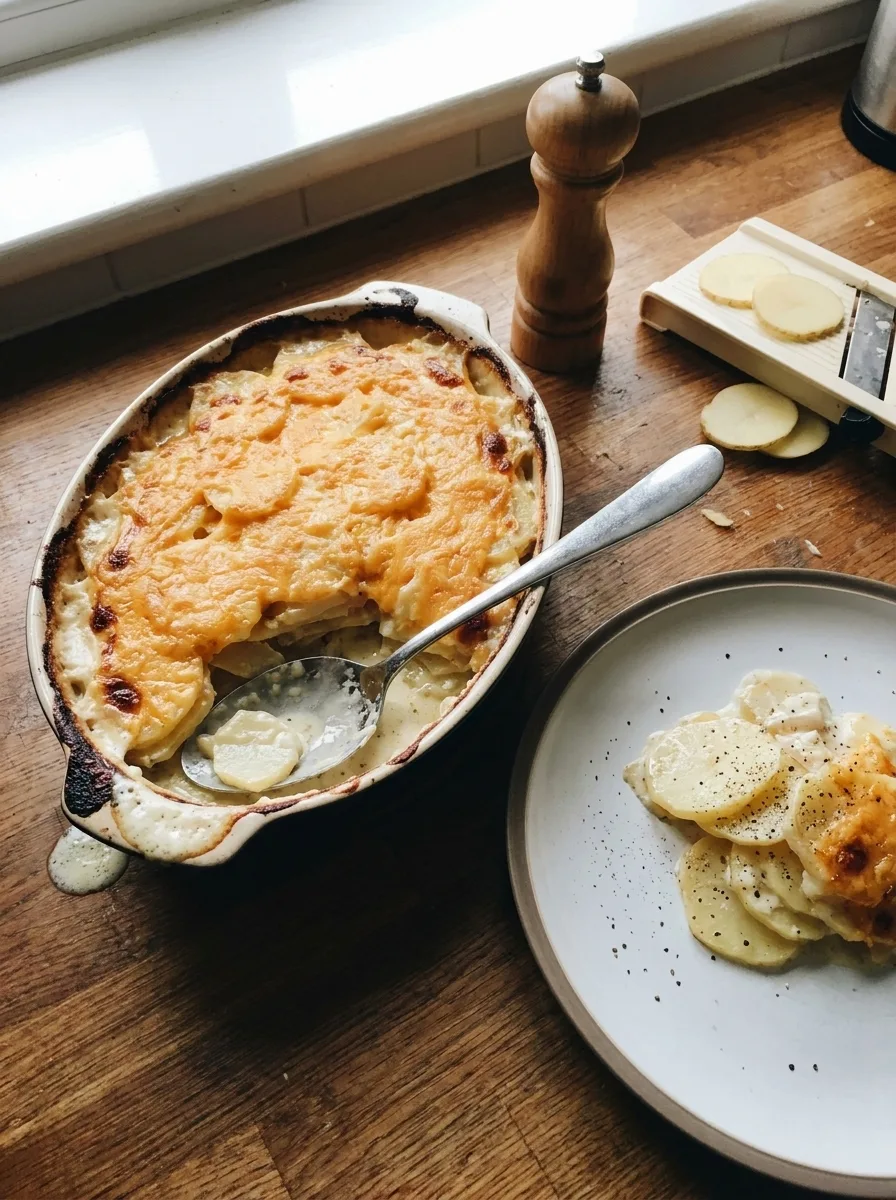
Gordon Ramsay’s dauphinoise potatoes are thin layers of waxy potato baked in cream and milk infused with bay leaf and garlic, finished with golden melted Cheddar on top. Rich, creamy, and ready in about 40 minutes of oven time.
This recipe comes from the Sunday Lunch cookbook, where Ramsay serves it alongside venison with red wine and chocolate sauce. He also has a potato and beetroot gratin in Ultimate Home Cooking, but this classic version is the one everyone searches for. Some call it potatoes au gratin or scalloped potatoes, but it is the same dish.
The detail that makes his version work is slicing the potatoes on a mandolin. Thick, uneven slices cook at different rates, so you get crunchy raw bits next to mushy ones. Ramsay’s slices are paper-thin and even, which means every layer cooks at the same speed and you get that soft, creamy collapse through the whole dish.
Cooked this recipe? Send a photo or tell me what you changed at fans@gordonramsayrecipes.uk and I’ll share your experience live on this page.
Gordon Ramsay Dauphinoise Potatoes Recipe
Course: Side DishCuisine: FrenchDifficulty: Easy4-6
servings15
minutes40
minutes420
kcal55
minutesGordon Ramsay’s gratin dauphinoise from the Sunday Lunch cookbook. Waxy potatoes layered with Cheddar, baked in garlic and bay leaf infused cream and milk until golden and tender.
Ingredients
1kg (2.2 lb) waxy potatoes such as Desiree or Charlotte, peeled
200ml (7 fl oz) whole milk
200ml (7 fl oz) double cream
1 bay leaf
1 garlic clove, peeled and smashed
200g (7 oz) medium Cheddar, grated
A little olive oil
Sea salt and freshly ground black pepper
Directions
- Infuse the cream: Put the milk, cream, bay leaf, and smashed garlic in a saucepan. Heat until simmering and the liquid begins to bubble up the sides. Turn off the heat and leave to cool slightly while you prepare the potatoes.
- Slice the potatoes: Peel and finely slice the potatoes using a mandolin. Ramsay is specific about using waxy potatoes like Desiree or Charlotte because they hold their shape better than floury ones.
- Prepare the dish: Heat the oven to 200°C (400°F) Gas 6. Lightly oil a deep gratin dish.
- Layer up: Scatter one-third of the Cheddar over the bottom of the dish. Cover with a layer of potato slices, overlapping them slightly. Season generously with salt and pepper. Repeat the layers until all the cheese and potatoes are used up, seasoning each layer and finishing with cheese on top.
- Pour and press: Strain the cream mixture, discarding the bay leaf and garlic. Pour over the potatoes to come about two-thirds up the sides. Gently press the potatoes down to help them absorb the liquid. Sprinkle with a little extra cheese.
- Bake: Cook for 35 to 40 minutes until the potatoes are golden brown on top and completely tender when prodded with a sharp knife. Leave to stand for a few minutes before serving.
Notes
- You can assemble this up to a day ahead and refrigerate before baking. Add 5 to 10 extra minutes in the oven if baking from cold. Ramsay also has a separate potato and beetroot gratin in Ultimate Home Cooking.
FAQs
Why does Ramsay use waxy potatoes instead of floury?
Floury potatoes like Maris Piper break down during the long bake and turn to mush. You end up with a thick, starchy paste rather than distinct layers.
Waxy potatoes like Desiree or Charlotte hold their shape. After 40 minutes in the oven, each slice is tender but still visible. You get that layered look when you cut into it, which is the whole point of a dauphinoise.
Ramsay specifies this in both his Sunday Lunch and Ultimate Home Cooking recipes. If you can’t find Desiree or Charlotte, any waxy salad potato works.
Why does Ramsay infuse the cream before pouring?
He heats the milk and cream with a bay leaf and smashed garlic clove, then strains them out before pouring over the potatoes.
This gives you the flavour of garlic and bay without any chunks in the finished dish. Raw garlic baked for 40 minutes can turn bitter and sharp. The infusion is gentler.
It also means the liquid is hot when it hits the potatoes, so the bake starts immediately. Pouring cold cream over sliced potatoes adds 10 to 15 minutes of oven time before anything actually starts cooking.
Why does Ramsay use Cheddar instead of Gruyère?
Traditional French dauphinoise uses Gruyère or no cheese at all. Ramsay’s version uses medium Cheddar, which is a deliberate British twist.
Cheddar melts differently to Gruyère. It goes golden and crisp on top rather than stretchy and gooey. That gives you a better gratin crust. It’s also easier to find in any UK supermarket and costs about half the price.
If you want it more traditional, swap the Cheddar for Gruyère or Comté. Or leave the cheese out entirely and let the cream and potatoes do the work.
Is dauphinoise the same as scalloped potatoes?
They are the same idea: thinly sliced potatoes baked in a creamy sauce until soft. Dauphinoise is the French original, built on cream, garlic and bay. Scalloped potatoes is the American name, often using a milk and flour sauce instead.
Ramsay does not have a separate scalloped recipe, because this is it. His version skips the flour and lets the cream and Cheddar do the work. If you came looking for scalloped potatoes, this is the richer version of the same dish.
What is the difference between dauphinoise and potatoes au gratin?
Very little, and Ramsay’s version blurs the line. Strictly, au gratin means a dish finished with a browned topping, usually cheese. Traditional dauphinoise is just cream, with no cheese at all.
His recipe layers and tops it with Cheddar, so this is a gratin too. The book even calls it gratin dauphinoise. So if you searched for potatoes au gratin, this golden, cheese-topped version is exactly what you want.
What is the difference between dauphinoise and fondant potatoes?
Completely different technique. Dauphinoise is sliced potatoes baked in cream. Fondant potatoes are thick cylinders seared in butter then braised in stock.
Dauphinoise is rich and creamy, best for feeding a group because it sits in a dish and you just scoop. Fondant potatoes are more impressive looking on individual plates but take more hands-on work.
For a special roast dinner, dauphinoise is the easier option because it goes in the oven and looks after itself. If you’re serving something like beef wellington where the main needs your full attention, dauphinoise is the smarter side.
Can you make dauphinoise ahead of time?
Yes, and Ramsay’s Sunday Lunch menu plan actually says to prepare the gratin dauphinoise about an hour ahead and bake it while the main course rests.
You can go further than that. Assemble the whole dish, cover with cling film, and refrigerate for up to 24 hours. When you’re ready, bake from cold at 200°C for 45 to 50 minutes instead of the usual 35 to 40.
It also reheats well the next day. Cover with foil and warm at 160°C for 20 minutes. The potatoes absorb more cream overnight so leftovers are actually richer than the first serving.