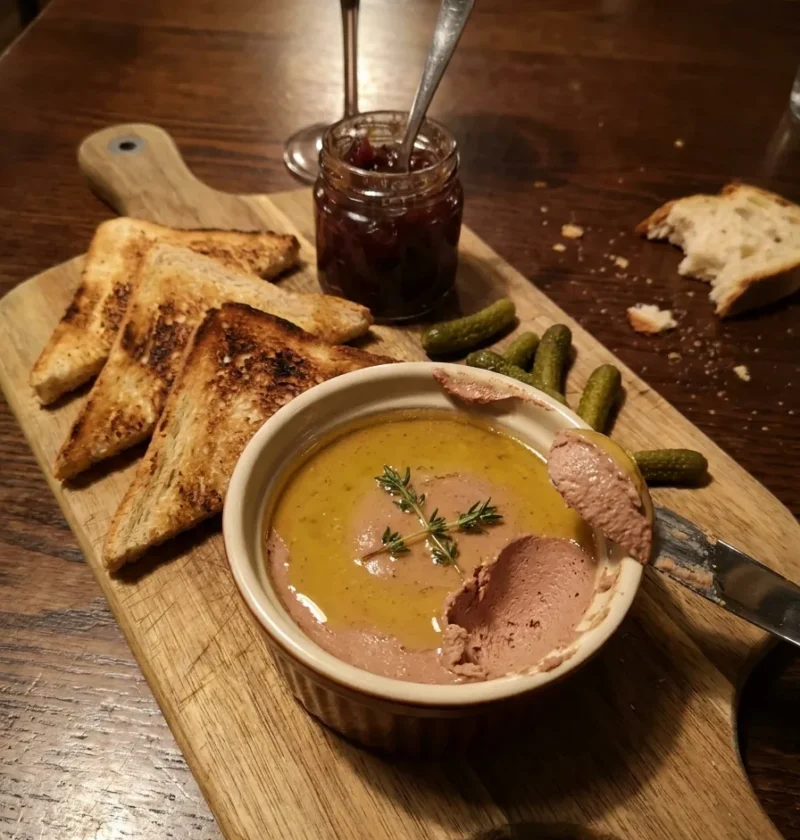
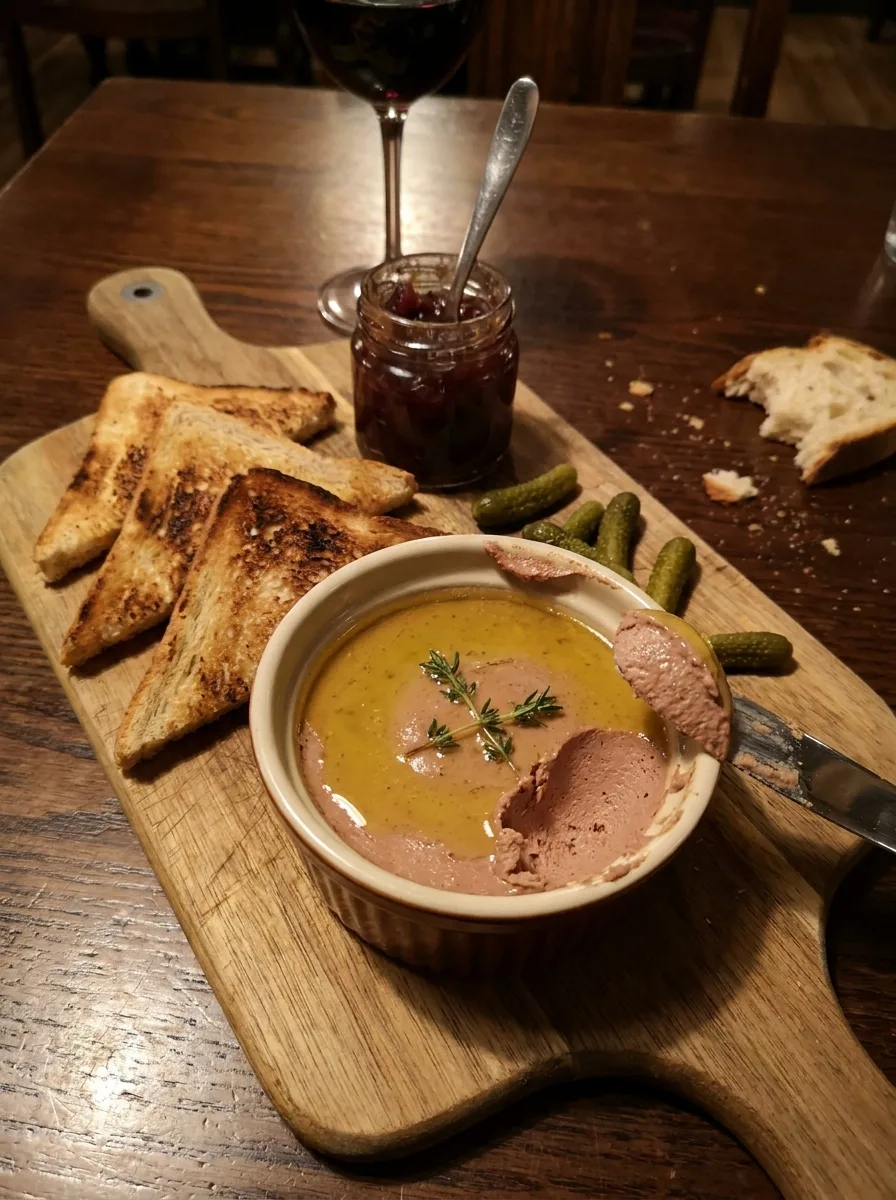
Gordon Ramsay’s chicken liver pâté is livers soaked in milk overnight, sautéed with shallots until still pink inside, flambéed in brandy, then blended smooth with butter and thyme. Sealed in ramekins under a layer of clarified butter, it keeps for up to a week in the fridge. Serves 4, about 20 minutes plus soaking and chilling.
This recipe comes from Great British Pub Food where he calls it “poor man’s pâté” and says “it may be inexpensive, but it makes an elegant starter and tastes divine, especially if you serve it with a red onion marmalade.” In Ramsay in 10 he adds “given that chicken livers are so inexpensive and delicious, I’m always amazed they aren’t more popular.”
The milk soak is the step that separates good pâté from bitter, grainy pâté. Soaking the livers for 6-8 hours draws out the blood and any metallic taste. Skip this and no amount of brandy will save it.
Cooked this recipe? Send a photo or tell me what you changed at fans@gordonramsayrecipes.uk and I’ll share your experience live on this page.
Gordon Ramsay Chicken Liver Pâté
Course: StarterCuisine: BritishDifficulty: Easy4
servings15
minutes10
minutes380
kcal25 minutes
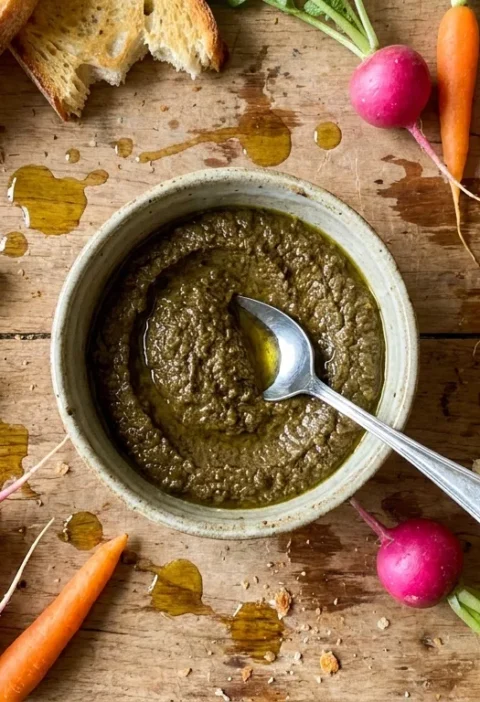
“Poor man’s pâté” from Ramsay’s Great British Pub Food. Chicken livers soaked in milk to remove bitterness, fried pink with shallots, flambéed in brandy, blended smooth with butter, and sealed under clarified butter. Keeps for a week in the fridge. Serve with warm toast and red onion marmalade. About 380 kcal per serving.
Ingredients
- For the pâté:
500g (about 1 lb) chicken livers, de-veined
150-200ml (enough to cover) milk, for soaking
75g (⅓ cup) unsalted butter, diced
2 large shallots, peeled and finely diced
Generous splash of brandy
Few thyme sprigs, leaves stripped
Sea salt and freshly ground black pepper
- To seal:
175g (¾ cup, melted) unsalted butter
A few thyme leaves
- To serve:
Warm toast or crusty bread
Red onion marmalade or chutney
Directions
- Soak the livers: De-vein the chicken livers and place in a bowl. Pour on enough milk to cover and leave to soak in the fridge for 6-8 hours or overnight. Bring to room temperature 20 minutes before cooking.
- Cook the shallots: Drain and rinse the livers, pat dry with kitchen paper and season well. Heat a few knobs of the butter in a pan and sauté the shallots over a medium heat for 5-6 minutes until soft but not coloured.
- Fry the livers: Increase the heat slightly. Add the livers and fry for 3-4 minutes until evenly browned but still pink inside. They should be firm on the outside but soft in the centre.
- Flambé: Add the brandy and carefully flambé by tilting the pan towards the flame. When the flame dies down, add the rest of the butter to melt. Remove from the heat and add the thyme leaves.
- Blend: Immediately tip everything into a food processor and blend to a smooth paste. For a very smooth texture, pass through a fine sieve. Divide between four small ramekins and smooth the tops with a spatula.
- Seal with clarified butter: Gently melt the 175g butter in a small pan over a very low heat. Carefully pour the golden oily layer from the surface into a jug, discarding the milky whey below. Spoon the clarified butter over each pâté to cover with a thin layer. Sprinkle with a few thyme leaves.
- Chill and serve: Cover with cling film and chill for at least 1 hour until set. Take out of the fridge 15 minutes before serving with warm toast and red onion marmalade.
Notes
- Soak the livers in milk overnight to draw out the blood. Skip this and the pâté will taste bitter and metallic.
FAQs
Why soak chicken livers in milk?
The milk draws out the blood and any bitter, metallic taste from the livers over those 6-8 hours. Without this step, the pâté will have a sharp, irony flavour that puts people off. Ramsay is specific about the timing: soak overnight, then bring them to room temperature 20 minutes before cooking.
Drain and rinse the livers thoroughly after soaking, then pat them completely dry. Wet livers won’t brown properly in the pan, and browning is where you build the deep savoury flavour that makes the pâté taste rich rather than livery.
Why must the livers stay pink inside?
This is the most common mistake with pâté. Overcooked livers turn dry, crumbly, and bitter. Ramsay fries them for “3-4 minutes until evenly browned but still pink inside.” That means firm on the outside but soft and slightly pink in the centre.
The residual heat from the hot butter and brandy continues cooking them after you take the pan off the heat. By the time they go into the food processor, they’re cooked through but still creamy. If you cook them grey all the way through in the pan, the pâté will be grainy.
What is the difference between pâté and parfait?
Pâté is blended livers set in a ramekin, usually sealed with clarified butter. Parfait is richer, it uses more butter and cream, is passed through a fine sieve for an ultra-smooth texture, and sometimes baked in a water bath. Parfait is silkier, pâté has more texture.
Ramsay’s version sits between the two. He blends it smooth and offers the sieve step for “a very smooth texture, if required.” If you pass it through the sieve, you’re essentially making a parfait. If you skip the sieve and leave a bit of texture, it’s a classic pâté.
Ramsay’s soda bread warm from the oven makes a good alternative to toast for serving alongside.
Why seal with clarified butter?
The clarified butter forms an airtight seal over the pâté that prevents it from oxidising and going grey on top. Ramsay says this seal means “this pâté keeps well for up to a week in the fridge.” Without it, the surface discolours within a day.
Clarifying the butter is simple: melt it slowly, then pour off the clear golden oil and leave the milky solids behind. The clear fat sets firm and creates that glossy layer you see on restaurant pâtés. A few thyme leaves pressed into the butter while it sets looks beautiful.
What to serve with chicken liver pâté?
Ramsay serves it with warm toast triangles and red onion marmalade, which is the classic British pub combination. The sweetness of the marmalade balances the rich, savoury pâté. He says it “tastes divine” with this pairing.
Cornichons, pickled onions, or chutney all work too. For a Christmas starter, try it with Ramsay’s cranberry sauce instead of the marmalade. A simple beetroot salad on the side adds colour and earthiness that pairs beautifully with liver.
Can you freeze chicken liver pâté?
Yes, but without the clarified butter seal. Freeze the blended pâté in ramekins covered with cling film for up to 2 months. Defrost overnight in the fridge, then add the clarified butter layer fresh before serving.
Ramsay’s hot chicken liver recipe in Ramsay in 10 is a good alternative if you want something quicker: he fries livers with pancetta, adds brandy, Tabasco, and Worcestershire sauce, then stirs in crème fraîche and serves it on toasted baguette with a pear and chicory salad. Same livers, completely different dish.