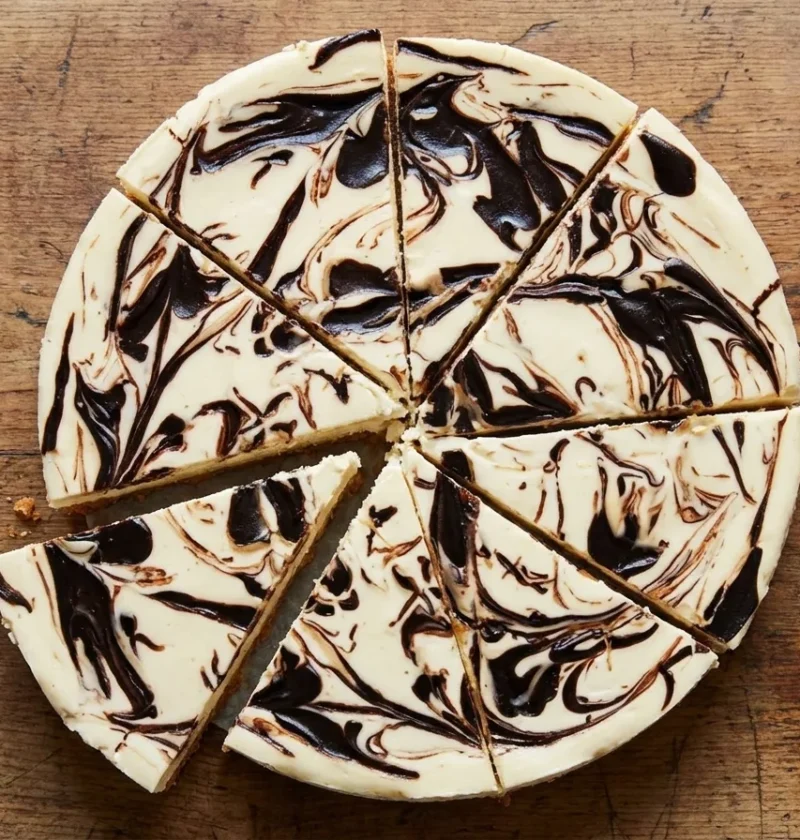
Gordon Ramsay chocolate swirl cheesecake is baked, not chilled. Plenty of people go looking for a no-bake version, but there are two eggs in this filling and half an hour in the oven. After that it sits in the switched-off oven overnight.
It comes from Cooking for Friends, where he calls it rich and creamy. Rich is the word. Dark chocolate goes into the filling in thick ribbons, and the base underneath is crushed biscuits mixed with ground toasted almonds.
The base bakes first at 165°C until golden. Then the oven drops to 135°C for the filling, low enough that the eggs set instead of scrambling. Ramsay is blunt about the cooling: take it out too early and the top cracks.
Cooked this recipe? Send a photo or tell me what you changed at fans@gordonramsayrecipes.uk and I’ll share your experience live on this page.
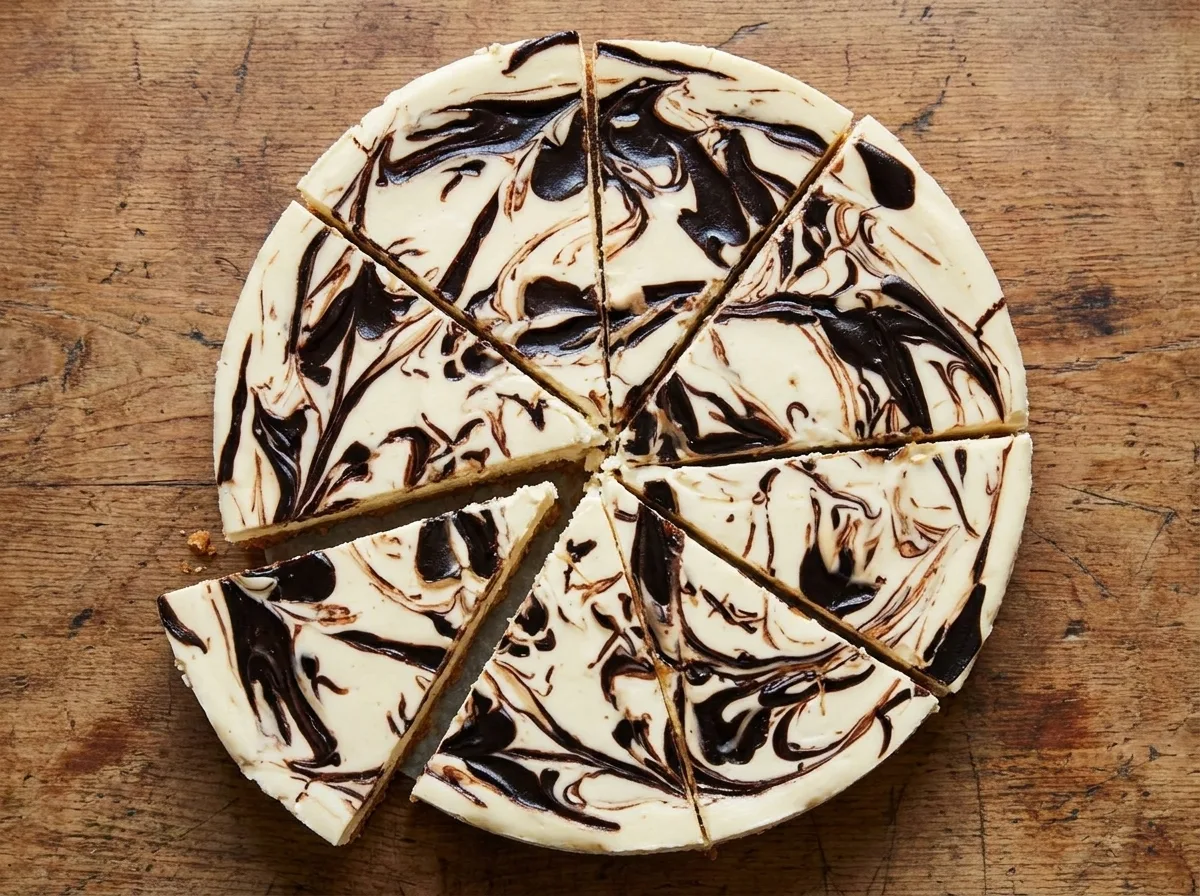
Gordon Ramsay Chocolate Swirl Cheesecake
Course: DessertCuisine: AmericanDifficulty: Medium10
servings20
minutes45
minutes525
kcal8
hours9 hr 5 min
A New York style baked cheesecake from Cooking for Friends, with dark chocolate swirled through the filling, ground toasted almonds in the base, and a long slow cool in a switched-off oven.
Ingredients
- For the base:
150g digestive biscuits, crushed (1½ cups graham cracker crumbs)
3 tbsp ground toasted almonds
55g unsalted butter, melted (4 tbsp)
- For the filling:
85g dark chocolate, minimum 65% cocoa solids, roughly chopped (3 oz)
150g caster sugar (¾ cup)
240ml soured cream (1 cup sour cream)
565g cream cheese (1¼ lb)
2 large eggs
1 tsp vanilla extract
Directions
- Make the base: Heat the oven to 165°C (325°F) and butter a 23cm (9 in) springform tin. Blitz the biscuits with the almonds in a food processor. Add the melted butter and pulse until it clumps together, then press into the tin with a spatula to make an even crust.
- Bake the base: Bake for 10 to 15 minutes until golden. Take it out and drop the oven to 135°C (275°F).
- Melt the chocolate: Set a heatproof bowl over a pan of barely simmering water. Melt the chocolate, stirring until smooth, then take it off the heat.
- Make the filling: Beat the sugar, soured cream, cream cheese, eggs and vanilla together with a hand-held electric mixer until smooth.
- Fill and swirl: Pour the filling onto the base. Tap the tin gently to level it and knock out any big air bubbles. Drizzle the melted chocolate over and drag it through to make swirls.
- Bake low: Bake for about 30 minutes. The filling should be set around the edges and still wobble in the middle when you shake the tin gently.
- Cool in the oven: Switch the oven off and leave the cheesecake inside to cool slowly, ideally overnight. It carries on setting as it cools.
- Serve: Release the springform, slide the cheesecake onto a plate and serve chilled.
Notes
- The original is written in American cups and sticks, so the metric weights here are converted rather than his own figures. Ramsay calls for extra-large eggs, which is roughly a British large. He suggests serving it with a fresh fruit compote: blueberry, mixed berries, or anything soft and tart.
FAQs
Can you make this one without the oven?
Not this recipe. The eggs and soured cream are what set the filling, and they need heat to do it. Leave them out and the whole thing stays liquid.
If the oven is the problem, use the recipe built for that. Ramsay’s no-bake cheesecake sets with whipped cream instead of eggs, so nothing goes near heat. Fold 85g of melted dark chocolate through it and you get the swirl without switching anything on.
Do you need a water bath?
No, and that’s unusual for a New York cheesecake. Most recipes sit the tin in a roasting pan of hot water to keep the heat gentle and stop the surface drying out.
Ramsay does the same job with temperature instead. Dropping the oven to 135°C keeps the heat low enough that a water bath becomes unnecessary. No foil-wrapping either, and no risk of water seeping into the base.
How do you get the swirl to look right?
Pour the filling first and level it. The chocolate goes on top of that, and you drag it through afterwards, which keeps it in ribbons rather than stirring it into the mix.
Use a skewer or the tip of a knife, in long slow strokes. Then stop, earlier than feels right. Over-dragging is what turns a bold swirl into a muddy grey-brown filling.
Why cool it in a switched-off oven?
Because a cheesecake pulled straight into a cold kitchen contracts too fast, and a fast contraction splits the top. Ramsay says plainly that taking it out too soon is what causes cracks.
Leaving it in lets the residual heat bring it down slowly while the filling finishes setting. That same trick shows up in the lemon meringue cheesecake, so it looks like his default for anything baked and custardy.
It cracked anyway. What went wrong?
Three usual causes. The oven ran hotter than 135°C, the cheesecake came out while the middle was still hot, or the filling was overbeaten.
Overbeating is the sneaky one. Air whipped into the mixture expands in the oven and then collapses as it cools, taking the surface with it. Beat only until smooth, never until fluffy, and a crack is cosmetic anyway.
Why almonds in the base?
Three tablespoons of ground toasted almonds go in with the biscuit crumbs, which most cheesecake bases skip. They bring fat and a roasted note, so the crust tastes of something instead of just crunching.
That matters here more than it would elsewhere. The filling is heavy with chocolate and soured cream, and a plain butter-and-biscuit base would disappear underneath it completely.
What do you serve with it?
Ramsay names a fresh fruit compote, suggesting blueberry, mixed berries, or anything soft and tart. Tart is the operative word, because the job is acidity against all that cream cheese.
Nothing sweet, in other words. Sharp fruit does more for rich chocolate than extra sugar ever will, which is the same reasoning running through the chocolate tart.