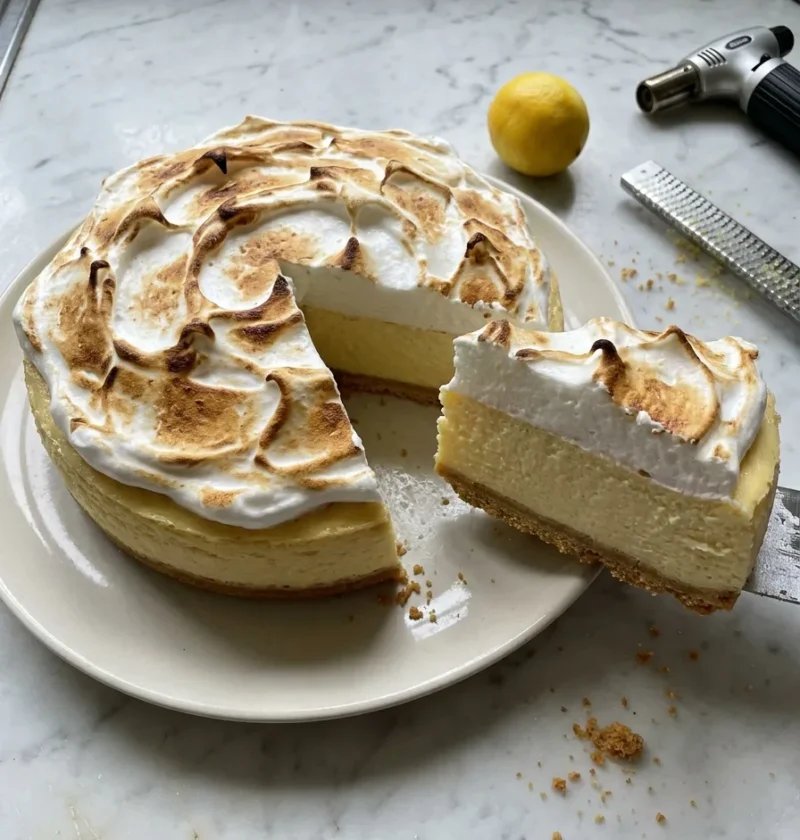
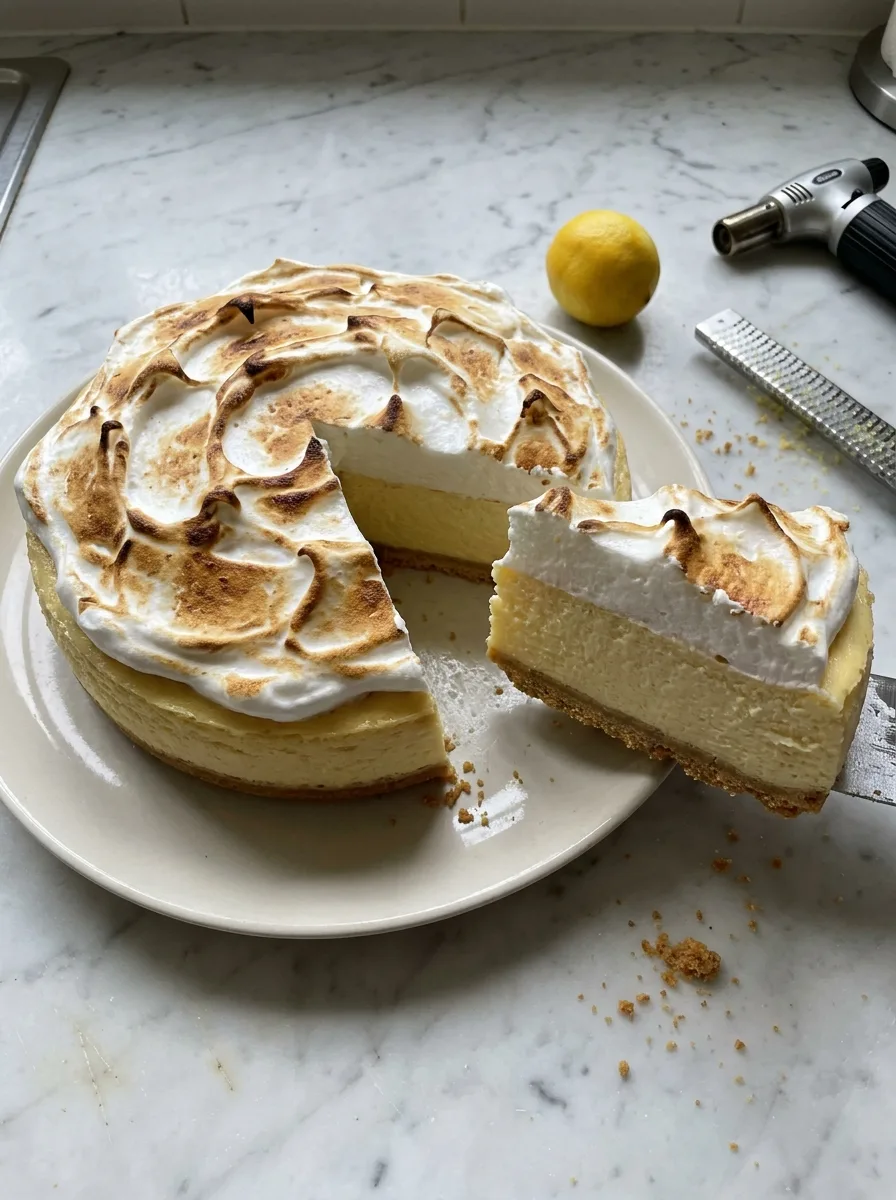
Gordon Ramsay’s lemon meringue cheesecake is creamy and sharp at once, a crisp digestive base under a baked lemon filling, finished with a torched cloud of meringue. It’s made with full-fat soft cheese, soured cream, fresh lemons and egg whites. About half an hour of work, then it sets in the fridge overnight.
Gordon hasn’t published this exact recipe, so I built it from three of his own. He’s open about why it isn’t a classic cornflour pie filling: he loved lemon meringue pie as a child but went off “the texture of the lemon-cornstarch filling.” So the lemon lives in the cheesecake itself here, through zest and fresh juice, the way he flavours his lemon tart.
The one thing that makes or breaks it is how you cool it. Turn the oven off and leave the cheesecake inside with the door ajar, because the gentle leftover heat lets the middle finish setting at the same pace as the edges. Cool it too fast and the top cracks.
Cooked this recipe? Send a photo or tell me what you changed at fans@gordonramsayrecipes.uk and I’ll share your experience live on this page.
Gordon Ramsay Lemon Meringue Cheesecake
Course: DessertCuisine: BritishDifficulty: Medium10-12
servings30
minutes55
minutes480
kcalBuilt from Gordon Ramsay’s own recipes: the sealed digestive base and slow-cool bake from his ricotta cheesecake, the bright lemon from his lemon tart, the warm-sugar meringue torched like his. A make-ahead pudding for 10 to 12.
Ingredients
- For the base:
200g digestive biscuits
60g unsalted butter, melted
1 medium egg white, lightly beaten
- For the lemon filling:
600g full-fat soft cheese, room temperature
150g soured cream
175g caster sugar
2 tbsp cornflour
3 large eggs plus 1 yolk, room temperature
Zest of 2 lemons
75ml lemon juice (about 2 lemons)
1 tsp vanilla extract
- For the meringue:
4 large egg whites
175g caster sugar
Directions
- Base: Heat the oven to 160C (140C fan, 325F). Blitz the biscuits to crumbs, mix with the melted butter and press into a 23cm springform tin. Bake 10 minutes. Brush the hot base with the beaten egg white, return for 2 minutes to seal, then leave to cool.
- Filling: Drop the oven to 150C (130C fan, 300F). Beat the soft cheese until smooth. Add the sugar and cornflour, then the eggs and yolk one at a time on low speed, taking care not to whip in air. Stir in the soured cream, lemon zest, juice and vanilla.
- Bake: Pour the filling over the base. Bake for 45 to 55 minutes, until set at the edges with a slight wobble in the centre.
- Cool slowly: Turn the oven off, prop the door open and leave the cheesecake inside for an hour. Then chill, ideally overnight, so it sets fully.
- Meringue: Warm the sugar in a low oven for a few minutes. Whisk the egg whites to stiff peaks, then add the warm sugar a spoonful at a time, beating to a firm, glossy meringue.
- Top and torch: Pile the meringue onto the cold cheesecake and swirl into peaks. Torch until golden, or grill 2 to 3 minutes, watching closely. Serve.
FAQs
Why does Ramsay cool the cheesecake in a turned-off oven?
Because a cheesecake cracks when it cools too quickly. The edges firm up while the centre is still loose, and the pull between them splits the top. His fix is to switch the oven off and leave it inside with the door ajar.
The gentle residual heat lets the middle finish setting in step with the edges. He uses the very same trick on his lemon tart, so it isn’t a one-off, it’s how he sets anything custardy. After that it needs a proper chill, overnight if you can.
Should I torch or grill the meringue?
Either works, but timing matters more than the tool. Make the meringue just before serving and brown it fast, because meringue left sitting on a cold cheesecake slowly weeps a sugary liquid.
A blowtorch gives you the most control, the same move you’d use on a crème brûlée. No torch? Slide it under a hot grill for two to three minutes, but stand there and watch, it goes from gold to burnt in seconds.
Why is there no cornflour filling like a normal lemon meringue?
That’s deliberate, and it comes straight from Gordon, who went off the texture of the classic cornflour filling. So here the lemon rides in the cheesecake itself, through plenty of zest and fresh juice, not a separate set layer.
You get a sharper, cleaner lemon and a creamier bite for it. If you do want the classic version, sharp lemon set firm inside pastry, that’s his lemon meringue pie, a different pudding altogether.
How do I stop the biscuit base going soggy?
The filling is wet and the base sits under it for the best part of an hour, so a plain crust turns to mush. Gordon seals his by brushing the hot, just-baked base with a little beaten egg white.
The white sets on the warm biscuit and forms a thin waterproof skin. Five extra minutes and the base stays crisp under all that lemon. Don’t skip it.
Can I make it ahead?
The cheesecake itself, yes, and it’s better for it. Bake it a day ahead and let it chill overnight. The meringue is the only catch: it has to go on fresh and be torched just before serving, or it weeps.
So make the base and filling ahead, then whip and torch the meringue on the day. If you’d rather a pudding you can build completely in advance, his tiramisu keeps happily for two days, and his apple tarte tatin reheats in minutes.