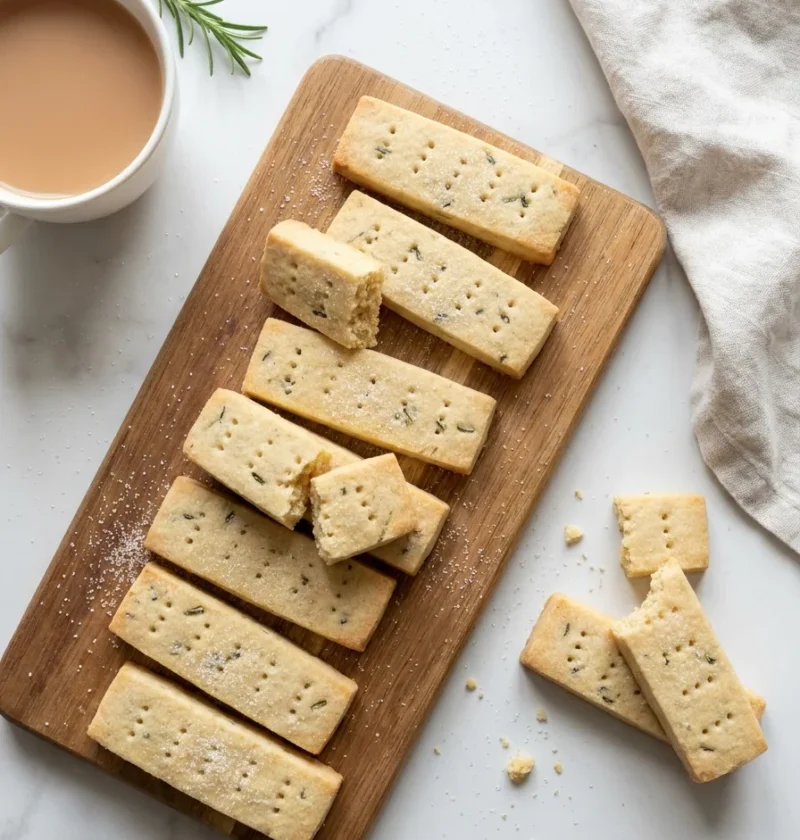
Gordon Ramsay’s shortbread cookies use plain flour, butter, caster sugar, sea salt, and fresh rosemary, ready in 45 minutes. No eggs and no raising agent, so nothing to hide behind. Rub room-temperature butter into flour, knead until smooth, then bake at 170°C for 30 minutes.
The recipe appears in Bread Street Kitchen with rosemary, and again in Ultimate Cookery Course with lemon thyme. Ramsay calls shortbread a base you build on, writing “just take the foolproof base and use your imagination.” He lists rosemary, orange zest, fennel seeds, and edible lavender as starting points.
What sets shortbread apart from every other biscuit is what you leave out. Ramsay explains the science in UCC: less air means a shorter, crumblier texture, so you use plain flour and minimal beating. Overwork this dough and you lose the crumble entirely.
Cooked this recipe? Send a photo or tell me what you changed at fans@gordonramsayrecipes.uk and I’ll share your experience live on this page.
Gordon Ramsay’s Shortbread Cookies
Course: DessertsCuisine: BritishDifficulty: Easy24
fingers15
minutes30
minutes91
kcal45
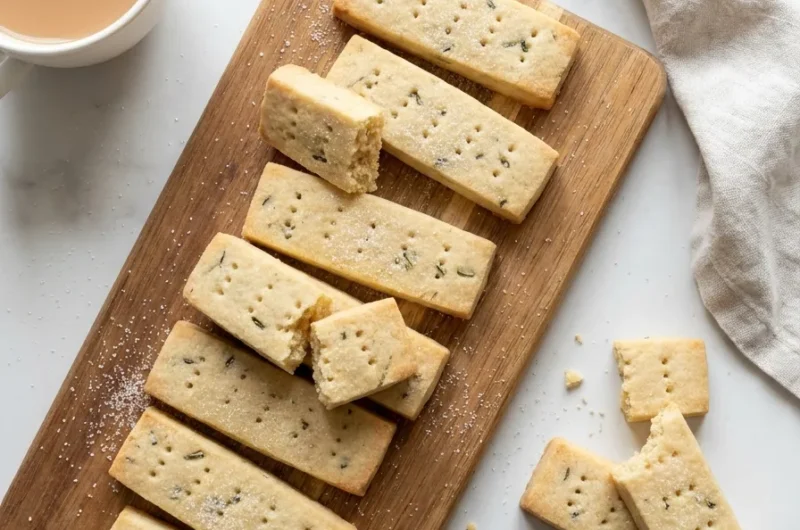
minutesRosemary shortbread fingers from Bread Street Kitchen using the traditional Scottish rub-in method. Five ingredients, around 91 kcal per finger, and about 19p each based on current Tesco prices. They keep in a biscuit tin for up to 5 days.
Ingredients
225g (8 oz) plain flour, plus extra for dusting
Pinch of sea salt
75g (2¾ oz) caster sugar, plus extra for sprinkling
150g (5½ oz) butter, at room temperature, cubed
1 small rosemary sprig, leaves picked and finely chopped
Directions
- Preheat: Heat the oven to 170°C (150°C fan / Gas 3 / 340°F). Grease a baking sheet.
- Mix dry ingredients: Sift the flour and salt into a large bowl, then stir in the sugar.
- Rub in butter: Rub in the butter using your fingertips until the mixture resembles fine breadcrumbs. Stir in the chopped rosemary.
- Knead: Knead and squeeze the mixture together with warm hands until smooth, with no wrinkles or cracks on the surface.
- Shape: Cut the dough in half. Roll one half on a lightly floured surface to a 12x12cm square, about 1cm thick. Cut into 2cm slices, then cut each in half to make 12 fingers. Prick all over with a fork. Repeat with the second half for 24 fingers total.
- Bake: Bake for about 30 minutes until the shortbread is golden and looks a little risen.
- Cool and store: Sprinkle with caster sugar if you like, then leave to cool completely on the baking sheet. Store in an airtight container for up to 5 days.
FAQs
Why does Ramsay say to use warm hands?
In Bread Street Kitchen, he specifically says to “knead and squeeze the mixture together with warm hands.” Cold hands leave you with a crumbly mess that won’t bind, while hands that are too hot will melt the butter and bake the shortbread dense instead of crumbly.
About a minute of kneading is all you need. The test is Ramsay’s own: no wrinkles and no cracks on the surface. Once it looks smooth, stop. I’ve tested all five of his cookie recipes and this is the only one where hand temperature actually matters.
What is the difference between Ramsay’s two shortbread methods?
Two different techniques in two different books, and both work. In Bread Street Kitchen, Ramsay rubs room-temperature butter into flour with his fingertips like making pastry, then kneads it together. This is the traditional Scottish method and gives you a slightly more crumbly, rustic texture.
In Ultimate Cookery Course, he creams the butter and sugar first with an electric mixer, then adds the flour on the lowest speed. It’s the opposite approach to his chocolate brownies where butter and chocolate get melted together. If you want that handmade crumble, use the Bread Street Kitchen method. If you want clean, even fingers, the creaming method is more forgiving.
Can you make lemon thyme shortbread instead?
Ramsay has a full lemon thyme version in Ultimate Cookery Course. Swap the rosemary for 2 tablespoons of finely chopped lemon thyme and follow the same method.
The UCC version is slightly richer too: 340g flour, 225g butter, 140g caster sugar. More butter to flour means a softer, more melt-in-the-mouth biscuit. If rosemary in baking appeals to you, his focaccia bread uses it on top of the dough instead of mixed through, which gives a completely different result.
Why plain flour and not self-raising?
This is the detail Ramsay explains in his baking chapter. Self-raising flour contains baking powder, which creates air bubbles and lift. That’s what you want in a cake, but in shortbread it would make the biscuit puffy instead of short and crumbly.
Plain flour with no raising agent keeps the texture dense and buttery. His sugar cookies from Make It Easy are the opposite: they use a beaten egg and more working to get a firmer dough that holds cut-out shapes, which is why the texture is crisp rather than crumbly.
How long do shortbread cookies keep?
In Bread Street Kitchen, Ramsay says they keep in an airtight container for up to 5 days. He calls them a handy “sugar boost between meals” worth keeping in a biscuit tin. Room temperature is best because cold firms up the butter and dries out the texture.
They freeze well for up to a month too. Wrap the fingers tightly in cling film, then thaw at cool room temperature. His chocolate chip cookies are the opposite: best eaten warm when the chocolate is still melted. Shortbread actually improves after a day because the butter flavour has time to develop.