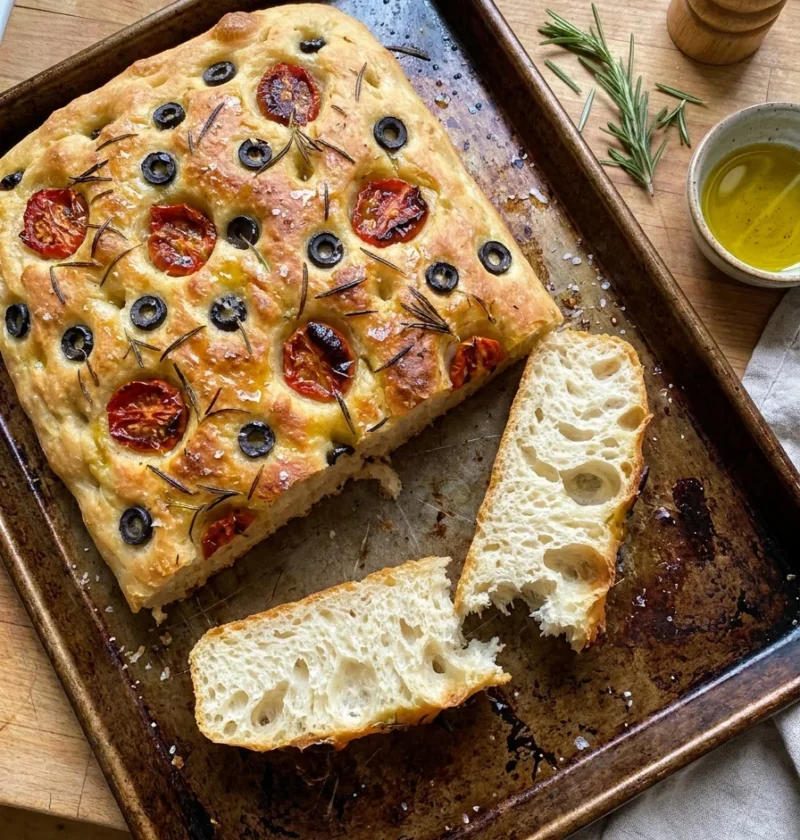
Gordon Ramsay’s focaccia is made with strong bread flour, semolina, dried yeast, and olive oil, topped with black olives, sunblush tomatoes, and rosemary, then baked at 200°C for 30 minutes. The recipe is from his Ultimate Cookery Course and serves 6-8.
In the UCC video Ramsay says “my first job for a three Michelin star establishment was a baker. I was 22, I used to start at midnight. One o’clock white bread, two o’clock brown bread, three o’clock sourdough, four o’clock cheese bread.” He calls focaccia “the perfect way to start baking” because it’s forgiving.
The semolina mixed into the flour is what gives it that gritty, rustic crunch on the base. Plain flour alone can’t do that. And the one technique most people get wrong is the toppings. Ramsay says in the UCC video “it’s possible to put olives and tomatoes through the dough but it never really allows the dough to bake properly.” Press them into the surface, not buried inside.
Cooked this recipe? Send a photo or tell me what you changed at fans@gordonramsayrecipes.uk and I’ll share your experience live on this page.
Gordon Ramsay Focaccia Bread
Course: SidesCuisine: ItalianDifficulty: Easy6-8
15
minutes30
minutes280
kcal105
minutesFrom Gordon Ramsays Ultimate Cookery Course. Strong bread flour with semolina for rustic crunch, olive oil worked into the dough for a silky texture, and toppings pressed into the surface not mixed through. Ramsay has three focaccia recipes across his cookbooks and calls this one the perfect starting bread for home bakers.
Ingredients
500g strong bread flour
1 heaped tbsp coarse semolina
2 x 7g sachets dried yeast
50ml olive oil, plus extra for the tray and drizzling
320ml warm water
75g pitted black olives, sliced
150g sunblush tomatoes
2-3 rosemary sprigs, leaves only
Sea salt and freshly ground black pepper
Directions
- Mix the dough: Combine the flour, semolina, and yeast in a large bowl with a couple of generous pinches of salt. Mix the warm water with the olive oil. Make a well in the flour and gradually add the liquid, mixing with a fork first, then your hands until it forms a ball.
- Knead: Tip onto a lightly floured surface and knead for 10 minutes until smooth, elastic, and springy. Ramsay says knead it gently, don’t overwork it.
- Prove: Place in a large floured bowl and leave in a warm place for 30-60 minutes until doubled in size.
- Shape: Preheat the oven to 200°C (400°F)/Gas 6. Oil a baking tray (about 28 x 20cm) and sprinkle salt on the base. Grease your fingers with olive oil and prod the dough out to the edges of the tray.
- Top: Press the olives and sunblush tomatoes into the surface so they poke slightly above the dough. Season with salt and pepper. Scatter the rosemary leaves over the top. Drizzle with olive oil.
- Bake: Place in the oven for 30 minutes until golden and cooked through. Turn out of the tray onto a board, slice, and serve warm.
FAQs
Why does Ramsay add semolina to the flour?
It creates a gritty, rustic texture on the base and edges that plain flour can’t replicate. Ramsay says it gives the focaccia “its sort of rustic charm.” Without it the bread is softer and smoother, more like a standard white loaf.
You only need a heaped tablespoon, not a lot, but you’ll notice the difference in the crunch when you tear it.
What is Ramsay’s Parmesan focaccia from Bread Street Kitchen?
A different recipe entirely. The BSK version uses 375g strong white flour with fast-action yeast, no semolina. After the second rise you press your fingers vigorously all over the surface to create deep dimples. Then scatter grated Parmesan and rosemary leaves on top before baking at 200°C.
The Parmesan melts into the dimples and crisps up. If you want a cheesier focaccia, this is the one.
Can you use spelt flour instead?
Ramsay has a third focaccia recipe in Cooking for Friends using spelt flour mixed with Italian 00 flour. The spelt gives a nuttier, earthier flavour and a slightly denser crumb.
That version uses fresh yeast instead of dried and presses whole unpeeled garlic cloves into the dough so they roast inside during baking. Three focaccia recipes across three books, each one different.
Why do the toppings go on top, not mixed through?
Ramsay is clear about this in the video: “It’s possible to put olives and tomatoes through the dough but it never really allows the dough to bake properly.” Wet ingredients like tomatoes and olives release moisture as they heat.
Buried inside, that moisture creates soggy pockets that stop the bread rising evenly. On the surface, the moisture evaporates and the toppings caramelise instead. Push them in with your finger so they sit half in, half out. For a quicker garlic hit without making dough, try the compound garlic butter method on a shop-bought baguette instead.