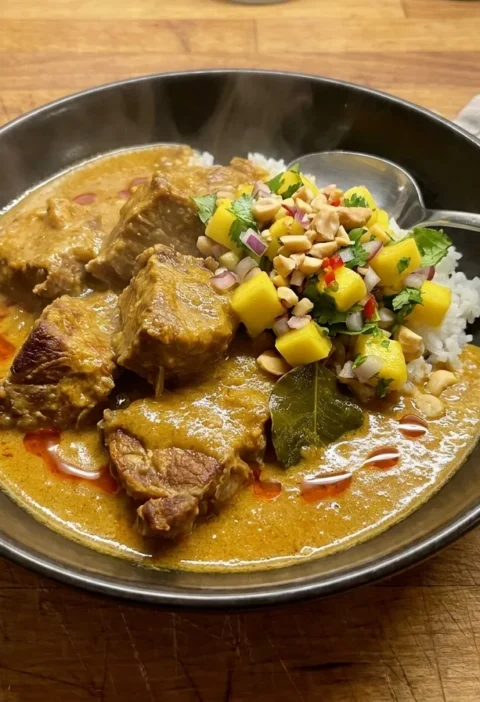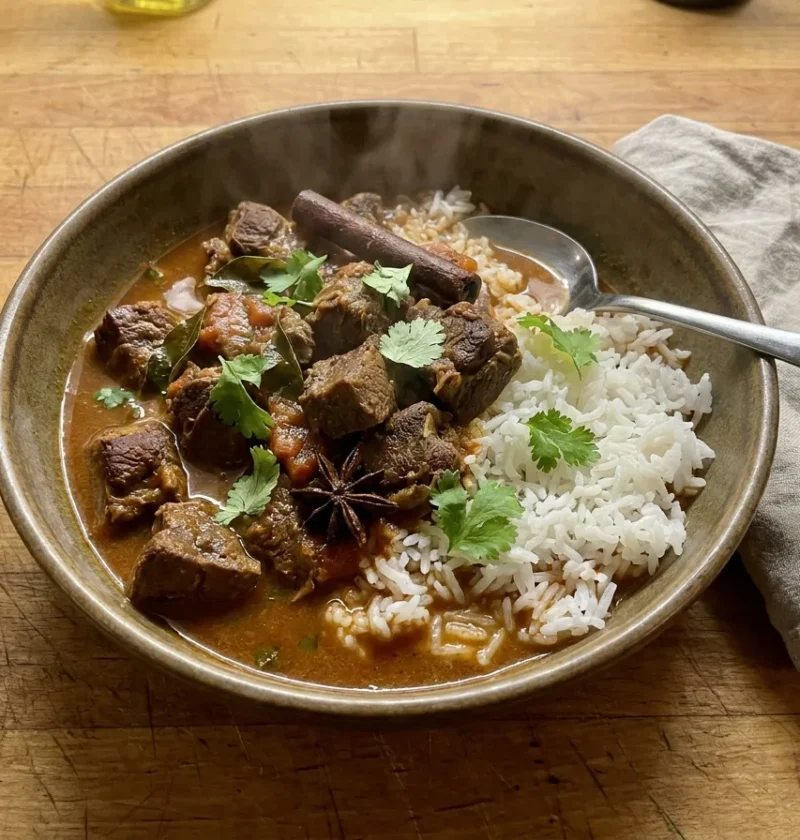
Gordon Ramsay’s goat curry slow-cooks boneless goat shoulder in a tomato and chicken stock sauce built on a blitzed chilli paste, with whole spices, for 3 to 4 hours until the meat gives completely. There’s no coconut milk and no yoghurt in it, and that’s the whole point.
The recipe comes from his Cooking for Friends book, inspired by the Caribbean goat curries he ate at Notting Hill carnival in London. He calls it “light, piquant” because chicken stock or water does the job that coconut milk and yoghurt do in Asian curries, so the goat itself leads.
The engine of the dish is a chilli paste, not chopped aromatics. Onion, four garlic cloves, four hot chillies and ginger get blitzed smooth with peanut oil, then fried until fragrant before any spice goes in, which spreads the heat evenly through every spoonful instead of leaving it in pockets.
Cooked this recipe? Send a photo or tell me what you changed at fans@gordonramsayrecipes.uk and I’ll share your experience live on this page.
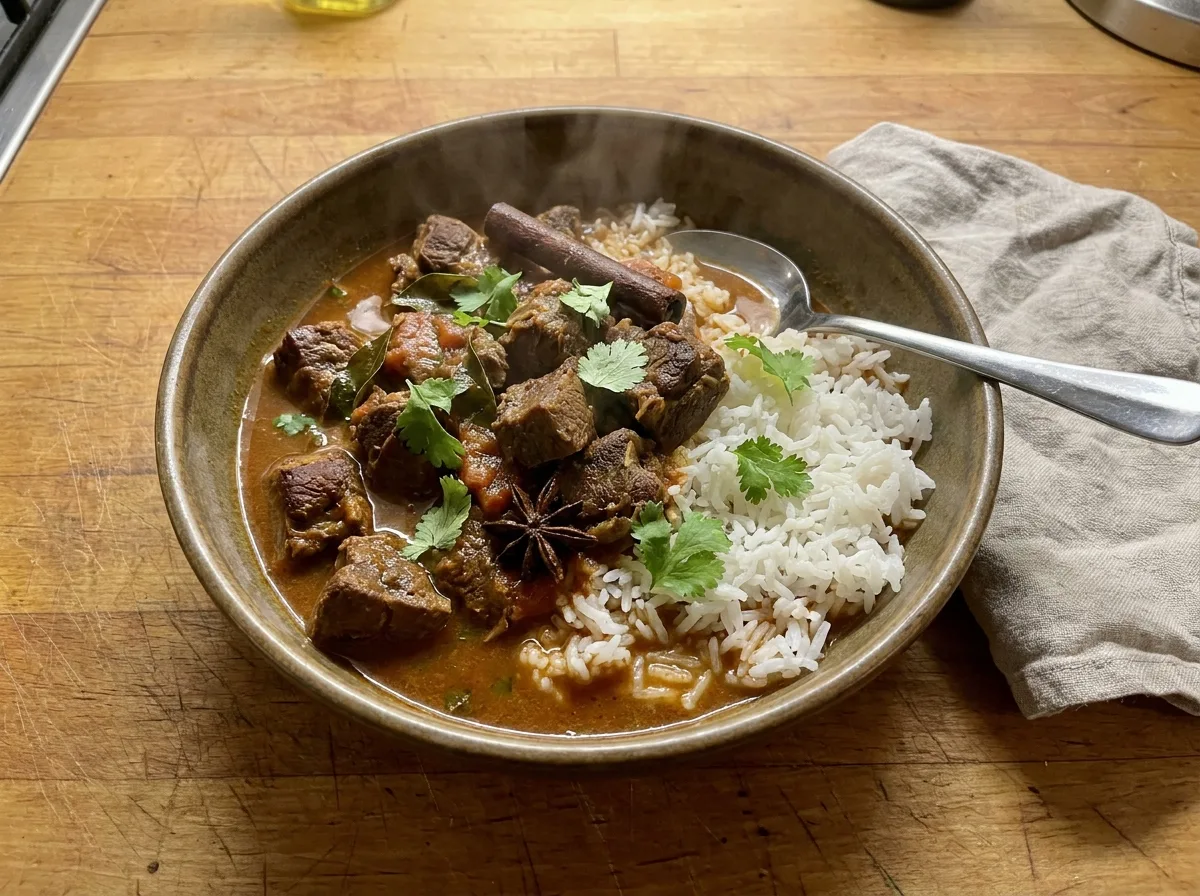
Gordon Ramsay’s Goat Curry
Course: DinnersCuisine: CaribbeanDifficulty: Medium4
servings25
minutes4
hours500
kcal4 hr 25 min
His Caribbean-inspired goat curry from Cooking for Friends: a blitzed four-chilli paste, whole spices, and chicken stock instead of coconut milk, finished uncovered so the sauce thickens properly.
Ingredients
- For the chilli paste:
1 small onion, roughly chopped
4 garlic cloves, peeled
4 small fresh hot chillies, deseeded and roughly chopped
4cm (1½ in) piece of fresh ginger, chopped
⅛ tsp fine sea salt
3 tbsp groundnut oil (US: peanut oil)
- For the curry:
1kg (2¼ lb) boneless goat shoulder or other braising cut, cut into bite-size chunks
Sea salt and freshly ground black pepper
3 tbsp olive oil
½ tsp ground turmeric
½ tsp ground cumin or cumin seeds
½ tsp mustard seeds
1 cinnamon stick
2 star anise
4 cardamom pods, lightly crushed
1 tsp brown sugar
Few curry leaves (optional)
1 x 400g (14 oz) tin crushed tomatoes
420ml (1¾ cups) chicken stock or water
Handful of coriander leaves, to garnish
Directions
- Blitz the paste: Put the onion, garlic, chillies, ginger, salt and groundnut oil in a small food processor and blitz to a fine paste, stopping to scrape down the sides two or three times so it’s evenly ground. Set aside.
- Brown the goat: Cut the goat into small bite-size chunks and season with salt and pepper. Heat half the olive oil in a wide saucepan and fry the meat in two batches until golden brown all over, setting each batch aside on a plate.
- Fry the paste: Tip the chilli paste into the pan and stir over medium heat for 2 to 3 minutes until fragrant.
- Add the spices: Add the turmeric, cumin, mustard seeds, cinnamon, star anise, cardamom, sugar and curry leaves if using, and stir for 1 minute.
- Simmer low and slow: Return the goat with the tomatoes and stock, stir well, reduce the heat to its lowest setting, cover, and cook gently for 3 to 4 hours until the meat is just tender.
- Skim and reduce: Remove the lid, skim the excess oil off the top, and simmer uncovered for 20 to 30 minutes more until the curry has reduced and thickened slightly and the meat is very tender.
- Serve: Taste, adjust the seasoning, and serve over plain steamed rice, garnished with coriander.
Notes
- Goat releases a fair amount of fat over 4 hours. Don’t skip the skim before reducing, it’s the difference between a clean sauce and a greasy one.
FAQs
Why is there no coconut milk in this goat curry?
That swap I mentioned up top is the recipe’s whole identity. Ramsay built it Caribbean rather than South Asian, and he’s explicit in the book that chicken stock or water takes the place of the yoghurt and coconut milk that anchor most curries, keeping it light and sharp rather than rich.
It also means the goat’s own flavour leads, which is the point of paying for goat in the first place. If you want a creamy curry night instead, his coconut-rich massaman curry goes the other way entirely.
What cut of goat should I buy, and where?
Boneless shoulder is what the book calls for, cut into bite-size chunks, though he notes any braising cut works. UK supermarkets rarely stock goat, so your real options are halal butchers, Caribbean grocers, or online farm suppliers, and shoulder usually runs cheaper than leg.
If your butcher only has bone-in, take it, because the bones add body to the sauce. Just extend the simmer towards the full 4 hours and pull the meat off the bones before the final reduce.
Did Gordon Ramsay cook goat curry in India?
He did, and it’s a completely different dish from this one. In Rajasthan, a local prince taught him a slow-cooked goat dish for a desert dinner party, the leg massaged with a masala of chilli, turmeric and a spice ground from a wild local melon that tenderises the meat. The whole thing then gets wrapped in chapatis, banana leaves and wet sackcloth, and watching it come together, Ramsay called it “almost like a Wellington, like a goat Wellington.”
The prince said the recipe was 300 years old, passed down from a family chef. The curry on this page is the one Ramsay actually published, in Cooking for Friends, but the Rajasthan lesson is worth watching on his channel.
Can I make it with lamb instead of goat?
Yes, and the book itself allows the flexibility since it calls for goat shoulder “or other braising cut.” Lamb shoulder is the natural swap, though it’s fattier than goat, so be extra thorough at the skim stage, and it can turn tender closer to the 3-hour mark.
The flavour shifts sweeter and richer with lamb, losing a little of the gaminess that makes goat curry taste like goat curry. My lamb curry recipe is the better home if lamb was your plan from the start.
Why does goat curry take 3 to 4 hours?
That leanness is exactly why the long cook matters. Goat is hard-working muscle, so its connective tissue needs barely-simmering heat to melt into the sauce, and rushing it at a boil just tightens the meat. The pan stays covered on the lowest setting the whole time.
Then comes the step most recipes skip entirely: uncover, skim off the fat that’s risen, and simmer 20 to 30 minutes more. That reduce is where the sauce thickens and concentrates, and it’s written into his method, not optional. The same low-and-slow logic drives his spicy beef curry, which uses a yoghurt marinade instead of a paste.
Does goat curry keep well?
Better than well, it’s one of those curries that improves overnight as the spices settle into the meat. Three days in the fridge, two months in the freezer, and because there’s no coconut milk or yoghurt in the sauce, it reheats without any risk of splitting.
Reheat it gently with a splash of water since the sauce thickens in the fridge. And if you’re working out where goat sits among all his curries, my roundup of his curry recipes ranks every one of them by heat and effort.