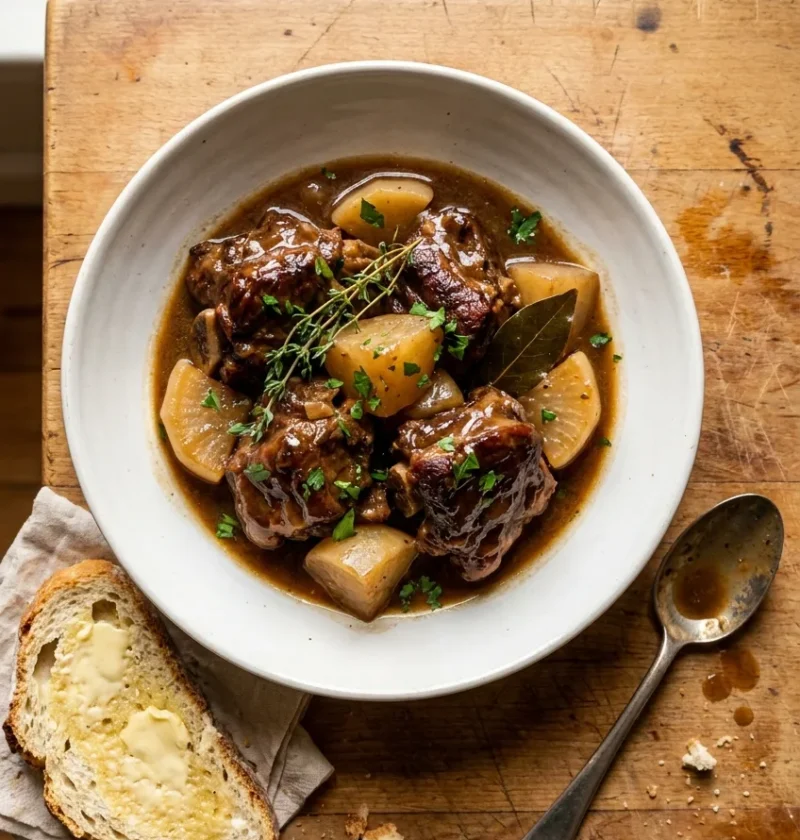
Gordon Ramsay’s lamb stew recipe is neck of lamb fillet coated in seasoned flour, browned in batches, then braised with turnips, onion, sherry, thyme and bay leaf for 2 to 3 hours until the meat falls apart. Simple, cheap, and the kitchen smells incredible.
The recipe is from Great British Pub Food, where Ramsay calls neck of lamb “an economical cut well suited to slow braising” and the dish “wonderfully comforting for wintry days.” Most lamb stew recipes use shoulder, but neck has more connective tissue which melts into gelatin during the long simmer.
The sherry deglaze after the vegetables is the step most people skip, and it makes the biggest difference. It lifts all the browned bits from the pan and builds a sticky base that the stock turns into a rich, dark gravy over the next 2 hours.
Cooked this recipe? Send a photo or tell me what you changed at fans@gordonramsayrecipes.uk and I’ll share your experience live on this page.
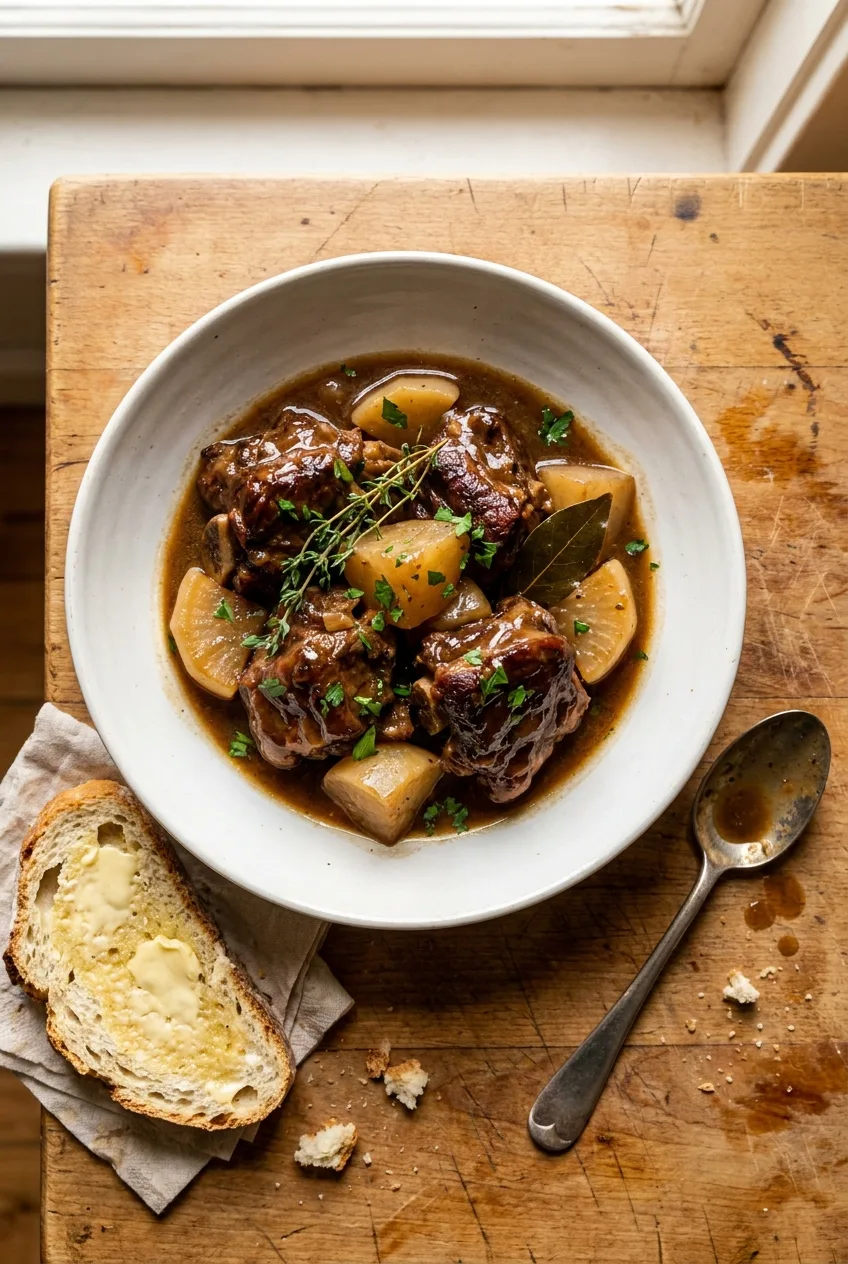
Gordon Ramsay’s Lamb Stew
Course: DinnerCuisine: BritishDifficulty: Easy4
servings15
minutes2
hours45
minutes719
kcal180
minutesBraised neck of lamb with turnips from Gordon Ramsay’s Great British Pub Food cookbook. Flour-coated lamb browned in batches, deglazed with sherry, then slow-simmered for 2 to 3 hours with thyme and bay leaf. Approximately 719 kcal per serving.
Ingredients
1kg (2.2 lb) neck of lamb fillet, cut into bite-sized pieces
3 tbsp plain flour
Sea salt and freshly ground black pepper
2 to 3 tbsp olive oil
1 large onion, peeled and chopped
600g (1 lb 5 oz) turnips, peeled and cut into small chunks
Splash of sherry
Few thyme sprigs
1 bay leaf
1 litre (34 fl oz) lamb stock
Small handful of flat-leaf parsley, chopped
Directions
- Coat the lamb: Cut the neck fillet into bite-sized pieces. Toss in the flour seasoned with salt and pepper until evenly coated.
- Brown in batches: Heat a thin layer of olive oil in a large heavy-based pan until hot. Fry the lamb in several batches, about 2 minutes per side, until evenly browned. Remove each batch to a plate.
- Fry the vegetables: Add a little more oil. Tip in the onion and turnips with a pinch of seasoning. Fry over a high heat for 4 to 6 minutes until they take on a little colour.
- Deglaze with sherry: Pour in a splash of sherry and let it bubble down to a sticky glaze, scraping the bottom of the pan with a wooden spoon.
- Build the stew: Return the lamb to the pan. Add the thyme sprigs, bay leaf and stock to cover. Bring to a simmer and skim off any froth or scum from the surface.
- Slow braise: Partially cover with a lid and simmer gently for 2 to 3 hours until the lamb is completely tender.
- Thicken if needed: If the sauce is too thin, strain the liquid into a wide saucepan and boil until reduced and thickened to a light coating consistency.
- Finish: Return the lamb and vegetables to the sauce. Reheat for a couple of minutes. Season well to taste and scatter with chopped parsley.
FAQs
Why does Ramsay use neck instead of shoulder?
Neck of lamb is cheaper than shoulder and has more connective tissue, which is exactly what you want in a 3-hour braise. That tissue breaks down into gelatin during cooking, which thickens the sauce naturally and makes the meat so tender it falls apart with a spoon.
Ramsay calls it “an economical cut well suited to slow braising” in Great British Pub Food. Shoulder works if your butcher doesn’t have neck, but you’ll lose some of that sticky, rich body in the sauce because shoulder has less collagen to give.
Why turnips and not potatoes or carrots?
Ramsay uses 600g of turnips as the only vegetable alongside onion. Turnips hold their shape during a 3-hour braise better than potatoes, which would collapse into mush, and they absorb the lamb stock without turning the sauce starchy.
He does offer a spring variation in the book: swap the turnips for baby turnips, young carrots, fresh peas and broad beans added towards the end of cooking. But the base recipe is turnips only, which gives the stew a clean, earthy flavour that doesn’t compete with the lamb.
Can you make this in a slow cooker?
Brown the lamb and vegetables on the hob first, then transfer everything to a slow cooker with the stock. Cook on low for 6 to 8 hours or high for 4 to 5 hours. The sherry deglaze still happens in the pan before you transfer.
The sauce will be thinner in a slow cooker because there’s less evaporation. Pour it into a saucepan at the end and boil it down for 10 minutes to get the thick coating consistency Ramsay describes. Skipping this step is why most slow cooker stews taste watery.
What should you serve with lamb stew?
Ramsay doesn’t specify sides in the book, but this is pub food so keep it simple. His mashed potatoes are the obvious match because they soak up the gravy, and his soda bread is the Irish pairing if you want something to tear and dip.
A stew this rich doesn’t need much alongside it. One starch and the bread is plenty. Save the salads and greens for lighter dishes.
Can you add dumplings?
Ramsay doesn’t include dumplings in this recipe, but they work well on top during the last 30 minutes of cooking. Mix 125g self-raising flour with 60g shredded suet, a pinch of salt and enough cold water to form a soft dough. Drop spoonfuls onto the simmering stew, cover tightly and steam for 25 to 30 minutes.
If you want another approach to lamb mince instead of a stew, his lamb curry from Quick and Delicious uses the same protein with a completely different spice profile and cooks in 30 minutes instead of 3 hours.