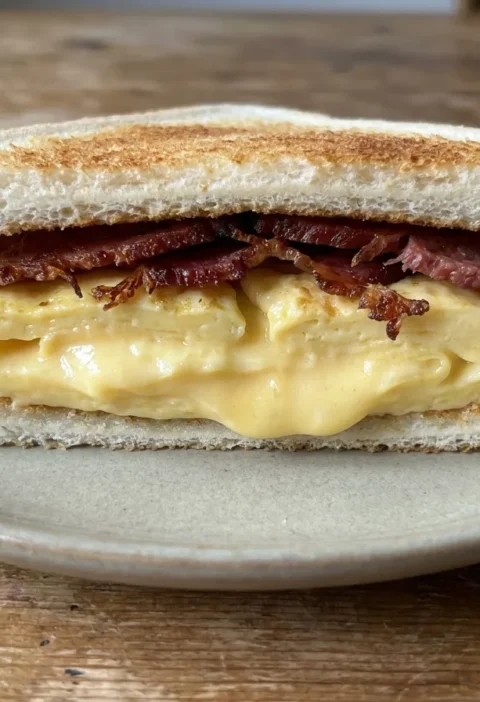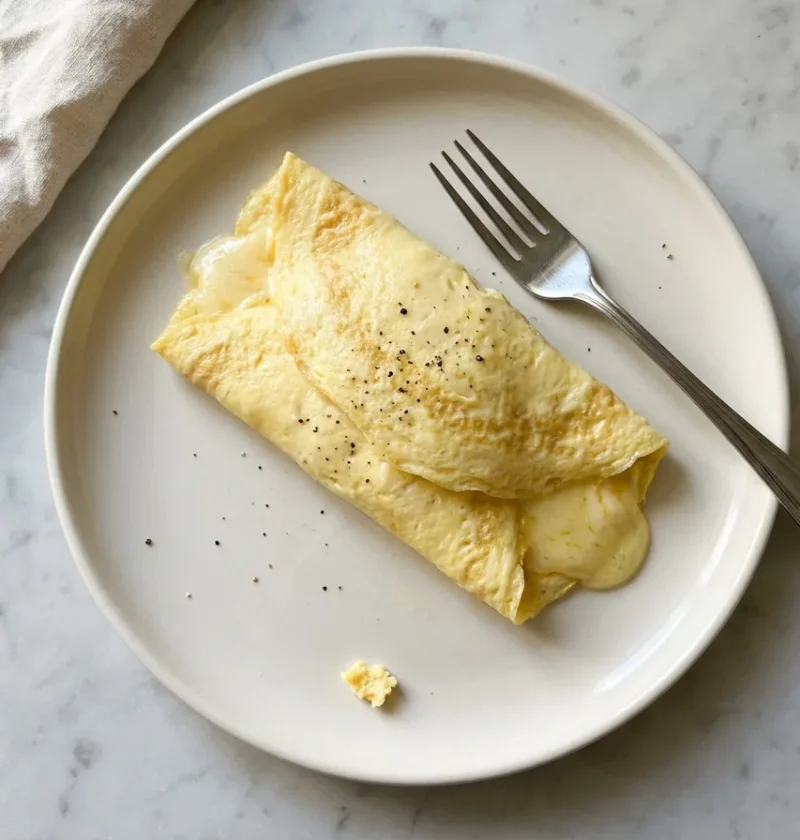
Gordon Ramsay’s omelette is a soft, creamy three-egg fold with butter, olive oil and Gruyère, ready in under 5 minutes. The outside is pale golden while the centre stays rich and barely set. I make this at least twice a week because nothing else comes close.
In Gordon Ramsay’s Secrets, he gives one strict rule: “don’t season the eggs before you cook them.” He repeats this in four Scrambled episodes, so it is not a throwaway tip. That single change made my omelettes lighter than anything before.
The real trick is heat control and knowing when to stop. Stir with a fork until three-quarters set, then leave the eggs alone for 30 seconds. That short rest firms the base without drying the centre, which is the difference between baveuse and rubber.
Cooked this recipe? Send a photo or tell me what you changed at fans@gordonramsayrecipes.uk and I’ll share your experience live on this page.
Gordon Ramsay’s Perfect Cheese Omelette
Course: BreakfastCuisine: British, FrenchDifficulty: Medium1
2
minutes3
minutes642
kcal5
minutesA classic French-style cheese omelette from Gordon Ramsay’s Secrets cookbook. Three eggs, Gruyère and the professional baveuse technique for a creamy centre that melts the cheese from residual heat alone. Around £2.85 per serving with Gruyère or £2.16 with mature Cheddar.
Ingredients
3 medium free-range eggs
1 tbsp olive oil
15g (½ oz) butter
50g (1¾ oz) Gruyère or mature Cheddar, grated
Sea salt
Freshly ground black pepper
Directions
- Beat the eggs: Crack 3 eggs into a bowl and beat until evenly blended. Do not add salt or pepper yet.
- Heat the pan: Place a 20-21cm (8 inch) nonstick frying pan over a medium-high heat. Add the olive oil, then slip in the butter and swirl as it foams and melts.
- Cook the eggs: Pour in the beaten eggs and swirl round with a fork, shaking the pan frequently. Work the eggs to an even, light, creamy texture.
- Set the base: When three-quarters set, stop stirring and leave undisturbed for 30 seconds until the base is just set. Loosen the edges with a palette knife.
- Loosen the omelette: Hold the pan just off the heat, tilt away from you and bang the opposite side on the work surface a few times to shake it loose.
- Season and add cheese: Season with salt and pepper now, then scatter the grated cheese over the omelette.
- Fold and serve: Flip the far third into the centre, then slide onto a warmed plate so it folds into a neat roll. Shape with a clean tea towel if needed. Serve at once.
FAQs
Why does Gordon Ramsay not season his omelette before cooking?
Salt breaks down the albumen in egg whites, which thins the mixture and kills that light, airy body you want. Ramsay explains the science in Secrets and repeats the same rule across four Scrambled episodes filmed in Portugal, Maine, Morocco and Norway.
Season only when the eggs are three-quarters set, just before the cheese goes on. By that point the protein structure has already formed, so the salt flavours the surface without weakening the omelette underneath.
What cheese does Gordon Ramsay use in his omelette?
In Secrets, he calls for 50g (1¾ oz) of grated Gruyère or mature Cheddar. The cheese goes on after seasoning, then you fold straight away so the residual heat from that creamy centre melts it without any extra cooking.
His other cookbooks use different options though. The open omelette variation in Secrets uses goat’s cheese with spinach and Parmesan, while the Ramsay in 10 version pairs shiitake mushrooms with mozzarella. Gruyère gives the strongest flavour, so I always start there.
What does baveuse mean?
Baveuse is the French kitchen term for an omelette centre that holds together but stays soft and creamy. Ramsay uses it in both Secrets and Ultimate Cookery Course, so the creamy centre is not optional. If it is firm and rubbery, you have overcooked it.
I aim for a centre that wobbles when I shake the pan. Pull the eggs off while they look slightly underdone because residual heat keeps cooking them through the fold. That same thinking applies to Ramsay’s poached eggs too, where seconds matter just as much.
What is the best pan for a Gordon Ramsay omelette?
Ramsay specifies a 20-21cm (8 inch) nonstick frying pan with rounded sides in Secrets. The rounded edges let the omelette curve instead of catching on a sharp rim, which makes folding and sliding much easier.
He also bangs the pan on the worktop to shake the omelette loose before folding. A heavy-duty pan that takes a metal fork is ideal, though a wooden fork works if your coating is delicate. I use a 20cm Tefal that cost about £18 and has lasted two years.
What fillings does Gordon Ramsay put in his omelettes?
His cookbooks have six different omelettes beyond this cheese version. Secrets includes goat’s cheese and spinach finished under the grill, plus variations with caramelised onion and anchovy or cherry tomatoes. Bread Street Kitchen has a wild mushroom and Gruyère version served with dressed rocket salad.
On his Scrambled series, he goes bigger with chorizo in Portugal, lobster in Maine and wild mushrooms in Morocco. The constant is cooking fillings separately so the eggs stay light. For another quick morning option, try Ramsay’s eggy bread or his croissant French toast.
How does Gordon Ramsay’s omelette compare to Jacques Pépin’s?
Pépin’s classic French omelette has zero colour and gets rolled cigar-tight in one smooth motion. Ramsay allows “pale golden” on the outside and folds in thirds, which is more forgiving because you do not need that one perfect roll.
Both agree the centre must stay creamy though. Whether you call it baveuse or barely set, the rule is the same: if the middle is dry, you have gone too far. That shared principle across two very different techniques tells you how important it is.