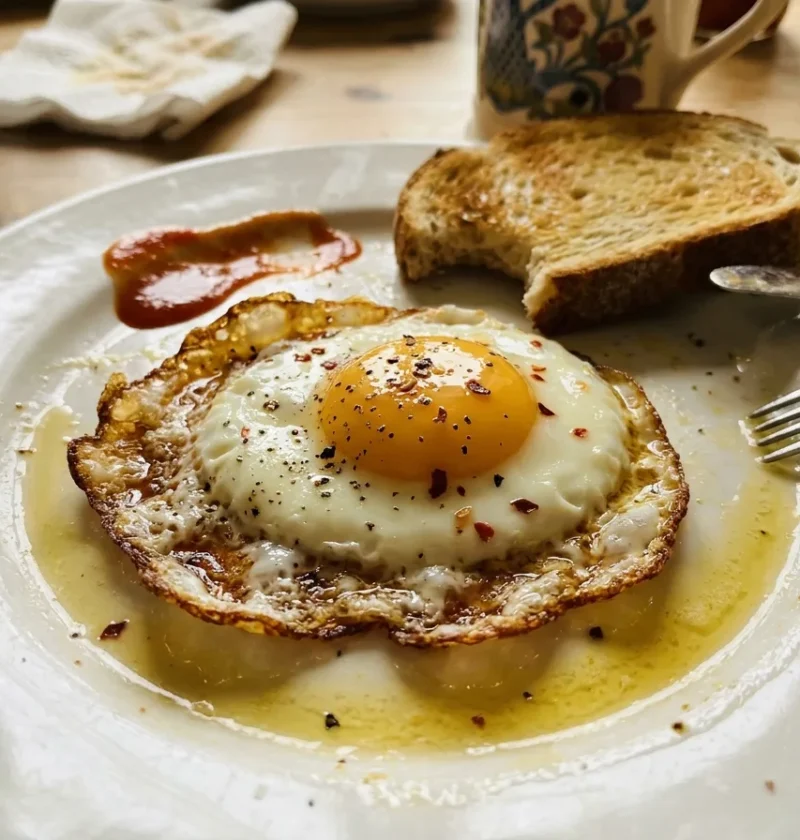
Gordon Ramsay’s fried egg is cooked in oil and butter, basted until the whites are crispy and the yolk stays runny. The technique comes from Secrets and takes about 3 minutes for a hen’s egg.
In his TikTok, Ramsay calls frying an egg “quite an art.” He turns off the gas before the egg is fully done and lets the residual heat in the pan finish the whites. This avoids the most common mistake of leaving it on too long.
The key detail from Secrets that nobody mentions is tilting the pan to centre the yolk as soon as the egg goes in. It sets in position after about 30 seconds, and from that point the yolk stays perfectly in the middle rather than drifting to one side.
Cooked this recipe? Send a photo or tell me what you changed at fans@gordonramsayrecipes.uk and I’ll share your experience live on this page.
Gordon Ramsay’s Perfect Fried Egg
Course: BreakfastCuisine: BritishDifficulty: Easy1
1
minute3
minutes150
kcal4
minutesThe technique from Gordon Ramsay’s Secrets, refined across three videos over 15 years. Oil for heat control, butter for flavour, and a clockwise roll to baste the whites without flipping. He has two different approaches: crispy blistered edges for hen eggs, and a gentle confit style for duck eggs.
Ingredients
1 large free-range egg
1 tsp olive oil
15g butter, cut into thin flakes
Sea salt and freshly ground black pepper
Pinch of chilli flakes (optional)
Directions
- Heat the pan: Place a non-stick frying pan over a medium heat. Add the oil and let it get hot, then add a small knob of the butter.
- Crack the egg: Crack the egg on a flat surface, not the edge of the pan. Open it gently and drop it into the hot butter.
- Centre the yolk: Tilt the pan to move the yolk to the centre. It will set in position after about 30 seconds.
- Lower the heat and baste: Lower the heat. Slip the remaining butter flakes down the side of the pan. As the butter foams, roll the pan clockwise so the foaming butter floods the egg whites and cooks them evenly.
- Season and finish: Season with salt, pepper and chilli flakes if using. Cook for about 3 minutes total until the whites are set and the edges are crispy but the yolk is still soft and runny. Turn off the heat and let the residual warmth finish the cooking for a few seconds.
- Serve: Loosen the edge with a small palette knife or spatula and slide onto a warm plate. Serve immediately.
FAQs
Why does Ramsay use both oil and butter?
Oil handles higher heat without burning, while butter adds flavour and creates the foaming baste that cooks the whites. In UCC, Ramsay explains that adding oil to the butter raises the burning point. You get better colour on the egg without compromising the buttery flavour.
The HexClad video shows this clearly. He starts with a tiny drop of oil, adds a knob of butter, then lets the butter melt and foam before the egg goes in. Without the oil, the butter would brown too fast and taste bitter.
Why roll the pan clockwise instead of spooning?
Rolling creates a wave of foaming butter that washes over the entire white evenly, including the tricky raw patch around the yolk. Spooning targets one spot at a time and can break a delicate yolk. In the TikTok, Ramsay says rolling “almost floods the centre of that egg with that foaming butter.”
This is how restaurants cook fried eggs without flipping them. The butter does the work of cooking the top surface while the direct heat crisps the bottom. You get set whites and a runny yolk without ever turning the egg over.
What is the difference between frying hen eggs and duck eggs?
In Secrets, Ramsay describes two opposite techniques. For hen eggs he wants crispy edges: “I love the ends nice and crispy” from the TikTok, with what the HexClad video calls “beautiful” blistering. For duck eggs, the frying “must be gentle, almost as a confit technique, so the egg white sets without crisping.”
Duck eggs are 25% larger with a richer yolk, so they need 4 minutes instead of 3. He also notes that “the whites have a superior flavour” to hen eggs. His scrambled eggs use the same eggs but a completely different cold-pan technique.
Why crack the egg on a flat surface?
Cracking on the edge of a pan pushes shell fragments into the egg. A flat surface creates a clean break across the middle of the shell, so the two halves pull apart without pushing shards inward. Ramsay demonstrates this in both the HexClad and TikTok videos.
A sharp edge can puncture the yolk membrane before the egg even reaches the pan. If the yolk breaks during cracking, you have lost your chance at a runny centre. His omelette uses the same flat surface method, though there the eggs get whisked after cracking.
What does Gordon Ramsay put on his fried eggs?
In the HexClad video, he uses just chilli flakes for a simple finish. In the TikTok, he goes further with Sriracha and Worcestershire sauce, calling them “eggs to die for.” His boiled eggs take the opposite approach with salty anchovy butter soldiers.
Across the cookbooks, he serves fried eggs on leek and Gruyère rösti, sweet potato rösti, and fried rice. The technique stays the same but what goes underneath changes every time. For a completely different egg technique, try his poached eggs with hollandaise.