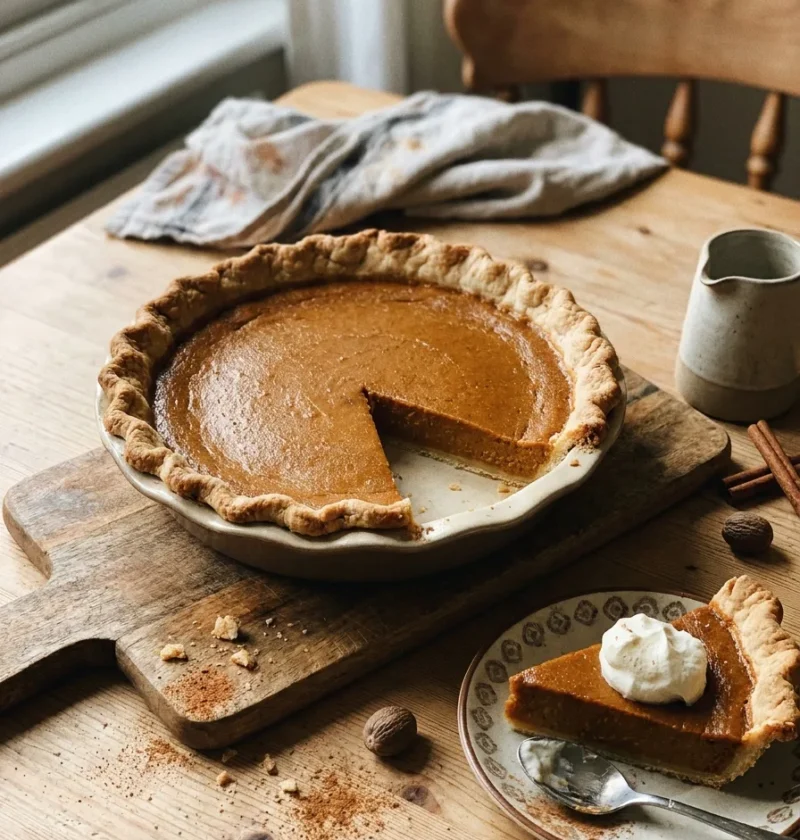
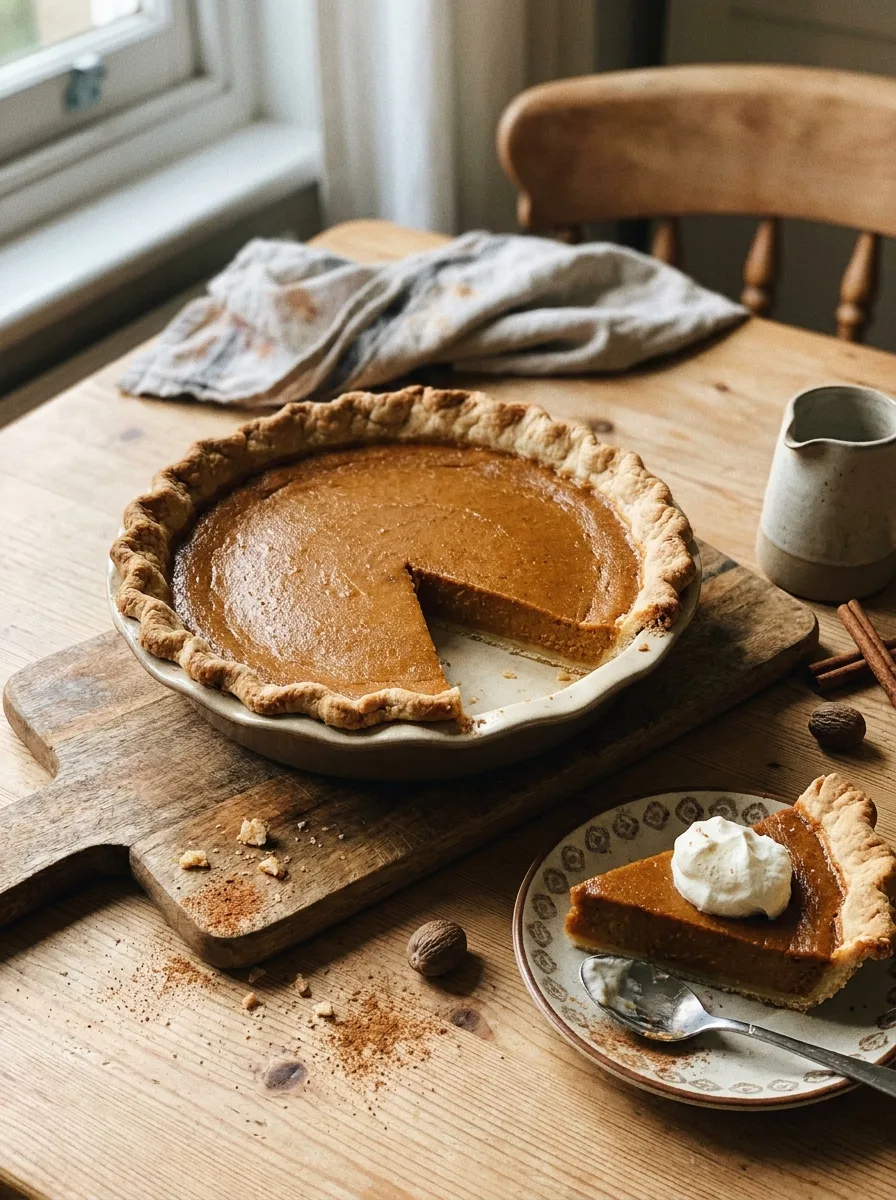
Gordon Ramsay’s pumpkin pie is silky and deeply spiced, made with pumpkin, double cream, eggs and warm spice in a crisp shortcrust shell, ready in about an hour and a half. The filling sets like a custard, smooth and dense, never grainy.
Gordon hasn’t put a sweet pumpkin pie in a book, so I built this from three of his own recipes: the blind-baked, egg-sealed pastry case from his pumpkin tartlets, the roasted puree from his pumpkin soup, and the warm spicing from his pumpkin cheesecake. Every part is his method, brought together into the pie.
The make-or-break is the filling. Gordon prefers roasted pumpkin to boiled, and for his cheesecake he goes further: freeze the puree, then thaw it so “the pulp separates out and you can discard the watery fluid leaving full-flavoured pumpkin flesh.” That extra step is why his sets thick while most pumpkin pies turn out wet.
Cooked this recipe? Send a photo or tell me what you changed at fans@gordonramsayrecipes.uk and I’ll share your experience live on this page.
Gordon Ramsay Pumpkin Pie
Course: DessertCuisine: BritishDifficulty: Medium8
servings30
minutes50
minutes360
kcalBuilt from Gordon Ramsay’s recipes: the egg-sealed pastry case from his pumpkin tartlets, his roasted-and-drained puree method, and the warm spicing from his pumpkin cheesecake. A silky, deeply set autumn pie. Serves 8.
Ingredients
- For the pastry:
300g sweet shortcrust pastry
1 egg white, lightly beaten
Plain flour, to dust
- For the filling:
400g pumpkin puree (good tinned, or roasted from about 700g fresh pumpkin)
150g soft brown sugar
200ml double cream
2 large eggs, plus 1 yolk
1 tbsp cornflour
1 1/2 tsp ground cinnamon
1/2 tsp ground ginger
1/4 tsp grated nutmeg
Pinch of ground cloves
1 tsp vanilla extract
Directions
- The puree: For the easiest reliable route, use good tinned pumpkin. To make Gordon’s from scratch, halve a 700g piece of pumpkin, scoop out the seeds, drizzle with oil and roast at 180C (160C fan, 350F) cut-side down for about an hour until soft. Scoop out the flesh and blend until completely smooth, then drain off any watery liquid so the filling sets firm.
- Blind bake: Roll the pastry and line a 23cm tart tin. Line with foil and baking beans, bake at 190C (170C fan, 375F) for 15 minutes. Lift out the foil and beans, prick the base all over with a fork, and bake 5 minutes more until just starting to colour. Brush the base with egg white and give it 2 final minutes to seal. Drop the oven to 160C (140C fan, 325F).
- Mix the filling: Whisk the puree with the brown sugar, cream, eggs, yolk, cornflour, spices and vanilla until smooth, taking care not to whip in air.
- Bake: Pour into the warm shell. Bake 40 to 50 minutes, until set at the edges with a slight wobble in the middle.
- Cool slowly: Turn the oven off and leave the pie inside to cool, then chill. It carries on setting as it cools, so don’t rush it.
- Serve: Serve at room temperature or cold, with lightly whipped cream.
FAQs
Should I use fresh or tinned pumpkin?
Both work, and I’ll be honest about the trade-off. Good tinned pumpkin is the reliable choice for a dessert, it’s smooth and consistent, and it’s what gives you that silky pie every time without any fuss.
Gordon’s roasted puree tastes deeper, but fresh pumpkin can turn out a little grainy or savoury in a sweet pie if it isn’t handled right. So if you go fresh, follow his method properly: roast it, blend it really smooth, and drain off the watery liquid. That draining is the bit that makes fresh work.
How do I stop the pastry going soggy under the wet filling?
Two steps. Blind bake the case fully, foil and beans first, then fork-prick the base and bake a few more minutes so it dries and colours, not just sets pale.
Then seal it the way Gordon does in his pumpkin tartlets: brush the hot base with beaten egg white and give it two minutes in the oven. The white forms a thin waterproof layer, so the custard can’t soak in. It’s a small step the rushed recipes skip, and it’s the difference between a crisp base and a wet one.
What spices does Ramsay use with pumpkin?
For sweet pumpkin he keeps to warm baking spices, cinnamon leading, with ginger, nutmeg and just a little clove, plus vanilla to round it. It’s the same direction as his pumpkin cheesecake, which leans on vanilla and gentle spice rather than a heavy shop blend.
Go easy on the clove, it’s the one that bullies everything else. If all you have is mixed spice, a rounded teaspoon works, but keep the cinnamon on top of that. One quiet trick from the baking world worth trying: a tiny pinch of black pepper in the filling. You won’t taste pepper, it just lifts the spice.
Why bake it low and cool it slowly?
A custard filling cracks if it bakes too hot or cools too fast. The edges set while the centre is still loose, and the tension splits the top. So it goes in at a low heat and comes out with a slight wobble, which is exactly right, not underdone.
Gordon cools his baked pumpkin cheesecake the same way, slowly, off the heat, letting it finish setting. Turn the oven off, leave the pie inside to come down gently, then chill. You get clean slices instead of a sunken, cracked middle.
Can I make it ahead?
Yes, and it’s better for it. The pie needs a few hours to set, so making it a day ahead is ideal. Keep it covered in the fridge for up to three days, and serve cold or at room temperature.
The filling can even be mixed the night before, the spices and brown sugar settle into the pumpkin and taste rounder for it. If you want another make-ahead autumn pud, his apple pie reheats well and his lemon meringue pie holds in the fridge once set.