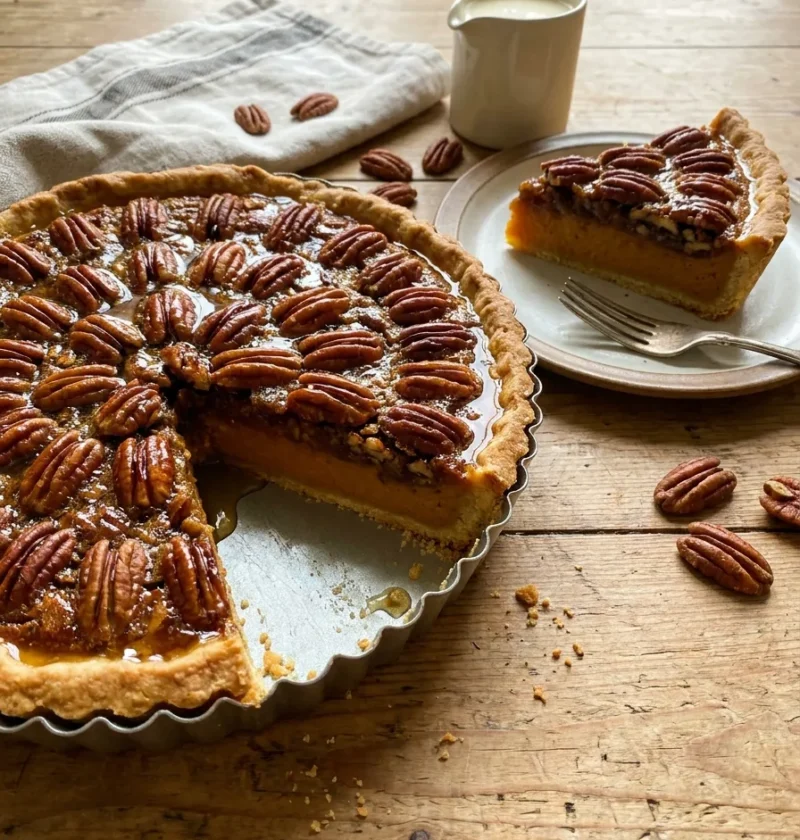
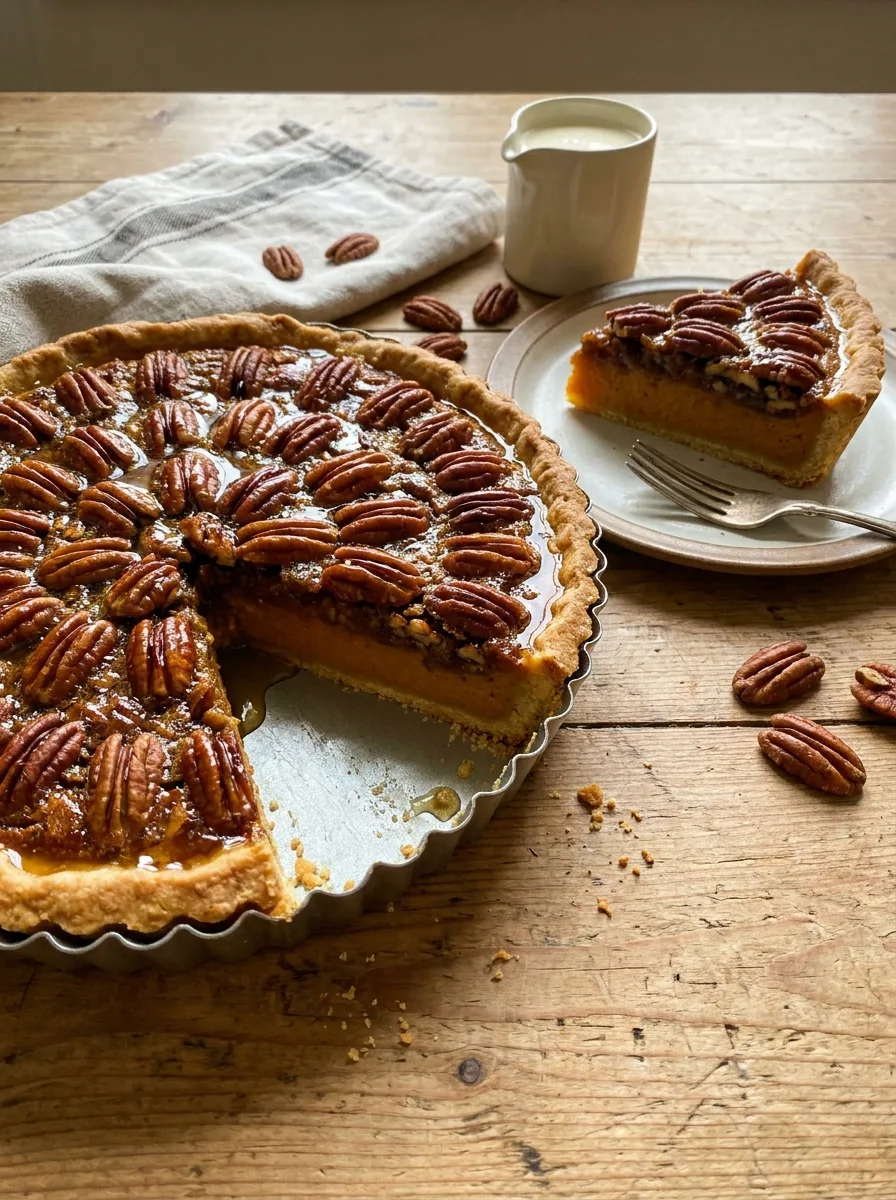
Gordon Ramsay’s pecan pie is a two-layer thing, spiced sweet potato on the bottom and a gooey golden-syrup pecan topping baked on top, all inside a cinnamon shortcrust. It’s from his Make It Easy book, filed under “cooking for a crowd,” and it serves 10 with room to spare.
What makes it his and not anybody else’s is the sweet potato layer. Most pecan pies are just pecans floating in corn syrup, one note, tooth-achingly sweet. Gordon puts a spiced sweet-potato custard underneath so you get something creamy and savoury-sweet before the sticky pecan hit on top. Two textures, two temperatures of sweetness, in the same bite.
The crust is worth paying attention to. He works ground cinnamon into the shortcrust itself, not sprinkled on after, so the warm spice bakes through the pastry and meets both layers from underneath. It’s a small thing in the ingredient list but it changes the whole pie.
Cooked this recipe? Send a photo or tell me what you changed at fans@gordonramsayrecipes.uk and I’ll share your experience live on this page.
Gordon Ramsay Pecan Pie
Course: DessertCuisine: British, AmericanDifficulty: Medium10
servings30
minutes2
hours15
minutes530
kcalFrom Gordon Ramsay’s Make It Easy: a spiced sweet potato filling under a gooey golden-syrup pecan topping in a homemade cinnamon shortcrust. Two layers, two textures, one pie that feeds 10.
Ingredients
- For the cinnamon pastry:
300g plain flour
Pinch of salt
1/2 tsp ground cinnamon
15g caster sugar
150g cold unsalted butter, diced
1 small egg yolk
1-2 tsp cold water
- For the sweet potato filling:
2 sweet potatoes, scrubbed
50g light brown sugar
50g caster sugar
1/2 egg, beaten
25ml double cream
25g soft unsalted butter
1 tsp vanilla extract
1/4 tsp ground cinnamon
Pinch of mixed spice
Pinch of freshly grated nutmeg
- For the pecan topping:
150g brown sugar
75ml golden syrup
1 1/2 eggs, beaten
30g unsalted butter
2 tsp vanilla extract
Pinch of ground cinnamon
250g pecan halves
Directions
- Bake the sweet potatoes: Heat the oven to 190C (170C fan, Gas 5). Bake the sweet potatoes whole for 30 to 40 minutes until tender when pierced with a knife.
- Make the pastry: Pulse the flour, salt, cinnamon, sugar and butter in a food processor until it looks like breadcrumbs. Add the egg yolk and water, pulse to a smooth dough, wrap in cling film and rest in the fridge for 30 minutes.
- Blind bake: Roll the pastry as thin as you can and line a 20cm, 5cm-deep flan tin, pressing into the edges and leaving the overhang. Line with greaseproof paper and dried beans, rest in the fridge 20 minutes, then bake 10 minutes. Cool. Drop the oven to 160C (140C fan, Gas 3).
- Make the filling: Halve the sweet potatoes and scoop the flesh into a food processor. Add both sugars, the egg, cream, butter, vanilla and spices. Process until just smooth.
- Assemble: Trim the pastry level with a sharp knife. Pour the sweet potato filling into the case. For the topping, whisk the brown sugar, golden syrup, eggs, butter, vanilla and cinnamon until smooth with an electric whisk. Spoon evenly over the filling.
- Top and bake: Arrange the pecan halves on top, pressing them down slightly. Bake for 1 hour 45 minutes, until a knife in the middle comes out clean. Cool completely in the tin.
- Serve: Cut into small wedges and serve at room temperature, with pouring cream.
FAQs
Why does Gordon put sweet potato under the pecans?
Because a straight pecan pie is a one-note sugar hit. The sweet potato layer underneath is spiced, creamy and just barely savoury-sweet, so it pulls the sweetness back before the sticky pecan topping takes over. You get two distinct textures in the same slice: soft custard, then fudgy crunch.
It also solves the common problem of a pecan pie that’s too rich to finish. The sweet potato absorbs some of the syrup from above and gives the filling body, so you can eat a proper wedge without it sitting like a brick. Gordon files the recipe under “cooking for a crowd,” and this is why, it feeds 10 without anyone pushing their plate away.
What’s different about his cinnamon shortcrust?
He works ground cinnamon and a little caster sugar straight into the flour before the butter goes in. The spice bakes into the pastry itself rather than sitting on top, so every layer of the pie carries it.
The pastry method matters too. He processes the butter and flour only until it looks like breadcrumbs, adds the yolk and barely any water, and rests it 30 minutes before rolling. Overwork it and the cinnamon makes the gluten tighten faster than a plain dough, so the crust goes tough. Keep it cold, keep it brief.
Did Gordon really serve a version of this to a world leader?
He did. In his earlier book he describes a treacle tart he calls “a cross between a bakewell tart and an American pecan pie,” and he writes that he served it to President Putin when he visited Prime Minister Blair in spring 2000. Putin insisted on a photo with him afterwards.
That version swaps the sweet potato for a golden-syrup, ground-almond and breadcrumb filling with a thin layer of raspberry jam under it. If you want to try his bakewell-pecan variation: spread warmed jam on the blind-baked case, mix 300g golden syrup with 85g breadcrumbs, 60g ground almonds, 1 egg and 150ml cream, pour over and bake at 180C then 150C for 30 to 35 minutes.
Why golden syrup instead of corn syrup?
Corn syrup is the American default, but it’s hard to find in UK shops and it can taste flatly sweet. Golden syrup is the British equivalent and it’s what Gordon uses. It brings a faint caramel, toffee note that corn syrup doesn’t have.
It does the same job of keeping the topping smooth and glossy rather than grainy, so the set stays soft and fudgy. If you can only get corn syrup, swap it one for one, you’ll just lose a little of that caramel depth.
How long does pecan pie keep?
Better than most pies. Covered at room temperature it holds two days easily, and in the fridge up to five. The flavour actually deepens overnight as the golden syrup settles into the nuts and the spice mellows through the sweet potato layer.
Bring fridge-cold slices to room temperature before serving so the filling softens, or warm them briefly. It freezes well for up to three months, tightly wrapped. If you want another make-ahead pudding for a crowd, his pumpkin pie sets overnight and his apple pie reheats in minutes.