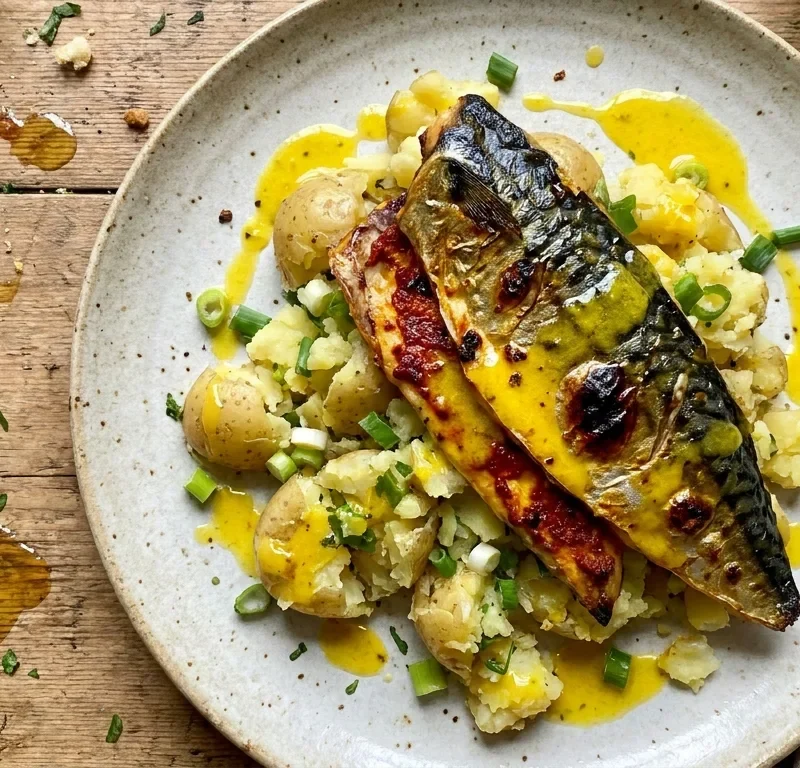
Mackerel fillets rubbed with a garlic and paprika paste, then roasted skin side up until the skin crisps. Ramsay serves them on crushed new potatoes dressed with a saffron and Dijon vinaigrette he calls “gently Spanish.” Serves 4 in about 30 minutes.
The recipe is in the Ultimate Cookery Course, where he writes that mackerel is “cheap and plentiful” and an “absolute winner” with this vinaigrette. He cooks it in his YouTube video and calls it a healthy meal that makes the most of cheap fish. The paste is pounded in a pestle and mortar, which gives a deeper flavour than just sprinkling paprika on top.
Dressing the potatoes while they are still warm is the detail Ramsay flags in the book. Hot potatoes absorb the saffron vinaigrette into their flesh rather than sitting in a puddle of it. Every forkful carries that mustard and saffron warmth by the time you serve.
Cooked this recipe? Send a photo or tell me what you changed at fans@gordonramsayrecipes.uk and I’ll share your experience live on this page.
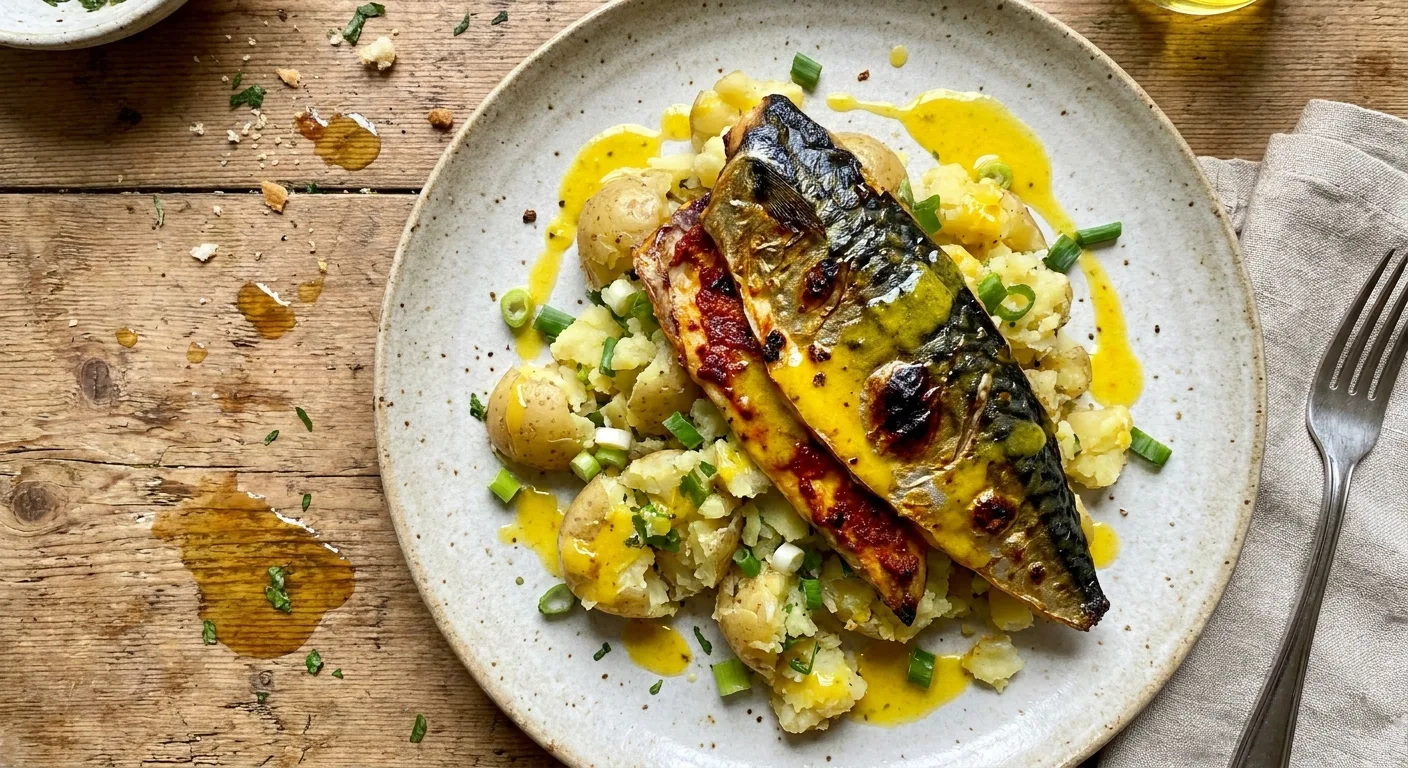
Gordon Ramsay’s Roasted Mackerel with Garlic and Paprika
Course: Dinner, MainCuisine: British, SpanishDifficulty: Easy4
servings10
minutes20
minutes480
kcal30 minutes
Paprika-rubbed mackerel from the Ultimate Cookery Course, roasted until crisp and served on crushed new potatoes with a saffron and Dijon vinaigrette. Cheap, healthy, 30 minutes.
Ingredients
- For the mackerel:
2 garlic cloves, peeled
2 tsp paprika
1 tsp salt
Olive oil
8 mackerel fillets, skin on
- For the crushed potatoes:
450g (1 lb) new potatoes
2-3 spring onions (scallions), trimmed and finely sliced
1 tbsp olive oil
- For the vinaigrette:
Pinch of saffron
1 tbsp white wine vinegar
1 tsp Dijon mustard
4 tbsp extra virgin olive oil
Sea salt and freshly ground black pepper
Directions
- Make the paste: Preheat oven to 220°C (425°F). Pound the garlic, paprika and salt in a pestle and mortar to a smooth paste, then add a few drops of olive oil.
- Rub the mackerel: Spread the paste over the flesh side of each fillet and set aside while you prepare the potatoes.
- Roast: Line a baking tray with greaseproof paper (parchment paper) and brush with oil. Lay the fillets skin side up, season the skin with salt and roast for 8-10 minutes until the skin is crisp and the fish is cooked through.
- Make the vinaigrette: Whisk the saffron, white wine vinegar, Dijon mustard and olive oil together in a small bowl. Season to taste.
- Crush the potatoes: Boil the new potatoes in salted water for about 15 minutes until tender, then drain. Return to the pan with a tablespoon of olive oil and crush lightly with the back of a fork. Stir in the spring onions (scallions) and a couple of tablespoons of vinaigrette.
- Serve: Spoon the crushed potatoes onto plates, top with the roasted mackerel and drizzle with the remaining vinaigrette.
Notes
- Ramsay says to “dress the potatoes while they are still warm as they’ll take on the dressing much better.” He also writes that mackerel is full of omega-3 and one of the healthiest fish you can buy. The UCC mentions hot-smoked trout or even mackerel as alternatives in the kedgeree recipe on the same page, so both fish suit this style of cooking.
FAQs
Why pound the garlic and paprika into a paste?
Crushing garlic and paprika together in a mortar breaks the cells open and bonds the flavour to the fish. Sprinkling paprika directly onto wet flesh just washes off in the oven, which is why the paste method works so much better.
The paste also acts as a barrier between the flesh and the baking tray. That keeps the underside moist while the skin above crisps in the dry heat of the oven.
How is this different from the grilled mackerel potato salad?
The mackerel and potato salad from Quick and Delicious grills plain fillets and serves them on a warm potato salad dressed with bay leaves. This roasted version uses a garlic and paprika paste with a saffron vinaigrette, so the flavour profile is completely different.
The grilled version is lighter and more British, while this one leans Spanish because of the paprika, saffron and olive oil. Both use new potatoes, but the crushing here gives a rougher texture that holds the vinaigrette better.
What other cheap fish does Ramsay cook this way?
The sardine spaghetti from the same book uses tinned sardines instead of fresh mackerel, which costs even less. The sesame tuna steak is pricier but uses a similar rub-and-sear approach with a crust that crisps in the pan.
Ramsay writes in the UCC that mackerel is one of the most sustainable fish in the UK. He returns to it across several books because the oily flesh carries strong flavours without being overwhelmed.
Can you use this paste on other fish?
The garlic and paprika paste works on any oily fish with the skin on. The fat in the flesh stops the paprika from burning, which is why it suits mackerel so well. The sea bream from the same book takes a different approach, but Ramsay has a saffron-marinated version in Pub Food that follows similar logic.
Lean white fish like cod dries out before the paste develops colour. Stick with mackerel, sardines or salmon for this method.
What makes the saffron vinaigrette work?
Saffron adds a floral bitterness that balances the oily mackerel, while the Dijon emulsifies so the dressing clings rather than running off. The kedgeree from the same chapter also pairs saffron with fish, so Ramsay clearly sees them as natural partners.
Whisk the vinaigrette just before serving because saffron loses its colour if it sits too long in acid. A pinch is enough since it is concentrated, and too much makes the dressing taste medicinal.