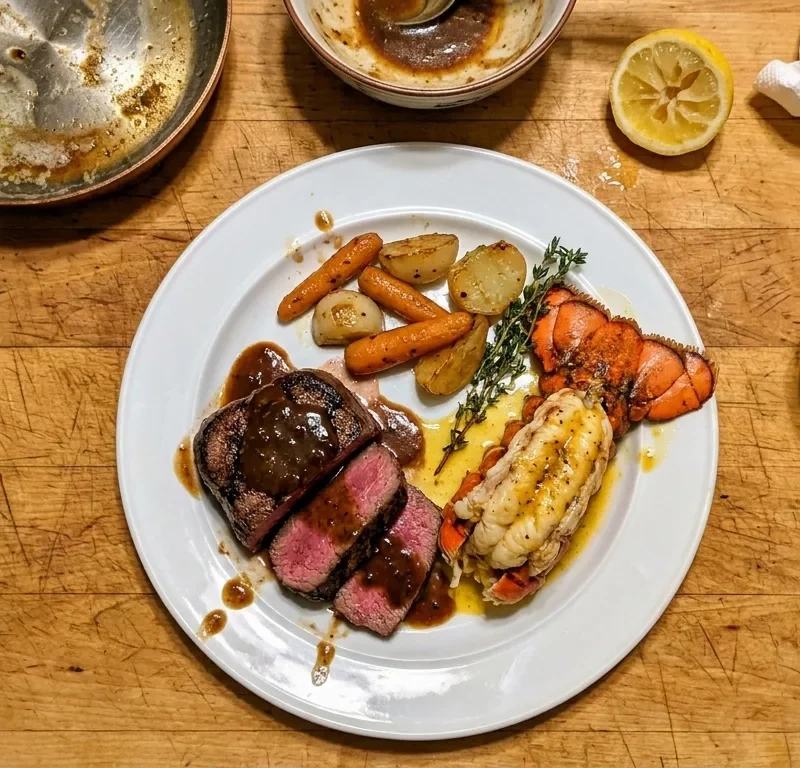
Gordon Ramsay’s surf and turf from The F Word sears filet mignon with garlic and thyme, then poaches lobster in saffron butter. A cognac cream sauce with demi-glace and grain mustard ties the plate together. It is his most theatrical steak dish and one he saved for the season finale.
“A dish to die for” he calls it in the F Word episode. He has two more surf and turf versions in his cookbooks that nobody talks about. Sunday Lunch pairs crab wraps with sirloin steak, and the UCC has pork and prawn meatballs he calls “that surf ‘n’ turf combination.”
The cognac sauce here follows the same base as his steak au poivre and steak Diane sauces: shallots, cognac flambé, cream, mustard. The difference is the demi-glace, which gives this version more body. Three dishes, same sauce family, different directions.
Cooked this recipe? Send a photo or tell me what you changed at fans@gordonramsayrecipes.uk and I’ll share your experience live on this page.
Gordon Ramsay’s Surf and Turf
Course: DinnerCuisine: French, BritishDifficulty: Hard2
15
minutes20
minutes850
kcal35
minutesFrom The F Word season finale. Filet mignon seared with garlic, thyme and butter, lobster poached in saffron butter, finished with a cognac cream sauce and glazed baby vegetables. Quantities are scaled for two from the demo. His Secrets and Sunday Lunch cookbooks have two more surf and turf versions compared in the FAQs below.
Ingredients
- For the beef:
2 filet mignon steaks, about 200g (7 oz) each
Olive oil
Sea salt and freshly ground black pepper
2 garlic cloves, crushed
Few sprigs of thyme
30g (1 oz) butter
- For the lobster:
2 lobster tails
50g (2 oz) butter
Pinch of saffron threads
Sea salt
- For the cognac sauce:
2 shallots, finely diced
1 garlic clove, finely chopped
15g butter
50ml cognac
150ml chicken stock
2 tbsp demi-glace or rich beef stock
100ml double cream
1 tsp grain mustard
- For the glazed vegetables:
8 baby turnips, halved
8 baby carrots
15g butter
Sea salt
Directions
- Sear the beef: Season the steaks with salt and pepper. Heat oil in a heavy pan until smoking hot. Sear the steaks for 2-3 minutes each side. Add the garlic, thyme and butter, baste for 1 minute. Transfer to a warm plate to rest.
- Make the sauce: In the same pan, add the shallots, garlic and butter. Cook for 2 minutes until softened. Pour in the cognac and flambé. Let it reduce to a syrup. Add the stock, demi-glace, cream and grain mustard. Simmer until it coats the back of a spoon.
- Poach the lobster: Melt the butter in a small pan with the saffron and a pinch of salt. Add the lobster tails and poach gently in the saffron butter for 6-8 minutes until the meat is firm and pink.
- Glaze the vegetables: Place the turnips and carrots cut-side down in a hot pan with butter. Season and cook until caramelised and tender, about 8-10 minutes.
- Serve: Slice the filet mignon, place on the plate with the lobster tail. Spoon the cognac sauce over the beef and arrange the glazed vegetables alongside.
FAQs
What are the three Ramsay surf and turf versions?
The F Word version above is the classic: filet mignon, lobster, cognac sauce. He saved it for the season finale and called it “a dish to die for.” This is the restaurant-style plate most people picture when they think surf and turf.
The Sunday Lunch cookbook takes a completely different approach. Chapter 14 is a full surf and turf menu: crab wraps with mango salsa as the starter, then sirloin steaks with tomato tarragon dressing and oven chips as the main. Crab is the surf, steak is the turf, split across two courses instead of one plate.
What makes the cognac sauce different from his other steak sauces?
The base is the same he uses for steak au poivre and steak Diane: shallots, cognac, cream. The difference here is the demi-glace and grain mustard instead of Dijon, which gives a richer, glossier sauce with more depth.
He reduces the cognac “down to a syrup” before adding the stock and cream. That concentration is what separates a good cognac sauce from a thin boozy one. The key is burning off all the alcohol first.
Why does Ramsay poach lobster in butter instead of water?
Butter poaching keeps the lobster meat soft and rich instead of rubbery. The saffron infuses the butter while the lobster cooks, so the flavour goes into the meat rather than sitting on top. His Uncharted cookbook poaches lobster in salted water with herbs, which is the simpler everyday method.
The saffron is what makes this version special. It gives the lobster a golden colour and a warm floral flavour that pairs with the cognac in the sauce. A pinch is enough because saffron is concentrated.
Can you make this with prawns instead of lobster?
Yes, and Ramsay does exactly that in the UCC. His pork and prawn meatballs in aromatic broth are what he calls “that surf ‘n’ turf combination, seafood and meat.” It is a completely different dish but proves he sees surf and turf as a principle, not just steak and lobster.
For a simpler version of this plate, swap the lobster for garlic king prawns seared in butter. The cognac sauce and filet mignon stay the same. The cost drops by about two thirds.
What cut of beef does Ramsay use for surf and turf?
Filet mignon in The F Word, sirloin in Sunday Lunch. Filet is the traditional choice because it is tender and mild, which lets the lobster share the spotlight without competing. Sirloin has more flavour on its own, so in the Sunday Lunch version the steak carries the plate while the crab plays a lighter starter role.
His cast iron steak method covers the oven-finish technique for thick filet mignon if you want more control over the doneness.