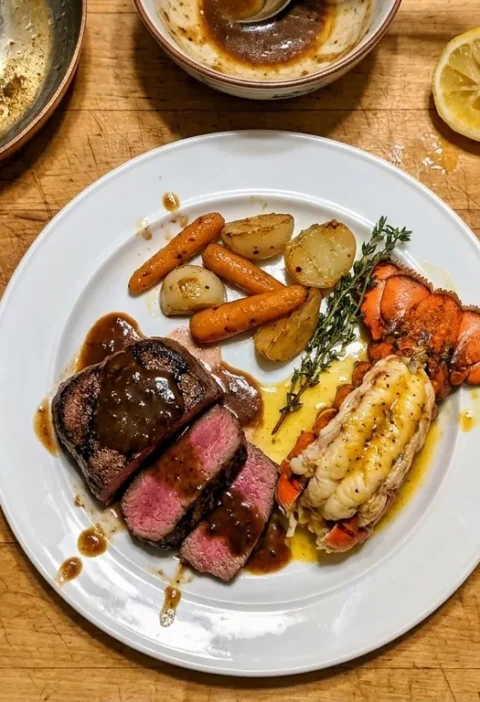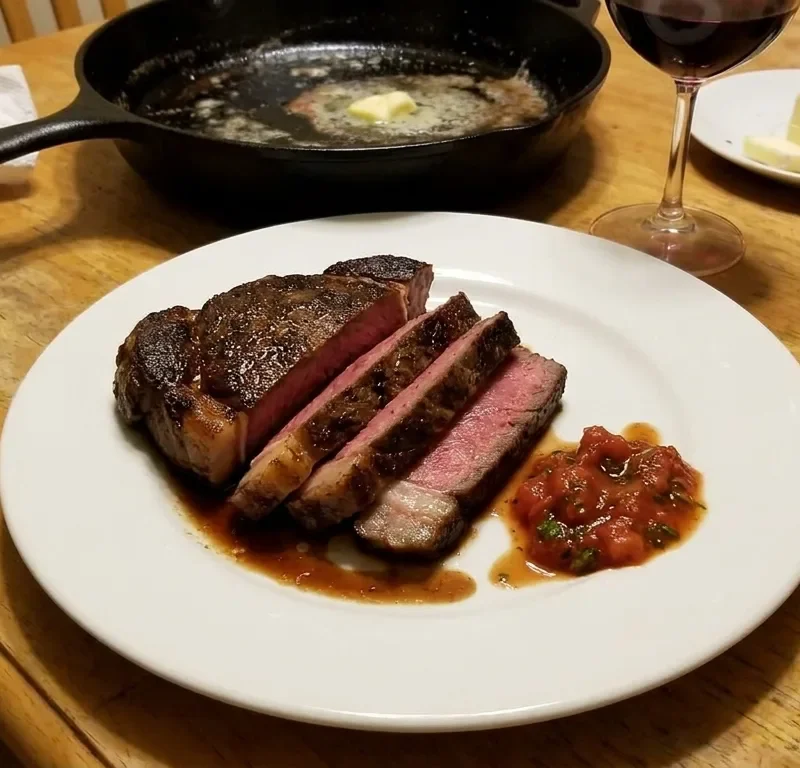
Gordon Ramsay’s sirloin steak from the Ultimate Cookery Course uses groundnut oil, salt, pepper and a butter baste in the last 90 seconds. It takes under 10 minutes from pan to plate. This is the version he wrote step by step for sirloin, and the technique every other steak in his books borrows from.
“Get the pan really hot, hotter than you’d normally dare” he writes. “If it’s not hot, it won’t colour the meat and without any colour, there’ll be no flavour.” That single rule drives everything in this recipe.
He has three sauces for sirloin across three cookbooks. Great British Pub Food pairs it with green peppercorn and cognac cream, Sunday Lunch with tomato tarragon, Ramsay in 10 with chimichurri. The tomato tarragon is the one I keep coming back to because it’s ready in the time the steak rests.
Cooked this recipe? Send a photo or tell me what you changed at fans@gordonramsayrecipes.uk and I’ll share your experience live on this page.
Gordon Ramsay’s Pan-Fried Sirloin Steak
Course: DinnerCuisine: BritishDifficulty: Easy2
servings5
minutes8
minutes500
kcal15 minutes
The UCC butter baste method applied to thick sirloin steaks. Groundnut oil for the sear, a knob of butter spooned over in the last 90 seconds for a rich nutty finish. Three different sauces from three cookbooks compared in the FAQs below.
Ingredients
2 sirloin steaks, 200-250g (7-9 oz) each
Groundnut (peanut) or rapeseed (canola) oil
Sea salt and freshly ground black pepper
25g (1¾ tbsp) butter
Directions
- Bring to room temp: Take the steaks out of the fridge 20 minutes before cooking. Meat at room temperature absorbs seasoning better and cooks more evenly.
- Heat the pan: Get a heavy frying pan really hot over high heat. Season the steaks generously with salt and pepper on both sides.
- Sear: Pour in the groundnut oil and wait until it is almost smoking. Lay the steaks in with the fat strip facing the back of the pan.
- Don’t fiddle: Leave to cook for 2½-3 minutes on one side without moving. Turn once.
- Butter baste: About 1½ minutes before the steak is ready, add the butter. As it foams, spoon it over the steak to give a rich, nutty brown finish. Use tongs to hold the steak upright and render the fat edge.
- Rest and slice: Transfer to a warm plate and rest for 5 minutes. This allows the muscle fibres to relax and the juices to redistribute. Slice at an angle and serve.
Notes
- Get the pan really hot, hotter than you would normally dare. Without colour there is no flavour.
FAQs
What sauce does Ramsay serve with sirloin steak?
Three options across three books. The GBPF green peppercorn sauce uses cognac, cream and mustard, and the full recipe is on Ramsay’s peppercorn sauce page. The chimichurri from Ramsay in 10 is the quick herby option.
The one I keep making is the Sunday Lunch tomato tarragon dressing because it needs no cooking. Chop 6 tomatoes, mix with 5 tbsp ketchup, 2 tbsp Worcestershire, 1 tbsp Dijon, Tabasco, lemon juice, 2 tbsp balsamic, 2 tbsp olive oil, 2 chopped shallots, then stir in tarragon and parsley. Ramsay calls it “a healthier version of steak and chips.”
How do you tell when sirloin steak is done?
Ramsay’s method in the UCC is the hand test. Press the fleshy base of your thumb with your hand open and that’s how rare feels. Touch your thumb to your middle finger and press again, that firmer feel is medium.
Thumb to little finger gives you well done, but Ramsay wouldn’t recommend it. For timing, 2½-3 minutes per side gives medium-rare on a 200-250g steak in a screaming hot pan. Always rest for 5 minutes so the fibres relax and the juices redistribute through the meat.
Why does Ramsay use groundnut oil instead of olive oil?
Groundnut oil has a higher burning point than olive oil so the pan can get hotter before it smokes. Hotter pan means better colour, and better colour means more flavour. Rapeseed oil works too for the same reason.
He also says not to fiddle with the steak once it’s in the pan. “Don’t keep fiddling or the meat won’t take on a caramelised crust” he writes in the UCC. Leave it alone for 2½-3 minutes, and “once it is browned, the meat will release itself.”
Should you marinate sirloin steak?
Ramsay’s answer is no, at least not before cooking. Sirloin has enough fat and tenderness that it only needs salt, pepper, oil and a hot pan. That’s the whole point of the UCC technique above.
The one exception is his UCC miso marinade where you cook the sirloin first, then rest it in the liquid. But that’s flavouring after cooking, not tenderising before. The steak marinade page covers all six marinades and which cuts actually need them.
What is the difference between sirloin, ribeye and fillet?
Sirloin is leaner with a clean beefy flavour and a strip of fat along one edge. It’s the best value of the three premium cuts and the one Ramsay uses most across his books. In the US, “top sirloin” is a slightly different cut from the hip, leaner and cheaper.
Ribeye has more fat marbling through the meat, which makes it richer but heavier. Fillet is the most tender but has the least flavour because it’s the least worked muscle. The cast iron steak method works for any of the three, but for this recipe sirloin is the right choice.