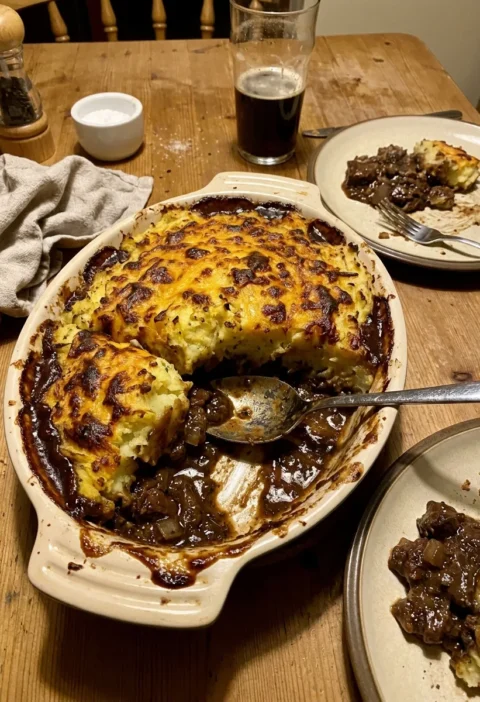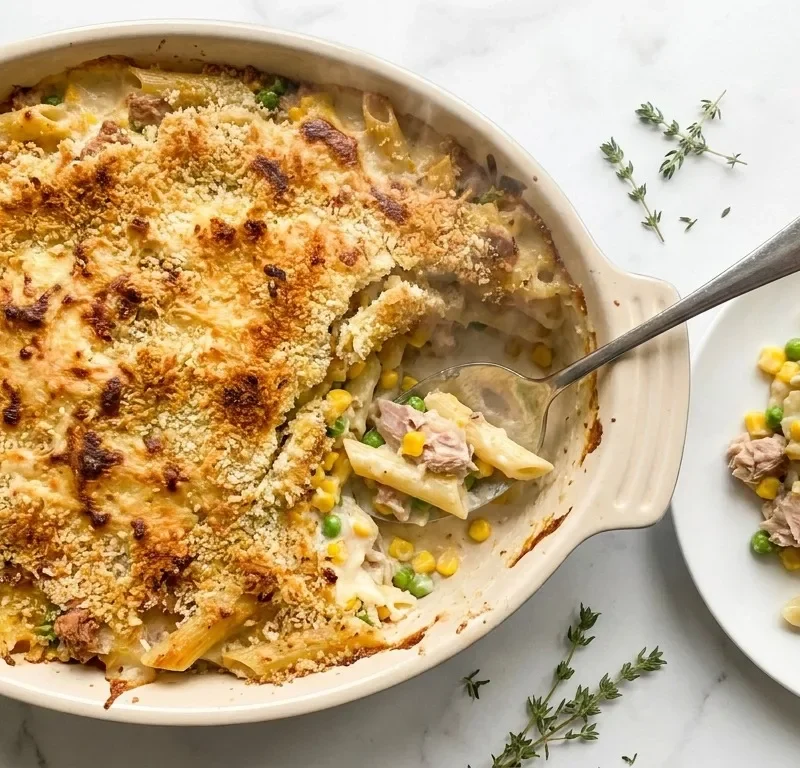
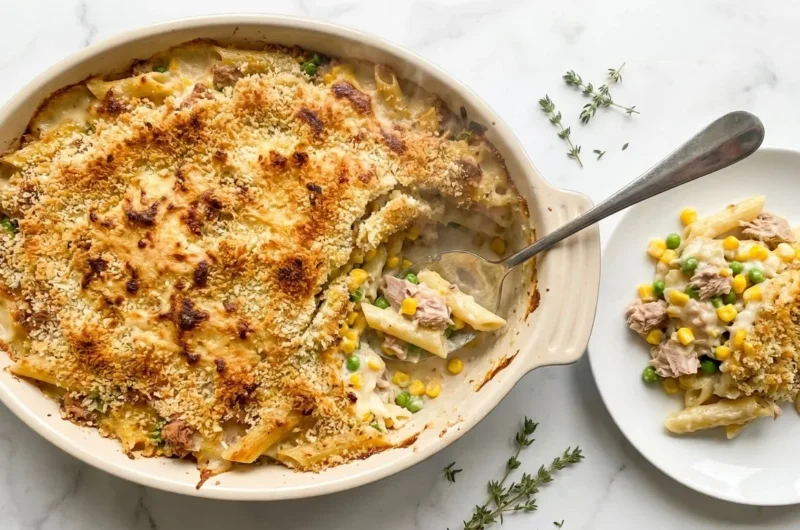
Gordon Ramsay’s tuna pasta bake is penne and tinned tuna in a mustard-spiked béchamel with mature Cheddar, sweetcorn and peas, finished with a breadcrumb and thyme topping and baked at 200°C until golden and crisp. Comfort food. Twenty minutes in the oven.
Ramsay doesn’t publish a tuna pasta bake in any of his 22 cookbooks. But his Ultimate Cookery Course teaches the béchamel and baked pasta technique this recipe is built on. His cauliflower bake from that book uses the same method: roux with English mustard, cheese sauce, breadcrumb and thyme topping, 200°C in a gratin dish. I’ve swapped the cauliflower for tinned tuna, sweetcorn and peas.
The mustard is what separates this from every other tuna pasta bake. Ramsay stirs 2 teaspoons of English mustard powder into the roux before adding milk. It cuts through the richness of the cheese and stops the whole thing tasting heavy. Most recipes skip this and end up with a bland white sauce that could be wallpaper paste.
Cooked this recipe? Send a photo or tell me what you changed at fans@gordonramsayrecipes.uk and I’ll share your experience live on this page.
Gordon Ramsay’s Tuna Pasta Bake
Course: DinnerCuisine: BritishDifficulty: Easy4
servings15
minutes20
minutes832
kcal35
minutesTuna pasta bake built from Gordon Ramsay’s béchamel and baked pasta technique in Ultimate Cookery Course. Penne with tinned tuna, sweetcorn and peas in a mustard-spiked cheese sauce, topped with breadcrumbs, thyme and Cheddar. He doesn’t publish this exact combination, but every technique here comes from his books. 832 kcal per serving.
Ingredients
300g (10½ oz) penne
2 x 160g tins tuna in oil, drained
1 x 198g tin sweetcorn, drained
100g (3½ oz) frozen peas
50g (2 oz) butter
50g (2 oz) plain flour
500ml (17 fl oz) whole milk
2 tsp English mustard powder
Pinch of cayenne pepper
150g (5 oz) mature Cheddar, grated (100g for sauce, 50g for topping)
40g (1½ oz) fresh white breadcrumbs
1 tbsp fresh thyme leaves
Sea salt and freshly ground black pepper
Directions
- Cook the pasta: Bring a large pan of salted water to the boil. Cook the penne until al dente according to packet instructions. Add the frozen peas for the last 2 minutes. Drain and set aside.
- Make the roux: Melt the butter in a large saucepan over a low heat. Stir in the flour and mustard powder. Cook for 1 minute, stirring constantly.
- Build the béchamel: Add the milk gradually, a splash at a time, whisking after each addition until smooth before adding more. Slowly bring to the boil over a low heat, whisking frequently, until the sauce thickens. Simmer gently for 2 minutes to cook out the raw flour taste. Season with cayenne, salt and pepper.
- Add the cheese: Remove from the heat. Stir in 100g of the grated Cheddar until melted and smooth.
- Combine: Fold the pasta, peas, drained tuna and sweetcorn into the cheese sauce. Be gentle with the tuna so it stays in chunks, not mush. Pour into a large gratin dish.
- Top and bake: Preheat the oven to 200°C (180°C fan) / Gas 6. Mix the remaining 50g Cheddar with the breadcrumbs and thyme. Scatter over the top. Bake for 20 minutes until the topping is golden and crisp and the sauce is bubbling at the edges.
FAQs
Why does this béchamel use mustard powder?
Ramsay stirs English mustard powder into his roux in Ultimate Cookery Course. It goes in with the flour before the milk, so the heat activates the flavour. Two teaspoons is enough to cut through the cheese without tasting like mustard.
Without it, the sauce is just butter, flour, milk and Cheddar. That’s bland. The mustard adds a sharpness that makes the cheese taste more like cheese. Ramsay also adds a pinch of cayenne for the same reason: a tiny amount of heat lifts everything around it.
Why add the milk gradually instead of all at once?
Because lumps. Ramsay teaches this in his béchamel lesson in Ultimate Cookery Course: “the secret for a smooth sauce is to add the liquid very gradually, especially at the beginning, and to whisk it in completely after each addition.”
Start with a tablespoon at a time. Whisk it into the roux until it forms a thick paste. Then a bit more. Once the paste loosens, you can pour faster. The first 100ml is where most people go wrong. After that, the sauce is thin enough to absorb milk quickly.
Should you use tuna in oil or water?
Oil. Every time. Tuna in oil has more flavour, richer texture and holds together in chunks when you fold it into the sauce. Tuna in water falls apart into stringy flakes and adds liquid that thins out the béchamel.
Drain the oil but don’t squeeze the tuna dry. Ramsay says the same about his tuna cakes from Ultimate Cookery Course: “don’t press it too hard otherwise you’ll dry out the tuna.” You want moist chunks, not a dry paste. Fold the tuna in last, gently, so it stays in pieces you can see.
Can you make this ahead or freeze it?
Assemble the whole thing, scatter the topping, cover with cling film and refrigerate for up to 24 hours. Add 5 minutes to the baking time because it’s going in cold. The breadcrumbs will still crisp up.
It freezes well for up to 3 months. Defrost in the fridge overnight and bake as normal. The sauce might look separated when cold but it comes back together in the oven.
This is one of the few dishes on the site that genuinely stores well, unlike his tuna niçoise salad which goes soggy within hours or his tuna tartare which must be served immediately.
What makes a breadcrumb topping crisp instead of soggy?
Ramsay’s method from Ultimate Cookery Course: mix the breadcrumbs with thyme and the remaining cheese, then scatter over the top as a separate layer. The cheese melts into the crumbs and forms a crust. If you stir breadcrumbs into the sauce instead of putting them on top, they dissolve into mush.
Fresh breadcrumbs work better than dried. They’re softer going in but they toast in the oven into uneven, craggy pieces that catch the heat differently. That’s where you get those golden and dark brown patches instead of one flat uniform colour. His tuna steak uses sesame seeds for crunch on fish. This uses breadcrumbs for the same purpose on a bake.