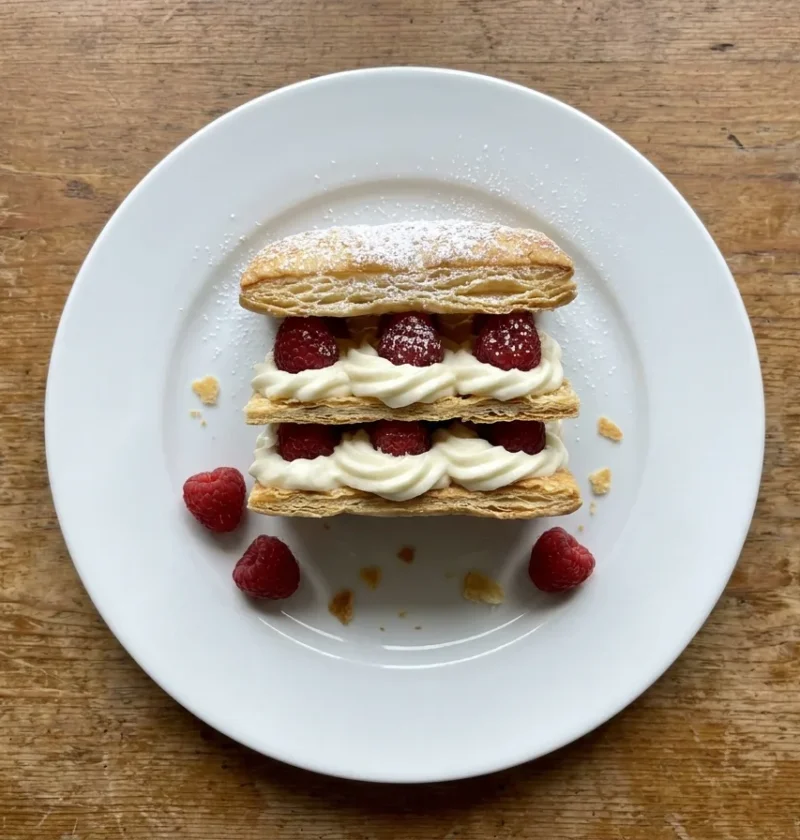
Raspberry millefeuille is crisp caramelised puff pastry layered with vanilla orange cream and fresh raspberries, and it comes together in under an hour. You need shop-bought all-butter puff, double cream, raspberries and a little Grand Marnier. The whole trick is in how the pastry bakes.
This is Gordon Ramsay’s version from his Ultimate Cookery Course, which he also makes in this video. He calls it a dessert with “wow factor” that is “incredibly simple to prepare, yet looks and tastes absolutely stunning.” Most recipes for this are far more frightening than his.
The one technique that makes or breaks it is dusting the raw pastry with icing sugar before it bakes. Get that right and you get crisp, glossy, separated layers. Get it wrong and the pastry bakes pale and flat, which is the difference the FAQ below explains.
Cooked this recipe? Send a photo or tell me what you changed at fans@gordonramsayrecipes.uk and I’ll share your experience live on this page.
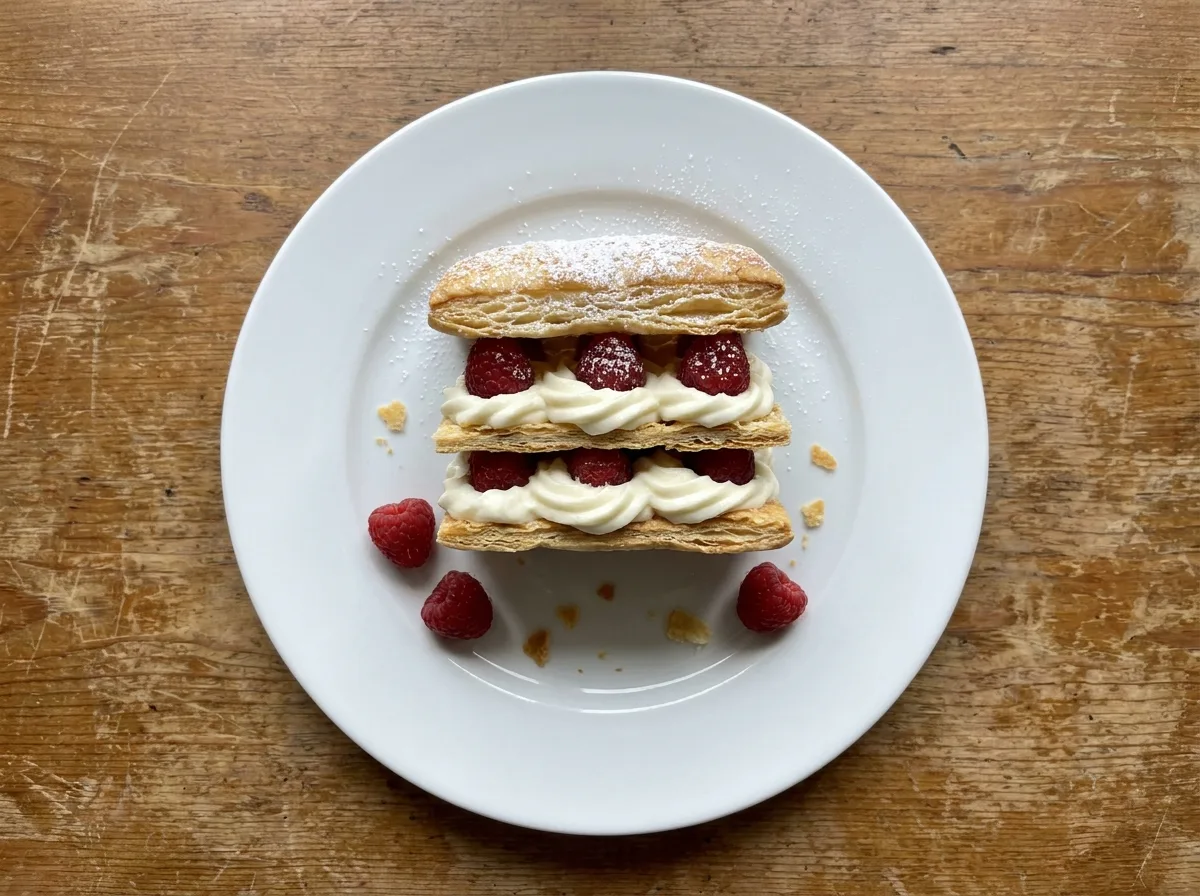
Raspberry Millefeuille
Course: DessertCuisine: FrenchDifficulty: Medium6
servings25
minutes20
minutes450
kcal45
minutesCrisp caramelised puff pastry layered with vanilla and orange chantilly and fresh raspberries, from Gordon Ramsay’s Ultimate Cookery Course. A no-fuss dinner party dessert that looks far harder than it is. Serves four to six.
Ingredients
320-375g (11-13 oz) ready-rolled all-butter puff pastry
3 tbsp icing sugar, plus extra to dust
Seeds from 2 vanilla pods
600ml (1 pint) double cream
Zest of 1 orange
½ tbsp orange liqueur, such as Grand Marnier
200g (7 oz) fresh raspberries
Directions
- Bake the pastry: Preheat the oven to 220C (425F/Gas 7). Unroll the pastry onto a non-stick tray, dust generously with icing sugar and bake for 8 minutes. Drop the heat to 200C (400F/Gas 6) and bake 7 to 12 minutes more until golden and glazed. Cool on a rack.
- Whip the cream: Mix the vanilla seeds into the cream with the 3 tbsp icing sugar and whip to soft peaks. Don’t overbeat or it splits. Fold in the orange zest and liqueur with a spatula.
- Pipe and chill: Spoon the cream into a piping bag with a plain nozzle and chill until you need it.
- Slice the pastry: Once fully cool, cut the pastry gently into 3 equal lengths with a serrated bread knife, so it doesn’t shatter.
- Assemble: Dot a little cream on the plate as glue and lay down one pastry length. Pipe cream over it, add a border of raspberries, then pipe more cream inside the border. Top with the second pastry length and repeat.
- Finish: Add the last pastry length, caramelised side up, dust with icing sugar and serve straight away.
FAQs
Why dust the pastry with icing sugar before baking?
This is the step that separates a proper millefeuille from a sad flat one. Gordon dusts the raw puff with icing sugar because, in his words, it caramelises the top and lets the layers split into the thousand leaves the name means. The sugar melts into a thin, glossy, crisp glaze as it bakes, the same caramelising trick behind his pear tarte tatin.
Without it, the pastry bakes pale and soft and never gets that lacquered crunch. Dust generously and evenly, and don’t skip the lighter dusting at the end, which gives the finished dessert its shine.
Why does millefeuille go soggy, and can I make it ahead?
Soggy millefeuille is the most common failure, and the cause is simple: cream sitting on pastry softens it within an hour. Gordon gets around this by assembling at the very last minute, never before. The crisp pastry only stays crisp if the cream meets it just before it reaches the table.
You can prep every part ahead, which is the trick. Bake the pastry and keep it in an airtight tin, whip and pipe the cream into its bag and chill it, wash the raspberries. Then stack it all together in the five minutes before serving.
Should you weigh the pastry down while baking?
This is where recipes split, so it’s worth knowing the choice. Many bakers sandwich the puff under a second tray so it bakes flat and even, which gives tidy, restaurant-neat layers. Gordon bakes his free, with no weight on top, so it puffs taller and more rustic.
Bake it free, his way, for height and a lighter, flakier bite. Weigh it down if you want flat, uniform slabs that stack precisely and cut cleanly. Either works, so it comes down to whether you want neat or generous.
How do you cut millefeuille without it collapsing?
The pastry is the problem, since pressing down shatters those crisp layers. Use a serrated bread knife and a gentle sawing motion rather than pushing straight down, both when you slice the baked sheet into three and when you portion the dessert.
Gordon also pipes a tiny dot of cream onto the plate first to anchor the base, so the whole thing doesn’t slide as you build and cut it. Choose your firmest, flattest pastry piece for the bottom layer to give the stack a stable base.
What cream goes inside, and how do you flavour it?
It’s a simple chantilly, double cream whipped with icing sugar and vanilla seeds to soft peaks, the same piped cream he uses in his profiteroles. Gordon lifts his with orange zest and a splash of Grand Marnier, which cuts the richness against the sharp raspberries. The cream should be thick enough to hold its shape when piped.
His key warning is to fold the orange and liqueur in by hand after whipping, not whisk them through. Adding liquid to already-whipped cream and beating it is what splits cream into a grainy mess, so a gentle spatula fold keeps it smooth.
Can you use other fruit or fillings?
Yes, and Gordon says so himself, the filling flexes to whatever you fancy. He suggests swapping the chantilly for crème fraîche or mascarpone, and the raspberries for strawberries or a touch of lime. If you love the raspberry and cream pairing, his raspberry lemon cheesecake from the same book runs with it too.
Keep the balance in mind: you want something sharp against the sweet cream and rich pastry. Berries, passion fruit or citrus all do that job, while softer fruits like banana turn mushy between the layers and are best avoided.