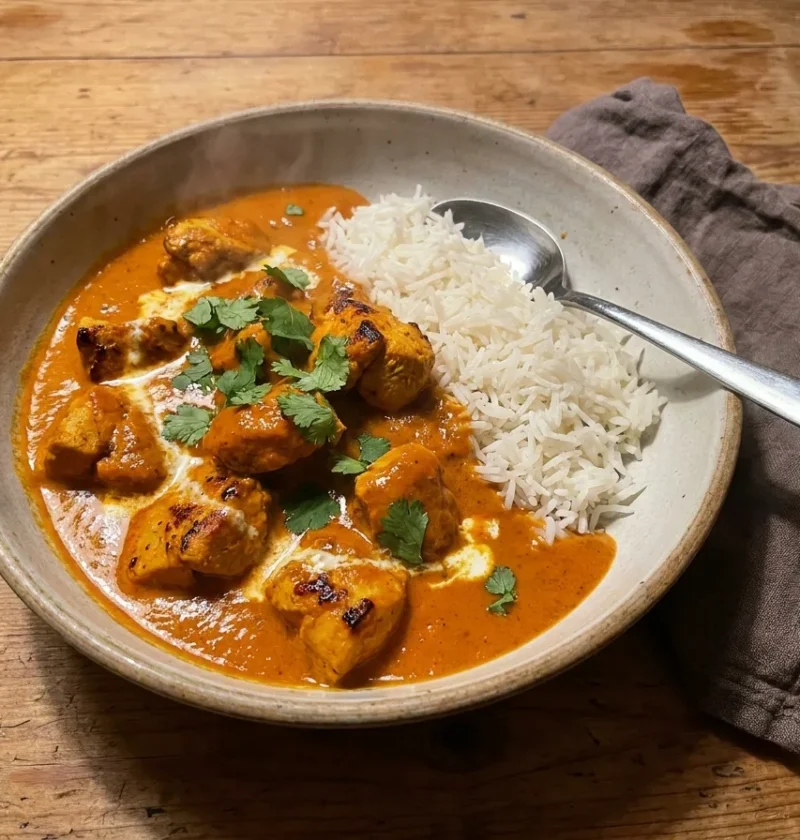
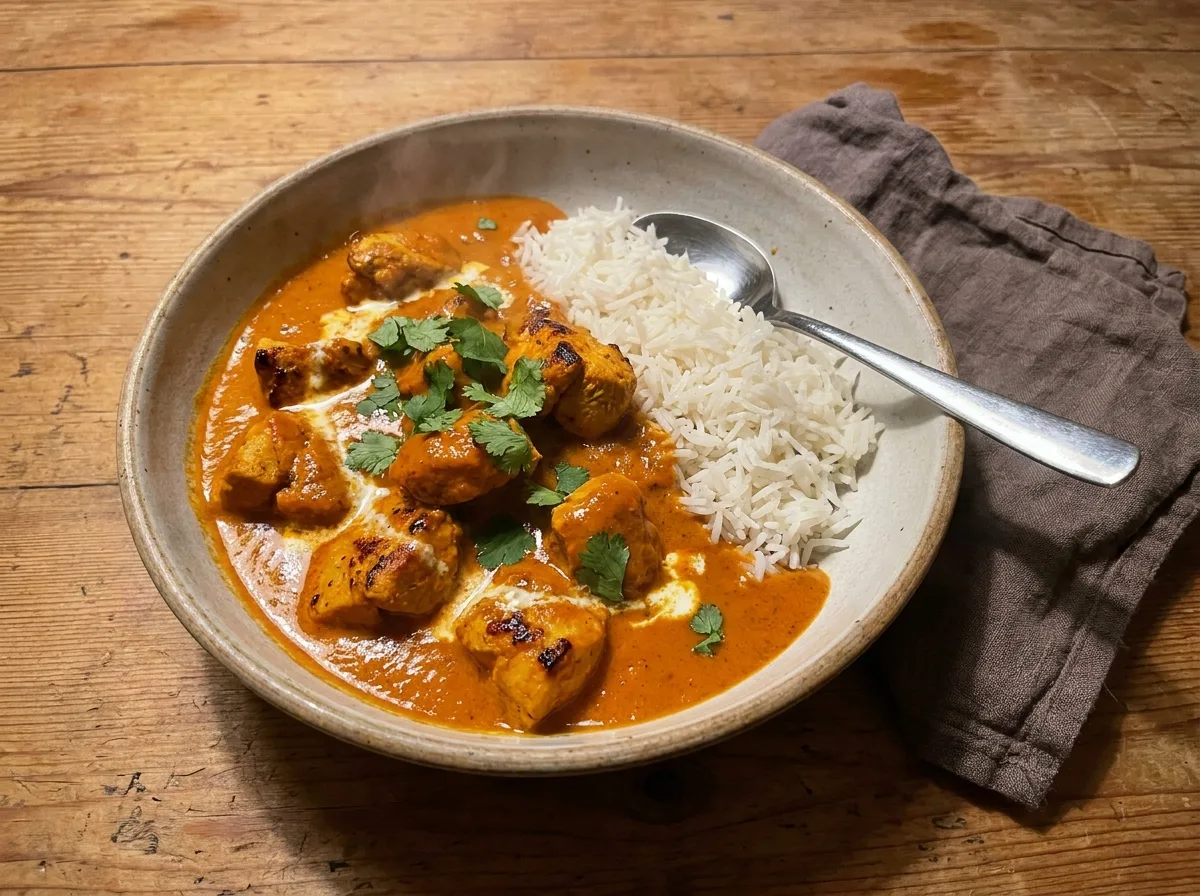
Gordon Ramsay’s butter chicken marinates chicken in spiced yoghurt, then roasts it hard in one pan while a tomato-cream sauce builds in another. Butter and lemon zest marry them at the end. His famous curry in a hurry, and a realistic 25 minutes at home.
He cooked it on Next Level Kitchen against a 15-minute clock, but the recipe has deeper roots: “I actually went all the way to India to the birthplace of butter chicken,” he says. His book names the place, Delhi’s Moti Mahal restaurant, where he ate the original.
The rule that saves the finish is his own: “whenever you add butter into something, you never boil it.” The final knobs go in off the boil and get worked in with a spoon. That’s what keeps the sauce glossy instead of greasy.
Cooked this recipe? Send a photo or tell me what you changed at fans@gordonramsayrecipes.uk and I’ll share your experience live on this page.
Gordon Ramsay’s Butter Chicken (Curry in a Hurry)
Course: DinnersCuisine: IndianDifficulty: Easy4
servings10
minutes15
minutes480
kcal25
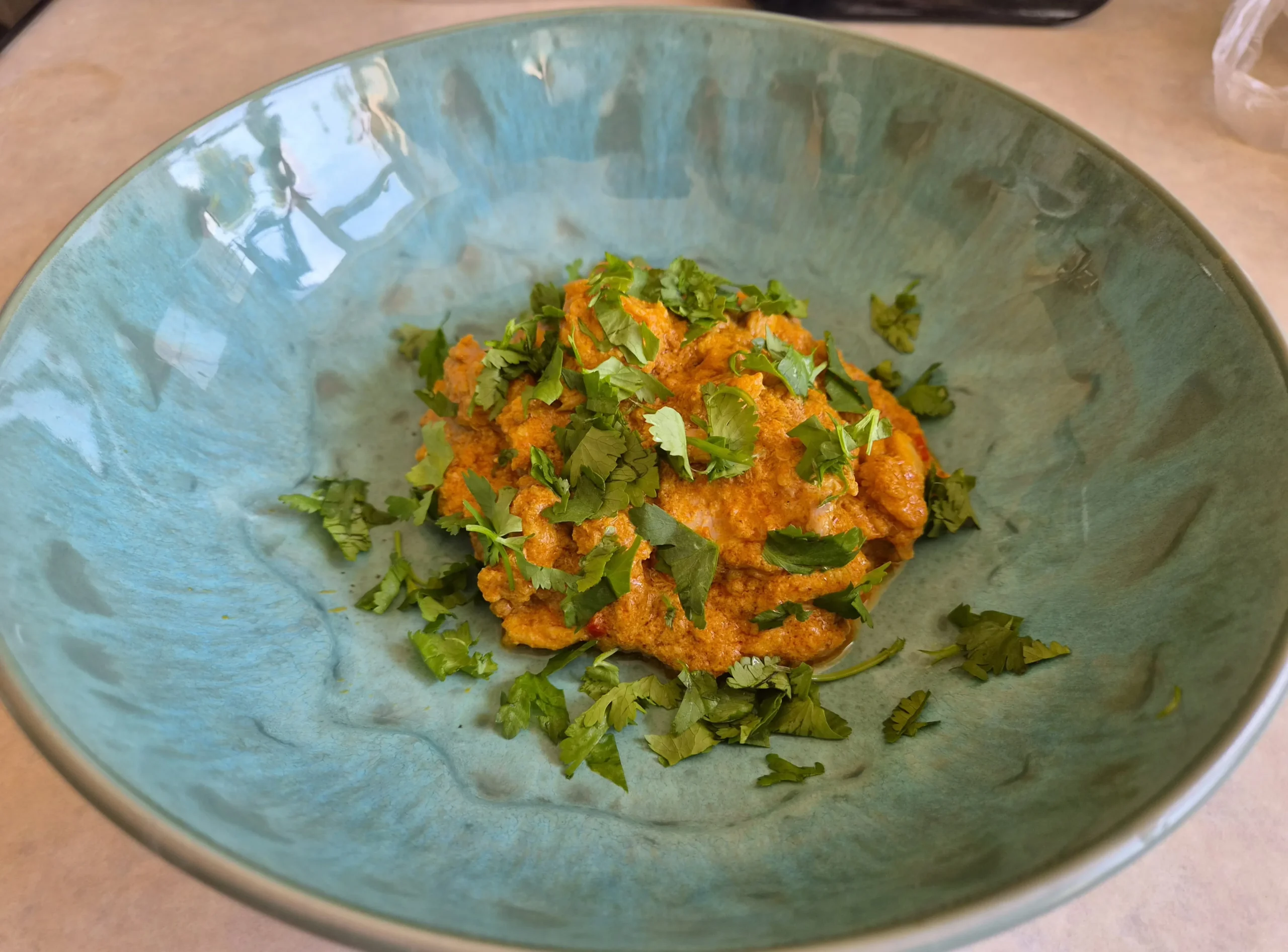
minutesThe Next Level Kitchen butter chicken he raced against a 15-minute clock: yoghurt-marinated chicken, a blended and sieved tomato-cream sauce, and butter worked in at the death.
Ingredients
- For the marinated chicken:
2 chicken breasts, about 500g (1.1 lb), cut into small even cubes (thighs or legs work too, see FAQs)
Sea salt and freshly ground black pepper
1 tsp ground turmeric
1 tsp ground cumin
1 tsp ground coriander
½-1 tsp cayenne pepper, to taste
1 tsp garam masala
3 tbsp natural yoghurt
Drizzle of grapeseed or vegetable oil
- For the sauce:
2 tbsp grapeseed or vegetable oil
1 red onion, sliced
2-3 cardamom pods, bashed
2-3 whole cloves
Thumb-size piece of fresh ginger, peeled and sliced
1 red chilli, sliced, seeds in
3 garlic cloves, chopped
40g (3 tbsp) unsalted butter, plus 2 knobs to finish
Small bunch of coriander, stalks chopped, leaves reserved
Light dusting each of garam masala, turmeric and cumin
Pinch of cayenne pepper
350g (about half a 700g jar) tomato passata
100ml (7 tbsp) double cream (US: heavy cream)
Squeeze of lemon juice, plus the zest to finish
Directions
- Marinate the chicken: Cut the chicken into small, even cubes. Toss in a bowl with salt, pepper, turmeric, cumin, ground coriander, cayenne and garam masala. Add the yoghurt and a drizzle of oil and mix until every piece is coated.
- Start the sauce base: Get a pan smoking hot with the oil. Add the red onion with a pinch of salt and let it caramelise, then add the bashed cardamom, cloves, ginger, chilli and garlic.
- Butter and toast: Add the 40g of butter to the onions and let it melt in. Add the coriander stalks, then dust over the garam masala, turmeric, cumin and cayenne and let the spices toast for a minute.
- Build the sauce: Pour in the passata and bring to the boil. Stir in the cream, season with salt and a squeeze of lemon juice, and simmer gently.
- Roast the chicken: Meanwhile, heat a second pan with a little oil and cook the marinated chicken over high heat until coloured and just cooked through.
- Blend and sieve: Pour the sauce into a blender, start slow, then blend until smooth. Pass it through a sieve back into the pan, pressing with the back of a ladle, for a completely velvety finish.
- Bring it together: Add the chicken and every scrap from its pan into the sauce. Keep the heat low.
- Finish, never boil: Add the 2 knobs of butter and the lemon zest off the boil, working the butter in with a spoon. Correct the seasoning, stir through the coriander leaves, and serve with steamed rice or chapatis.
Notes
- He measures the spices by eye on camera, and the passata and cream amounts here match what he pours. Marinate overnight if you can, the FAQs explain why.
FAQs
Is Gordon Ramsay’s butter chicken really ready in 15 minutes?
He proved it on camera, just barely: “that is curry in a hurry in literally 14 minutes and 58 seconds.” The trick is cutting the chicken small enough to cook through in minutes while the sauce runs alongside.
For a home kitchen without a producer holding a stopwatch, 25 minutes is the honest number. The full sprint is worth watching on YouTube, and it runs the same race as his butternut squash chicken curry, his other dish built against a clock.
Why does Ramsay marinate butter chicken overnight?
Because the marinade does more than flavour it: “if you marinate the chicken the night before, I promise you, it penetrates the chicken so well, it goes all the way through and literally stains the colour.”
That staining is his dig at shortcuts. As he points out, “sometimes you see in these old-fashioned Indian restaurants that they’re using food colouring.” The real deep orange comes from time in turmeric and spiced yoghurt. Fifteen minutes works, overnight transforms. One reader, Alex, took it further by grinding whole coriander and cumin seeds to powder instead of using pre-ground. He says the colour deepens and the flavour is noticeably sharper, which makes sense because whole spices hold their oils until you crack them.
Why does he blend AND sieve the sauce?
“We’re cooking the sauce twice, okay?” is how he explains it, and each pass does a different job. The blender breaks the onions and spices down into a smooth gravy. The sieve then catches the whole cardamom pods and cloves that were only there to infuse.
The sieve pass is optional, a cheffy flourish by his own admission. But press the sauce through with the back of a ladle and what lands in the pan pours like silk.
How is his cookbook butter chicken different?
Almost completely, and nobody online seems to know it exists. The murgh makhani in his Great Escape India book is the slow, faithful version. It runs a two-stage marinade, 30 minutes in garlic, ginger and lemon, then 3 to 4 hours in spiced yoghurt, with the chicken baked on a rack.
The book sauce builds on tomato purée and finishes with 40g of butter and cream, no blender, no sieve. Its headnote traces the dish to Moti Mahal, where he ate it. The same book’s marinade logic runs through his chicken biryani recipe, and the video version above is the weeknight answer.
Can I use thighs or legs instead of breast?
All three are his options, with his own cutting guide from the video: breast in small cubes for speed, thighs quartered into chunks, and legs kept whole. Whole legs obviously blow the 15-minute claim, but he rates them for flavour.
The book version settles the debate quietly, it uses 800g of boneless thighs. Breast is the sprint choice, thighs are the flavour choice, and the marinade protects either one.
How long does butter chicken keep?
Three days in the fridge, and like most spiced tomato sauces it’s deeper on day two. The reheating rule is the same as the cooking rule: gentle heat, never a boil, or the cream and butter split and the gloss turns to grease.
It freezes for 2 months, though the sauce can separate slightly on thawing. A slow stir over low heat brings it back, a fresh knob of butter helps, and my roundup of his curry recipes points to what’s next.