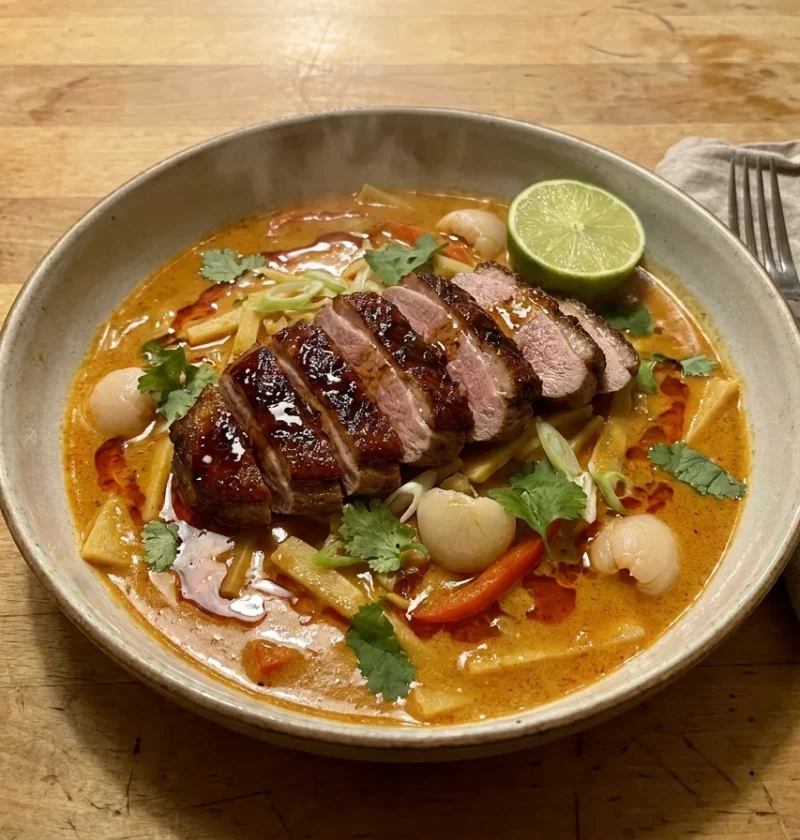
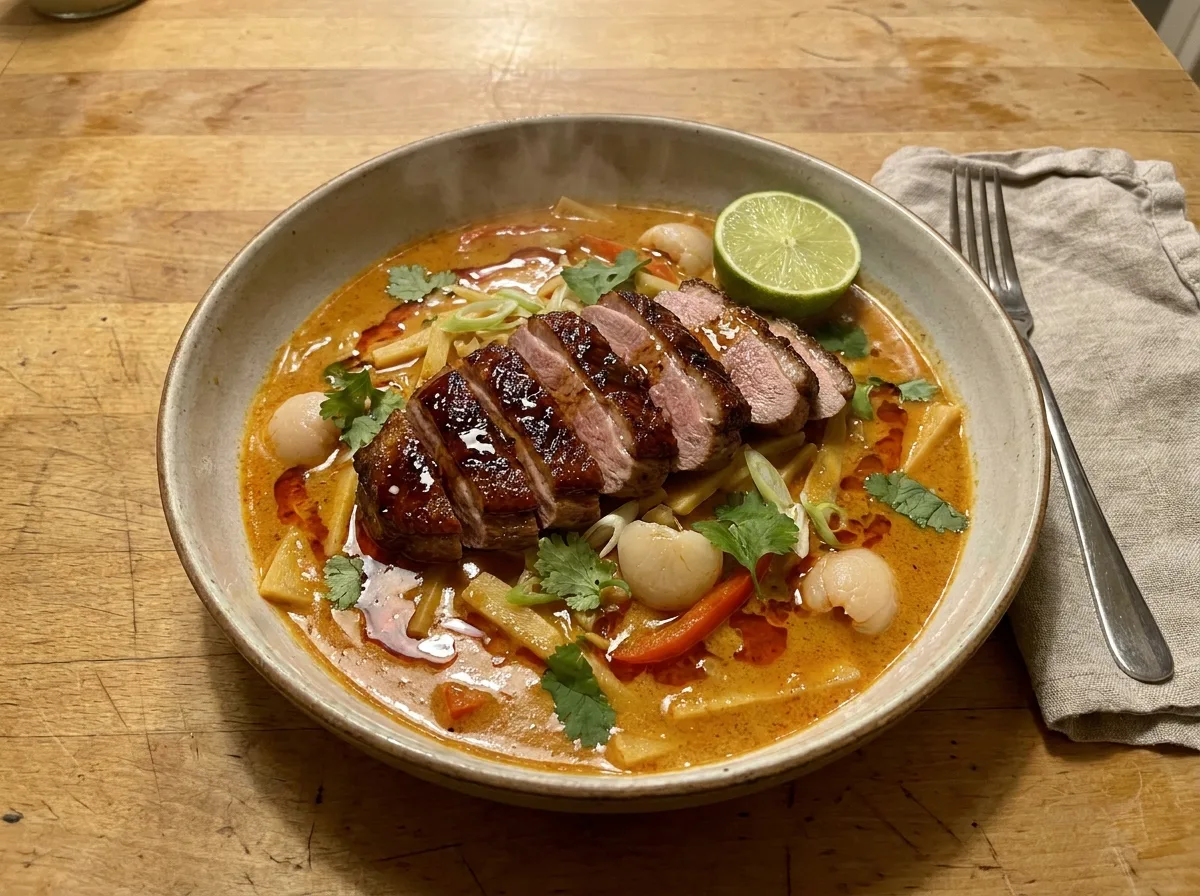
Gordon Ramsay’s Thai red curry is honey-glazed crispy duck laid over a coconut sauce built on his homemade paste, with bamboo shoots, red pepper and fresh lychees underneath. It serves 4 with one breast each, and takes about an hour because you’re making the paste too.
He learned it in Chiang Mai for his Great Escape Southeast Asia book, where villagers told him the men once gathered to pound a month’s paste in a single day. His own version leans on 16 chillies, mostly dried ones, since they “leak their colouring better than fresh ones.”
What surprised me is that the duck never actually cooks in the curry. It renders skin-down in a dry pan for 8 to 10 minutes like a French duck breast, picks up a honey and dark soy glaze at the end, and only meets the sauce on the plate.
Cooked this recipe? Send a photo or tell me what you changed at fans@gordonramsayrecipes.uk and I’ll share your experience live on this page.
Gordon Ramsay’s Thai Red Curry with Duck and Lychees
Course: DinnersCuisine: ThaiDifficulty: Medium4
servings30
minutes30
minutes750
kcal1 hr
His Chiang Mai duck and lychee red curry from Great Escape Southeast Asia: a 16-chilli homemade paste, honey and dark soy glazed duck cooked separately, and the fruit going in with the vegetables.
Ingredients
- For the red curry paste:
1 tsp cumin seeds
2 tbsp coriander seeds
1 tsp black peppercorns, crushed
10 dried Kashmiri chillies, soaked and drained
5 dried red chillies, soaked and drained
1 red long finger chilli, deseeded
2cm (¾ in) knob of galangal, peeled and chopped
3 kaffir lime leaves
5 garlic cloves, peeled and chopped
5 shallots, peeled and chopped
2 tbsp coriander stalks, chopped
1-2 lemongrass stalks, trimmed and chopped
1 tbsp shrimp paste
2 tsp sea salt
- For the curry:
4 x 175g (6 oz) duck breasts, skin on
Sea salt and freshly ground black pepper
2 tbsp honey
2 tbsp dark soy sauce
Groundnut oil (US: peanut oil), for cooking
1 x 400ml (14 fl oz) tin coconut milk
150ml (⅔ cup) chicken stock
1 tbsp fish sauce
1 tsp palm sugar
300g (10.5 oz) bamboo shoots, sliced lengthways
1 red pepper (US: red bell pepper), thinly sliced
200g (7 oz) fresh lychees, peeled, stoned and quartered
- To garnish:
Handful of coriander leaves
2 limes, halved
2 spring onions (scallions), thinly sliced
Directions
- Make the paste: Toast the cumin and coriander seeds in a dry pan over high heat for a few minutes until fragrant. Put them in a blender or pestle and mortar with all the remaining paste ingredients and blend or pulse until smooth.
- Render the duck: Score the skin of each duck breast in a criss-cross pattern with a very sharp knife. Season generously and rub it into the skin. Lay the breasts skin-side down in a dry, hot frying pan, then immediately turn the heat right down and cook over very low heat for 8 to 10 minutes to render the fat.
- Crisp and glaze: Turn the heat up and fry until the skin is crisp, then turn and cook the other side for 3 to 4 minutes. Just before the duck is ready, drizzle over the honey and dark soy, and toss until the liquid reduces to a syrupy glaze. Rest on a warm plate for 5 to 10 minutes.
- Fry the paste: Place a wok over high heat with 3 tablespoons of groundnut oil. Add 4 to 6 tablespoons of the curry paste and fry for 1 to 2 minutes until it deepens in colour and smells fragrant.
- Build the sauce: Pour in the coconut milk and chicken stock and stir well. Add the fish sauce and palm sugar and bring to a gentle simmer.
- Add the vegetables and lychees: Add the bamboo shoots, red pepper and lychees, and cook through for 5 minutes. Taste and adjust with more fish sauce or palm sugar if needed.
- Serve: Slice the rested duck breasts, spoon the curry into warm bowls, and lay the duck on top. Garnish with coriander, lime halves and spring onions.
Notes
- The paste makes more than the 4-6 tablespoons the dish uses, and that’s the point. I keep the rest a week in the fridge or freeze it in portions.
FAQs
What’s the difference between Thai red and green curry?
The colour comes from the chillies, which is why his red paste starts with dried red ones. He explains in the book that dried chillies work best in pastes because they release their colour better than fresh, while green paste gets its shade from fresh green chillies and herbs.
Heat is a different story though, because it depends on whose paste you’re eating rather than the colour. His red runs warm rather than fierce, since 10 of those 16 chillies are Kashmiris, which bring colour more than fire. His Thai green curry rice shows how the green side works.
What’s in Gordon Ramsay’s Thai red curry paste?
Those 16 chillies across three types, plus toasted cumin and coriander seeds, black peppercorns, galangal, lime leaves, garlic, shallots, coriander stalks, lemongrass, shrimp paste and salt. It deliberately makes more than the 4 to 6 tablespoons the dish uses, which goes back to that Chiang Mai story from the intro.
If whole villages once made a month’s paste in a day, yours can last a while too. He watched a home cook bash hers by hand for an hour, and his takeaway was that a food processor does it in seconds but “the result won’t stay fresh for quite as long.” I keep mine a week in the fridge, or freeze it in portions.
Why duck and lychees in a curry?
Because both can stand up to a hot coconut sauce, the rich meat and the perfumed fruit pulling in opposite directions, a combination he says “marries perfectly.” The version he ate in Chiang Mai actually used rambutans, which are close cousins of the lychee.
It’s also why the duck gets that careful treatment I mentioned above rather than being chopped through the sauce. Serving one whole glazed breast per person makes it, in his words, “a more elegant dish,” and the render-and-rest method is the same one from his duck breast recipe, just finished with the glaze.
Can I use tinned lychees?
You can, though the book calls for fresh ones, peeled, stoned and quartered, because they hold their floral edge against the heat better. If tinned is what your supermarket has, drain them well and give them the final minute rather than the full five, since they’re already soft.
Whatever you do, don’t skip the fruit, because without the lychees this becomes just a duck curry. The sweet-against-spice contrast is the whole idea of the dish.
Can I make it with chicken instead of duck?
His recipe is duck and no chicken version appears in his books, so this swap is mine. Skin-on thighs work best, and since they don’t have a fat cap to render, skip the slow stage, give them a hot sear with the same honey and dark soy glaze, then finish them in the sauce for 10 minutes because chicken has to cook through.
You lose the rare-pink slices but keep the glaze and the paste, which are most of the flavour anyway. And if what you really want is a curry where the meat simmers in the sauce properly, his massaman curry from the same book was built for exactly that.
Does Thai red curry keep?
The sauce does, but the duck doesn’t. The curry base keeps 3 days in the fridge and freezes for 2 months, though the coconut can separate as it thaws, so give it a stir over gentle heat and it comes back together. The lychees soften with every reheat, which is one more reason to eat it sooner.
Reheated duck breast goes grey and chewy, so if you know there’ll be leftovers, only glaze the breasts you’re eating tonight and do the rest fresh tomorrow. And once this one’s in your rotation, my roundup of his curry recipes ranks every one of them by where to go next.