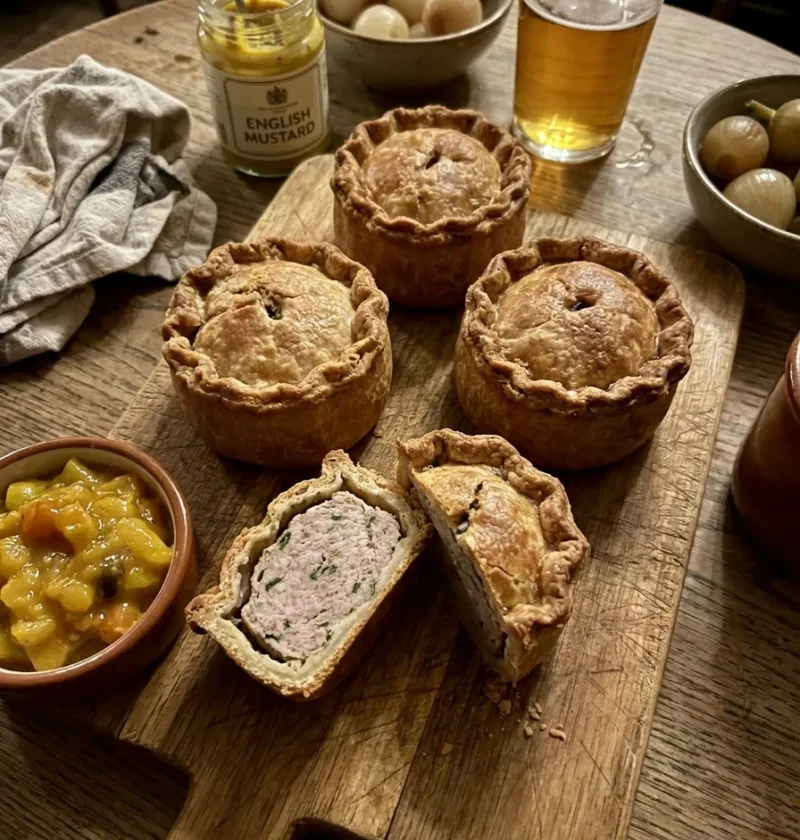
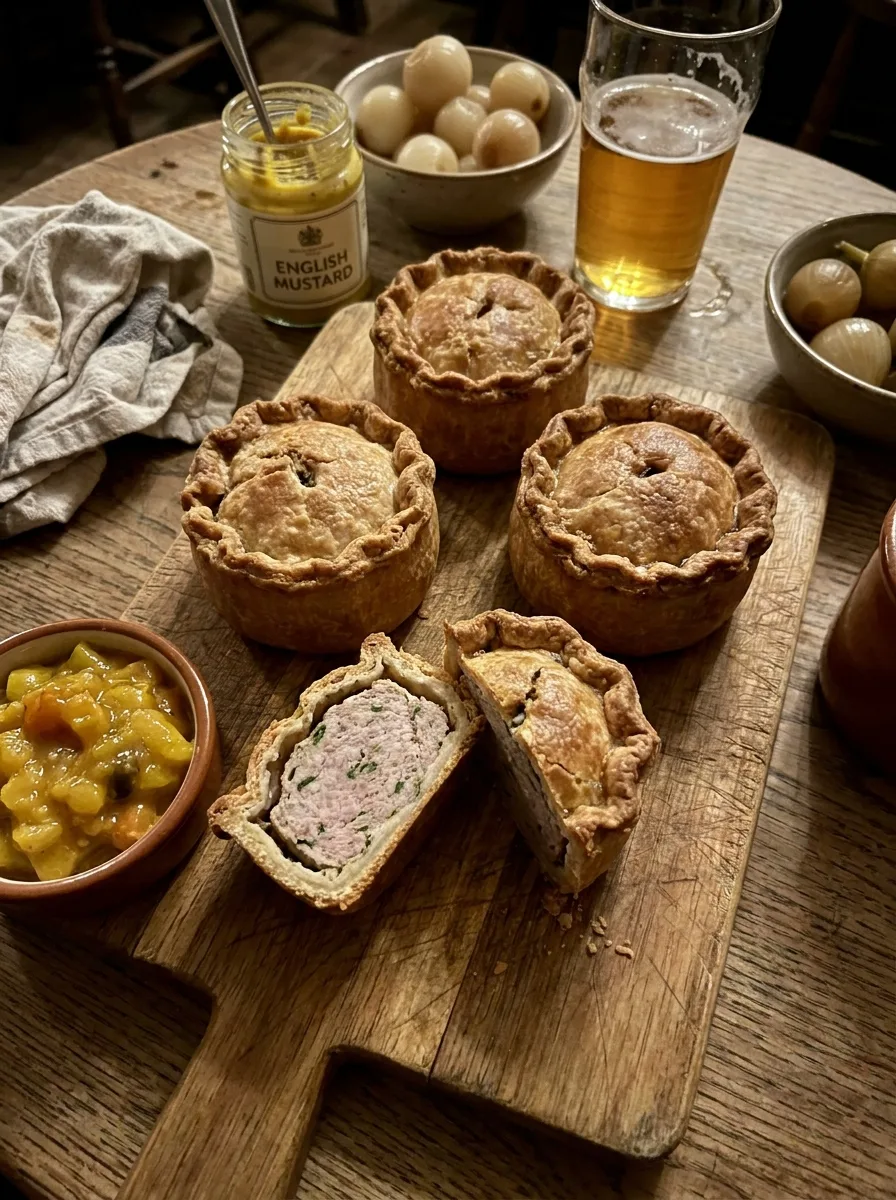
Gordon Ramsay’s pork pie is a proper British raised pie with hot water crust pastry, filled with minced belly and shoulder pork mixed with sausagemeat, sage, juniper berries and lemon zest. Makes eight individual pies you can eat warm or cold with piccalilli and a pint. Takes about two hours including chilling.
This is his recipe from Great British Pub Food, and the hot water crust pastry is the whole point. Most online pork pie recipes cheat with shortcrust, but Gordon uses the traditional method: butter and lard melted with water, poured into flour and worked warm. It sets firm when it cools, which is what gives a proper pork pie its sturdy, free-standing case.
The filling is equal parts belly and shoulder mince, and that ratio matters. Belly brings the fat so the pie stays moist and juicy. Shoulder brings the texture so it holds together when you bite through. All lean mince and the filling dries out. All belly and it’s greasy. Half and half is the sweet spot.
Cooked this recipe? Send a photo or tell me what you changed at fans@gordonramsayrecipes.uk and I’ll share your experience live on this page.
Gordon Ramsay Pork Pie
Course: Lunch, SnackCuisine: BritishDifficulty: Medium8
pies30
minutes25
minutes380
kcalGordon’s old-fashioned pork pies from Great British Pub Food. Hot water crust pastry filled with belly and shoulder pork, sausagemeat, sage, juniper and lemon zest. Individual hand-raised pies, eaten warm or cold with piccalilli.
Ingredients
- For the hot water crust pastry:
250g plain flour
½ tsp fine sea salt
1 large egg
50g unsalted butter
50g lard
85ml water
1 egg yolk, beaten with 1 tbsp water (glaze)
- For the filling:
400g minced pork (equal parts belly and shoulder)
250g sausagemeat
1 tbsp chopped parsley
1 tbsp chopped sage
Finely grated zest of 1 lemon
5 juniper berries, ground with a pinch of salt
Pinch of allspice
Sea salt and black pepper
Directions
- Make the pastry: Sift the flour and salt into a bowl, make a well, crack the egg in and sprinkle over some flour. Melt the butter, lard and water together, bring to the boil, pour around the edge of the flour and stir quickly with a knife until combined. Knead lightly until smooth. Wrap in cling film and chill at least an hour.
- Mix the filling: Combine the pork mince, sausagemeat, parsley, sage, lemon zest, ground juniper, allspice and seasoning. Divide into 8 balls of about 80g each.
- Shape the pies: Cut one-third of the pastry for lids and re-chill. Roll the rest to pound-coin thickness. Cut 8 circles using an 11cm saucer. Roll the reserved pastry and cut 8 rounds of 7cm for lids.
- Assemble: Place a filling ball on each base, flatten slightly. Put a lid on top. Brush the border with egg wash, draw the base pastry up around the filling to meet the lid, pinch to seal and crimp. Chill until firm.
- Bake: Heat the oven to 190C (170C fan, Gas 5). Place pies on a baking sheet, poke a hole in each lid with a skewer. Bake 15 minutes, then reduce to 170C (150C fan, Gas 3), brush with egg wash and bake 10 more minutes. Test with a skewer: it should feel hot when you pull it out.
Let them cool on a wire rack. They’re good warm from the oven, but they’re also brilliant cold the next day when the pastry has set firm and the filling has had time to settle. That’s the whole point of a raised pie: it travels.
FAQs
What is hot water crust pastry?
The traditional pastry for raised pies. You melt butter, lard and water together, pour the hot liquid into flour and work it while it’s still warm. It’s pliable when warm so you can shape it by hand, then sets firm and sturdy when it cools.
It’s completely different from shortcrust, which crumbles. Hot water crust holds its shape without a tin, which is why pork pies can stand up on their own.
Why equal parts belly and shoulder?
Belly is fatty, shoulder is lean. Together they give you a filling that’s juicy but holds together. If you use all lean mince the pie dries out and tastes cardboardy. If you use all belly it’s too greasy.
Ask your butcher to mince equal quantities of each, or buy them separately and mix at home.
What do the juniper berries do?
They add a piney, slightly resinous note that cuts through the richness of the pork. It’s a traditional British seasoning for pork that most people have forgotten about.
Five berries is enough. Grind them with a pinch of salt using a pestle and mortar. Combined with the allspice and lemon zest, they give the filling a warmth you can’t quite place but would miss if it wasn’t there.
Can I make one big pie instead of eight small ones?
Yes, but individual pies are better for portion control and they cook more evenly. If you make one large pie, use a springform tin to help it hold its shape, and add 10 to 15 minutes to the bake time.
Test with a skewer in the centre. It needs to feel properly hot, not just warm.
What should I serve with them?
Gordon says piccalilli or pickled onions and a pint of ale. That’s the classic British combination. If you’re making a spread, his cheese and onion pie from the same book is the vegetarian option for the same table.
Branston Pickle and a sharp English mustard work well too.
Do they keep?
Yes, and they’re designed to. A proper pork pie with hot water crust pastry keeps in the fridge for three to four days, wrapped in greaseproof paper. The pastry stays firm because of the lard.
They’re actually better the day after baking, once the filling has cooled and set completely. That’s how they were always meant to be eaten: cold, at a picnic, with a beer.