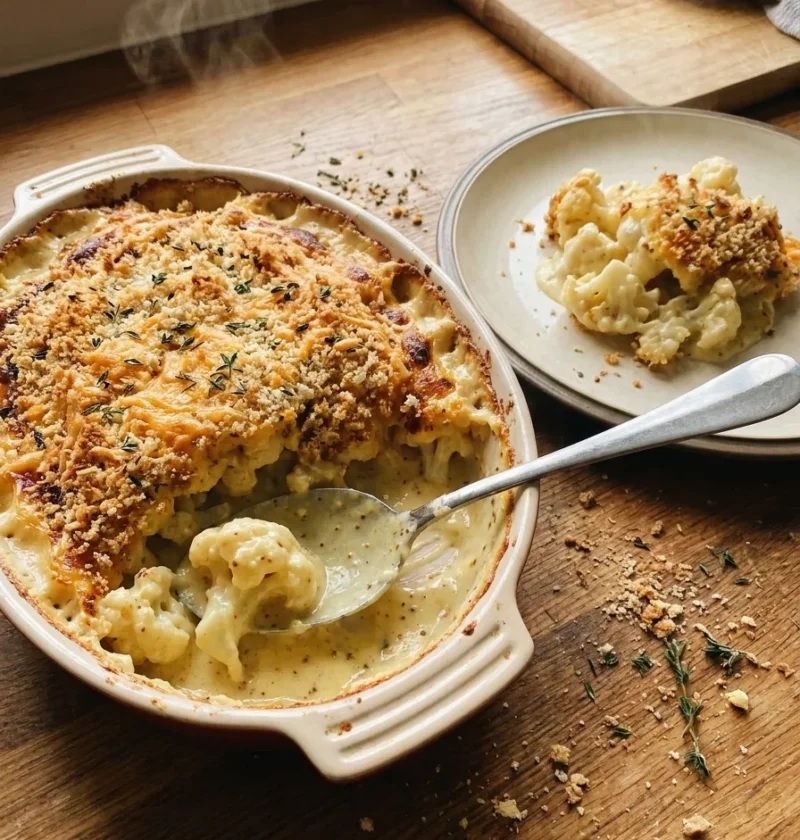
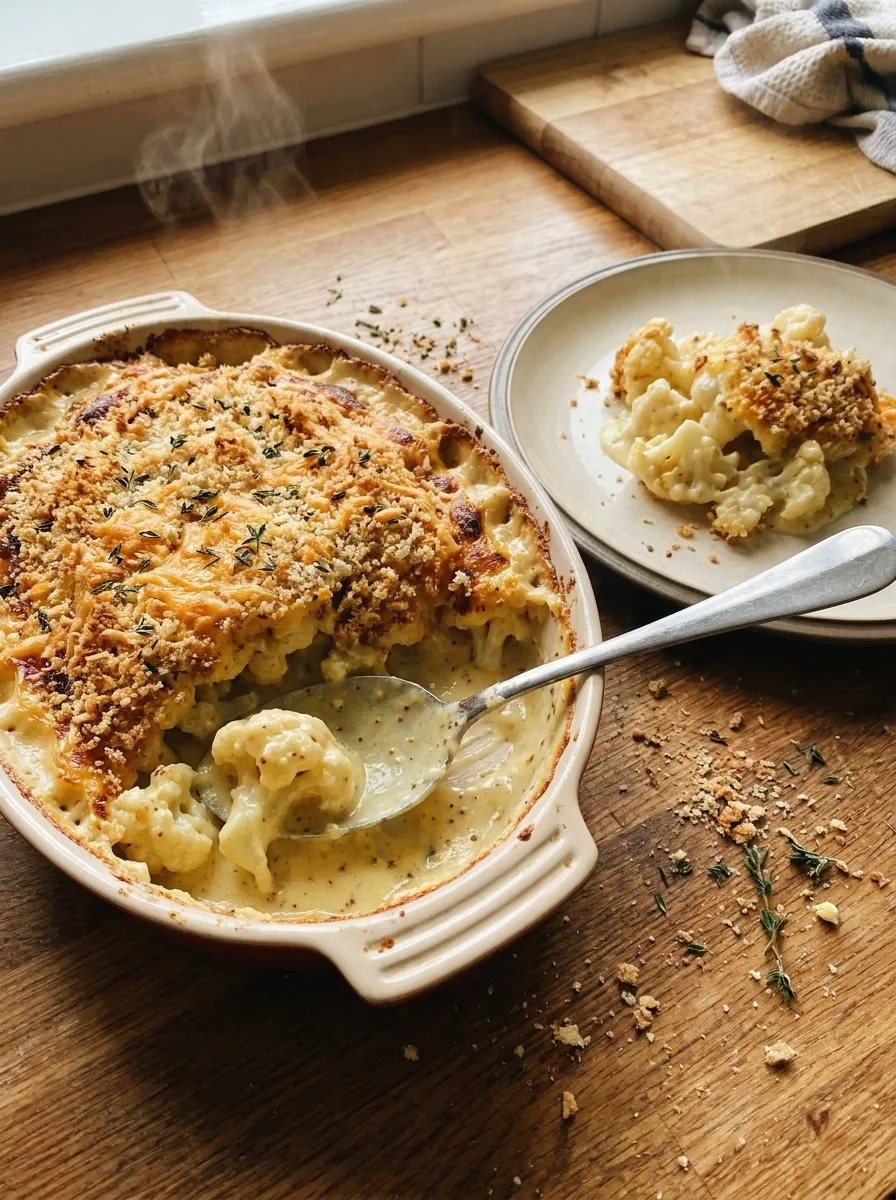
Gordon Ramsay’s cauliflower cheese is tender florets baked in a mustard-spiked cheese sauce made with three British cheeses: mature Cheddar, Lancashire, and Cheshire. Topped with a cheesy breadcrumb and thyme crust and baked until golden and bubbling.
This recipe comes from Gordon Ramsay Restaurants, where he serves it as a side with roast dinners. The technique is a classic béchamel base: butter, flour, and mustard powder cooked into a roux, then milk whisked in gradually. Half the cheese goes into the sauce, and the other half gets mixed with breadcrumbs and thyme for the crispy topping.
The detail most home cooks skip is the ice bath. Ramsay blanches the cauliflower for 4 to 5 minutes, then plunges it straight into iced water. This stops the cooking dead so the florets stay firm in the oven instead of turning to mush under the sauce. Without it, you get porridge.
Cooked this recipe? Send a photo or tell me what you changed at fans@gordonramsayrecipes.uk and I’ll share your experience live on this page.
Gordon Ramsay Cauliflower Cheese Recipe
Course: Side DishCuisine: BritishDifficulty: Easy4
servings15
minutes20
minutes450
kcal35
minutesClassic British cauliflower cheese from Gordon Ramsay Restaurants. Three cheeses (Cheddar, Lancashire, Cheshire), mustard powder, cayenne, and a crispy breadcrumb and thyme topping. Golden, bubbling, ready in 35 minutes.
Ingredients
- For the cauliflower:
1 large cauliflower, cut into florets (about 600g / 1.3 lb)
Sea salt
- For the cheese sauce:
60g (2 oz) butter
60g (2 oz) plain flour
1 tbsp English mustard powder
600ml (1 pint) whole milk
Pinch of cayenne pepper
Sea salt and freshly ground black pepper
100g (3.5 oz) mature Cheddar, grated
100g (3.5 oz) Lancashire cheese, crumbled
100g (3.5 oz) Cheshire cheese, crumbled
- For the topping:
50g (1.75 oz) fresh breadcrumbs
1 tbsp fresh thyme leaves
Directions
- Blanch the cauliflower: Bring a large pan of well-salted water to the boil. Add the cauliflower florets and cook for 4 to 5 minutes until just tender. Drain and refresh immediately in a bowl of iced water to stop the cooking. Drain well and transfer to a large ovenproof dish.
- Make the roux: Preheat the oven to 200°C (400°F) Gas 6. Melt the butter gently in a clean saucepan, then stir in the flour and mustard powder over a low heat to make a smooth paste.
- Build the sauce: Gradually add the milk a little at a time, whisking continuously until completely smooth after each addition. Bring to the boil and simmer for a few minutes, stirring constantly, until the sauce thickens enough to coat the back of a spoon. Remove from the heat, add the cayenne pepper, and season with salt and pepper.
- Add the cheese: Mix the three cheeses together in a bowl. Stir half into the hot sauce until fully melted and smooth.
- Assemble: Pour the cheese sauce all over the cauliflower in the dish.
- Make the topping: Mix the remaining cheese with the breadcrumbs and thyme leaves. Sprinkle this cheesy crumble evenly over the dish, covering the cauliflower and sauce completely.
- Bake: Transfer to the oven and bake for 15 to 20 minutes until the topping is crisp and golden and the sauce is bubbling. Serve immediately.
Notes
- Ramsay uses three British cheeses for maximum flavour. The Cheddar adds sharp tang, the Lancashire brings a crumbly milkiness, and the Cheshire melts smoothly. You could use all Cheddar if you can’t find the others, but the blend is what makes this version special.
FAQs
Why does Ramsay use three cheeses instead of just Cheddar?
Each cheese does a different job. Mature Cheddar adds sharp, tangy depth. Lancashire is crumbly and milky, which gives the sauce body without making it greasy. Cheshire melts smoothly and brings a gentle saltiness.
Together they create a sauce that’s more complex than anything you’d get from one cheese alone. It’s the same principle as blending wines. Each component contributes something the others lack.
If you can’t find Lancashire or Cheshire, a mix of Cheddar and Red Leicester gets you close. Or use all Cheddar, just make sure it’s mature so the flavour is strong enough to carry the dish.
Why does Ramsay ice bath the cauliflower after blanching?
The cauliflower spends 4 to 5 minutes in boiling water, then goes straight into iced water. This is called “refreshing” and it stops the residual heat from continuing to cook the florets.
Without the ice bath, the cauliflower carries on softening while you make the sauce. By the time it goes in the oven for another 20 minutes, it’s already overcooked.
The ice bath locks the texture at just-tender. The florets hold their shape through the bake and give you something to bite into under the crispy topping.
What does the mustard powder do in the sauce?
English mustard powder doesn’t make the sauce taste of mustard. Instead, it amplifies the cheesiness. It’s a common restaurant trick for cheese sauces, Welsh rarebit, and anywhere you want more punch from less cheese.
Mustard contains compounds that interact with the fats in cheese to make the flavour taste stronger and sharper. One tablespoon is enough for 600ml of sauce. Any more and you’ll start tasting actual mustard rather than boosted cheese.
The pinch of cayenne does something similar. It adds warmth that lifts the richness without making the dish spicy.
How is this different from cauliflower mac and cheese?
Ramsay has both recipes. This one is pure cauliflower in cheese sauce, a classic British side dish. His macaroni and cauliflower bake from the Ultimate Cookery Course adds 300g of dried macaroni to the same three-cheese sauce.
The mac version is a full meal. This version is a side dish designed to sit next to a roast or a pie. The technique and cheese blend are identical across both recipes.
If you want it alongside something like dauphinoise potatoes or a roast dinner, this lighter version is the one to make.
Can you make cauliflower cheese ahead?
You can assemble the whole thing, cover with cling film, and refrigerate for up to 24 hours before baking. Add 5 extra minutes in the oven if baking from cold.
Don’t freeze it before baking. The cauliflower goes watery when frozen and thawed, and the sauce can split. If you have leftovers, they reheat well covered with foil at 160°C for 15 minutes.
The topping loses some crunch overnight. If you’re making it ahead, keep the breadcrumb mixture separate in a bag and sprinkle it on just before baking for the crispiest result.