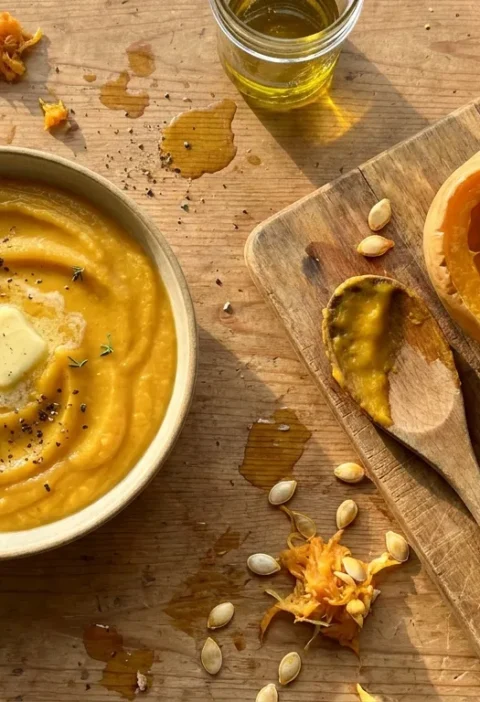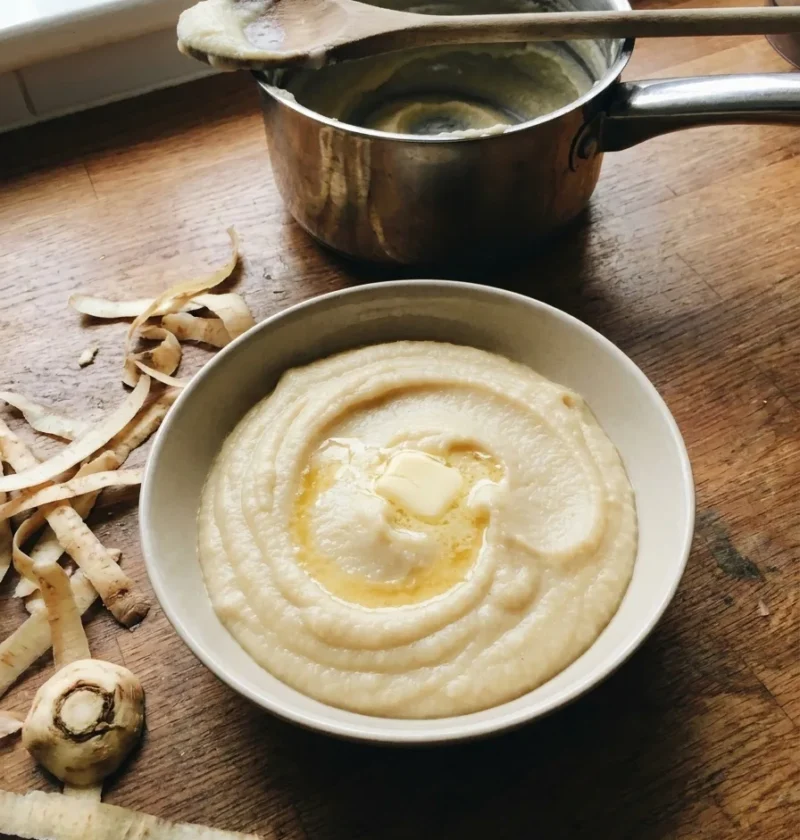
Gordon Ramsay’s parsnip purée is silky smooth, made by caramelising parsnips in butter before simmering them in milk and blitzing until completely smooth. Rich, sweet, and ready in about 25 minutes.
This uses Ramsay’s root vegetable purée technique from the Great Escape cookbook, where he sautés celeriac and carrots in butter, simmers them in milk, and blitzes until smooth. The same method works beautifully with parsnips. In Healthy Lean & Fit he specifically recommends serving parsnip mash alongside braised chicken legs with honey and five-spice.
The step most people skip is the initial sauté. Boiling parsnips straight in water makes them watery and bland. Caramelising them in butter first builds a toffee sweetness that carries through the whole purée, and that’s the difference between a side dish people remember and one they push around the plate.
Cooked this recipe? Send a photo or tell me what you changed at fans@gordonramsayrecipes.uk and I’ll share your experience live on this page.
Gordon Ramsay Parsnip Purée Recipe
Course: Side DishCuisine: BritishDifficulty: Easy4
servings5
minutes20
minutes195
kcal25
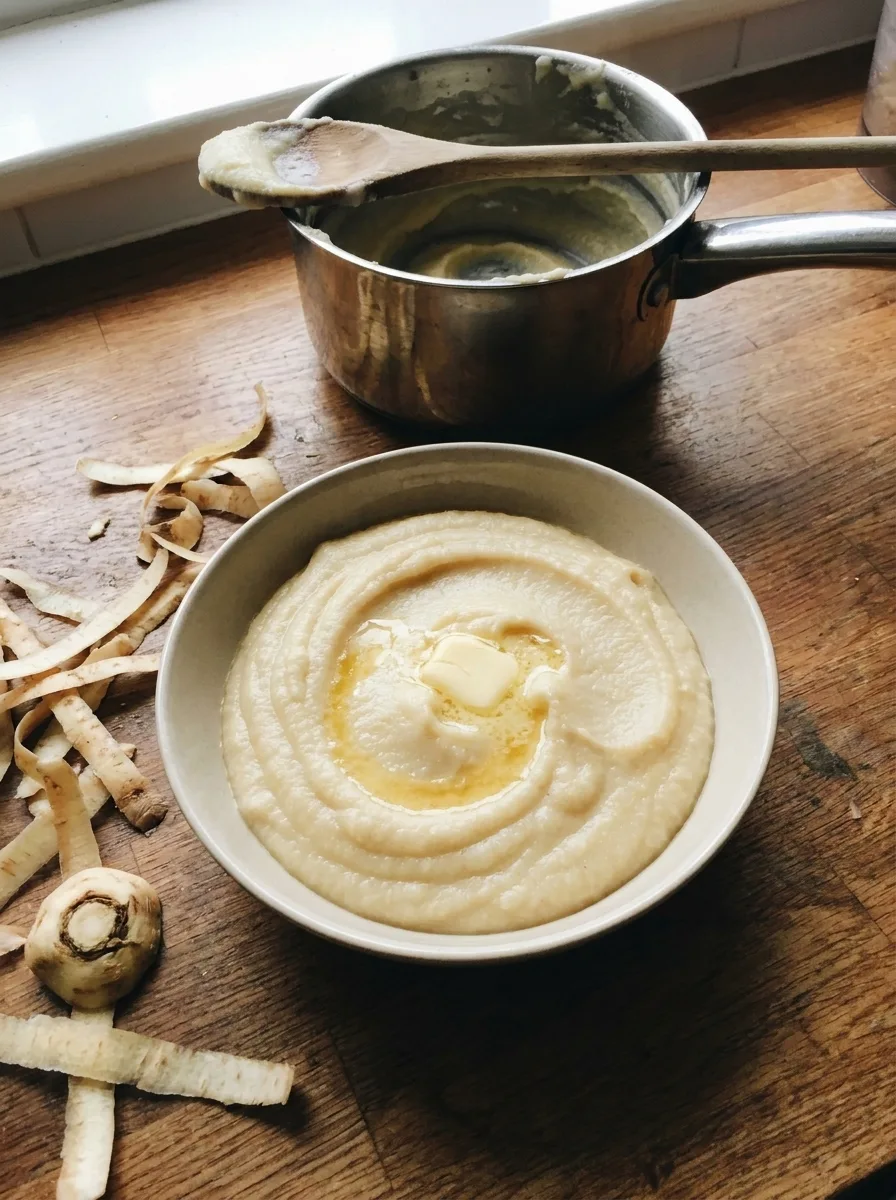
minutesSilky parsnip purée built from Gordon Ramsay’s root vegetable purée technique in the Great Escape cookbook. Caramelised in butter, simmered in milk, then blitzed smooth. A rich side for lamb, beef, or roast chicken.
Ingredients
600g (1 lb 5 oz) parsnips, peeled and chopped into even chunks
40g (1.5 oz) unsalted butter
150ml (5 fl oz) whole milk
Sea salt and freshly ground white pepper
Pinch of freshly grated nutmeg (optional)
Directions
- Sauté the parsnips: Melt half the butter in a wide saucepan over medium-high heat. Add the parsnip chunks and cook for 4 to 5 minutes, turning occasionally, until golden at the edges. This caramelisation builds sweetness you cannot get from boiling alone.
- Add milk and simmer: Pour in the milk and add the remaining butter. Season with salt. Reduce the heat to medium-low, cover, and cook for 12 to 15 minutes until the parsnips are completely soft and a knife slides through with no resistance.
- Blitz until smooth: Transfer everything including the liquid to a blender or food processor. Blitz until completely smooth with no lumps. For an extra silky finish, push through a fine sieve with the back of a spoon.
- Season and serve: Return to the pan over low heat. Taste and adjust the seasoning with salt, white pepper, and a pinch of nutmeg if you like. The purée should be thick enough to hold its shape on a plate but soft enough to spread.
Notes
- Best served straight away. Parsnip purée thickens and goes stodgy as it cools because the starch sets. You can make it up to a day ahead and reheat gently with a splash of warm milk, whisking to loosen. If the parsnips are very large with a woody core, cut out the tough centre before chopping.
FAQs
Why does Ramsay sauté root vegetables before simmering?
Most recipes tell you to boil parsnips in water, drain, then mash. Ramsay’s root vegetable purée technique starts differently. He sautés in butter first until the edges turn golden.
That caramelisation creates a toffee-like sweetness that stays in the purée after blitzing. Boiling in water washes out flavour and adds moisture you then have to cook off.
His celeriac and carrot purée in the Great Escape follows this same order. Sauté until caramelised, then add milk and butter, then cook until tender. Every root veg purée he makes starts this way.
Why milk and butter instead of cream?
Ramsay uses milk and butter rather than cream in his root vegetable purées. The milk loosens the texture without making it heavy, and the butter adds richness that cream would make sickly.
This matters because parsnips are already sweeter than most root vegetables. Cream on top of that sweetness pushes it too far. Whole milk keeps the balance right so the purée works as a side dish rather than tasting like dessert.
If you want it richer, add a little more butter at the end rather than switching to cream. You keep the silky texture without losing the savoury balance.
What does Ramsay serve parsnip purée with?
In Healthy Lean & Fit he recommends parsnip mash alongside braised chicken legs with honey and five-spice. The sweetness of the parsnip works with the spiced glaze.
Lamb shanks with parsnip purée is one of the most popular pairings, and it makes sense. Lamb shanks are rich, fatty, and deeply savoury. The sweet parsnip purée cuts through that richness the same way apple sauce works with pork.
If you’re making a roast, beef wellington with parsnip purée instead of mash is a restaurant-level pairing.
What is the difference between purée and mash?
Texture. Mash is crushed with a fork or masher, so it’s chunky with visible pieces. Purée goes through a blender or food processor until completely smooth with no lumps at all.
The cooking method changes too. Mash usually means boiling in water, draining, then crushing with butter. Purée uses less liquid during cooking so the flavour is more concentrated. There’s no draining step because all the liquid is already absorbed or blended in.
Ramsay’s technique sits firmly in the purée camp. He wants it blitzed smooth every time, whether it’s parsnips, celeriac, or carrots.
Can you make parsnip purée ahead of time?
You can, but it’s better fresh. Parsnip purée thickens and goes stodgy as it cools because the starch sets.
If you need to make it ahead, store it in the fridge for up to a day and reheat gently in a saucepan with a splash of warm milk, whisking until it loosens again. Don’t microwave it because the edges dry out while the centre stays cold.
For a roast dinner where everything needs to land at once, the purée is actually one of the easier things to reheat last minute while the meat rests. Two minutes on a low heat with a bit of milk and it comes back.