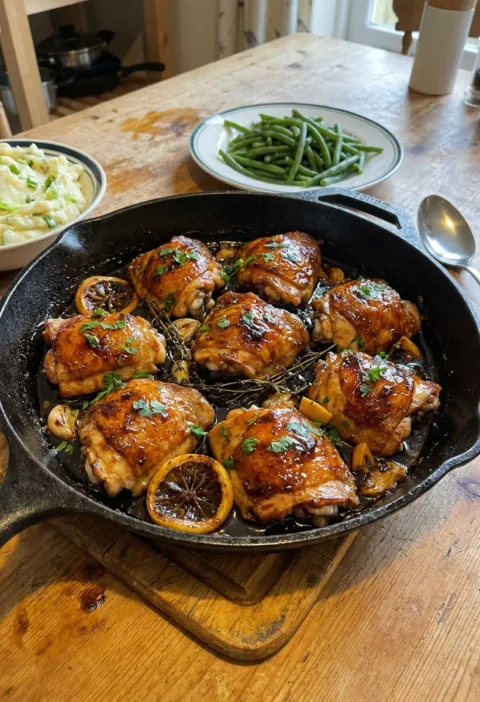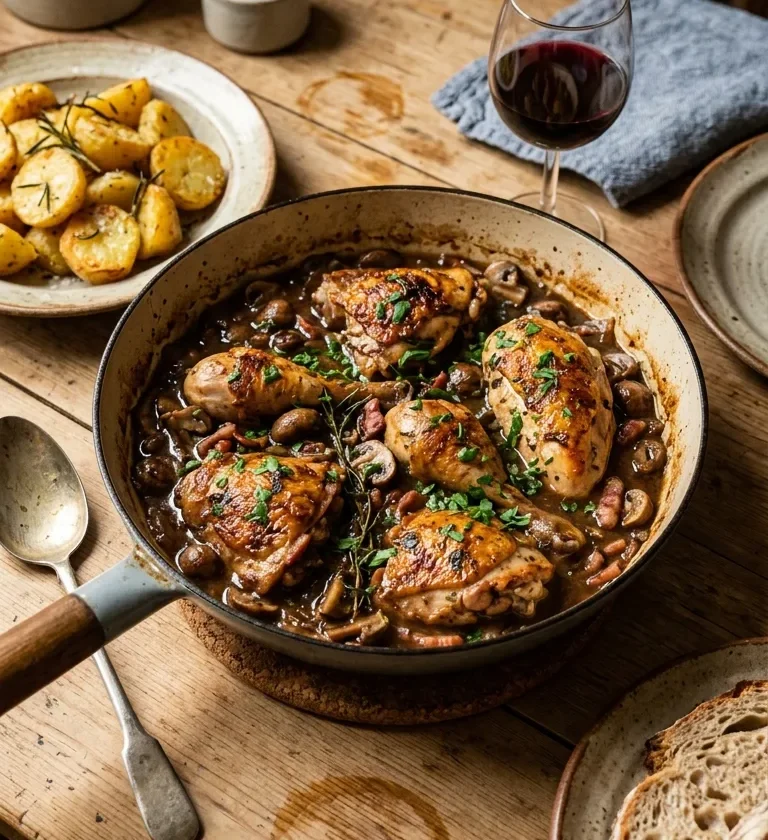
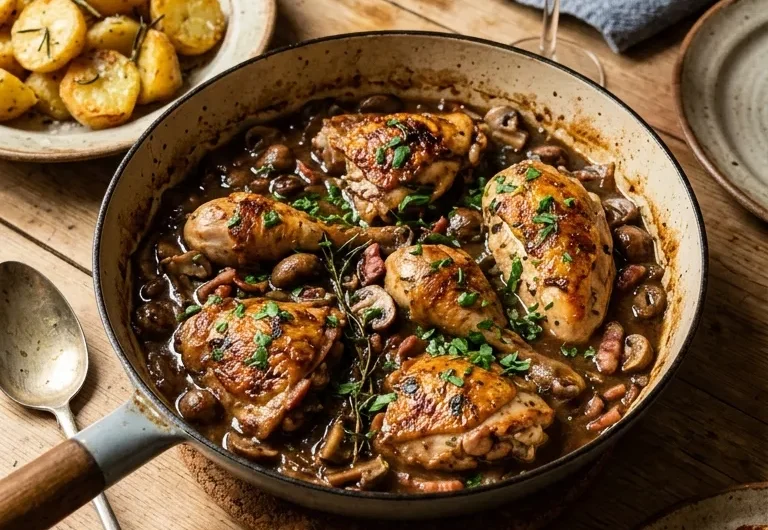
Gordon Ramsay’s chicken fricassee is a whole jointed chicken browned with smoked bacon lardons, chestnut mushrooms and garlic, flambéed in brandy, then braised in chicken stock for 25 minutes until the sauce reduces into something rich and glossy. Rustic French cooking at its best, and ready in under 40 minutes.
The recipe is from his Ultimate Home Cooking, where he says “fricassée is one of those old-fashioned terms which basically just means braised.” He also says something that surprised me: “You could add some double cream towards the end if you wanted to enrich the sauce but, to be honest, made with a quality chicken, it is already my ultimate home-cooked French dinner.” So no cream. The stock and the chicken do the work.
In the video he cooks this with his daughter Tilly, and describes it as “almost like a chicken stew.” The brandy flambé is the step that takes it from stew to fricassee, because once the flames die down “there’s no raw alcohol anywhere, so we’ve got a really nice deep rich flavour.” That depth is what you cannot get from just adding wine to a pan.
Cooked this recipe? Send a photo or tell me what you changed at fans@gordonramsayrecipes.uk and I’ll share your experience live on this page.
Gordon Ramsay Chicken Fricassee
Course: DinnerCuisine: FrenchDifficulty: Medium4
servings10
minutes30
minutes480
kcal40
minutesA jointed chicken braised with smoked bacon, mushrooms and garlic, flambéed in brandy and poached in chicken stock. From Gordon Ramsay’s Ultimate Home Cooking. No cream needed. His “ultimate home-cooked French dinner.”
Ingredients
1 large free-range chicken, jointed into 8 pieces (2 drumsticks, 2 thighs, 2 breasts cut in half)
150g smoked bacon lardons
4 garlic cloves, peeled and bashed
150g chestnut mushrooms, halved
1 bay leaf
2 rosemary sprigs
2 thyme sprigs, leaves only
75ml brandy
450ml chicken stock
Small handful of parsley, chopped
2 tbsp olive oil
Sea salt and freshly ground black pepper
Directions
- Brown the chicken: Place a large heavy-based sauté pan over a medium heat and add the olive oil. Season the chicken on both sides, then sauté for 3-4 minutes on one side until golden. Turn the chicken over, then add the lardons, garlic and mushrooms. Stir in the bay leaf, rosemary and thyme.
- Flambé: Add the brandy and carefully tilt the hot pan towards the lit gas to ignite the alcohol. Let the flames die down, then lower the heat slightly and simmer for 2-3 minutes.
- Braise: Pour in the chicken stock and bring to a gentle simmer. Cook uncovered for 10 minutes, then cover and cook for a further 15-20 minutes until all the chicken pieces are cooked through.
- Reduce the sauce: Transfer the chicken to a plate. Increase the heat for a few minutes to reduce and slightly thicken the sauce. Return the chicken to the pan and spoon the sauce over it.
- Finish: Discard the garlic cloves, rosemary sprigs and bay leaf. Sprinkle with the chopped parsley and serve.
Notes
- Source: Gordon Ramsay’s Ultimate Home Cooking (Hodder & Stoughton, 2013). Video: Gordon Ramsay’s French Inspired Recipes on YouTube, cooked with his daughter Tilly.
FAQs
Why does Ramsay flambé the brandy instead of just adding it?
The flambé burns off the raw alcohol so you get the deep caramel flavour of the brandy without any harshness. In the video he says “all the cognac has been flambéd so there’s no raw alcohol anywhere, so we’ve got a really nice deep rich flavour.” If you just pour brandy in and simmer it, the alcohol takes longer to cook out and the sauce can taste slightly bitter.
If you don’t have a gas hob, light it with a long match or just simmer for an extra 3-4 minutes. The alcohol cooks off either way, though you lose some of that instant caramelisation.
Does this need cream?
Ramsay says no, and I agree with him. His exact words: “You could add some double cream towards the end if you wanted to enrich the sauce but, to be honest, made with a quality chicken, it is already my ultimate home-cooked French dinner.” The stock reduces down and the chicken juices give the sauce enough body on its own.
That said, about 100ml of double cream stirred through at the end turns it into the classic bistro version: pale, silky and richer. Both ways are good, so it depends on the mood.
What is the difference between a fricassee and a stew?
Ramsay calls this “almost like a chicken stew” in the video, and he’s right that they’re close. The real difference is the browning and the flambé. A stew usually starts with raw meat simmered in liquid. A fricassee browns the meat first for colour and flavour, then flambés it in spirits before braising. That gives it a deeper, more complex sauce.
If you want the same comfort but with an Italian twist, chicken marsala uses the same braising method with fortified wine instead of brandy.
Can you use chicken pieces instead of jointing a whole bird?
Absolutely, and it’s easier. Buy a mix of skin-on thighs and drumsticks, about 1kg total. The dark meat is better for braising because it stays juicier over the longer cooking time. Breast pieces can dry out if you’re not careful with the timing.
If you have a whole chicken but don’t fancy jointing it, Ramsay’s roast chicken is the simpler route and you can use the leftover meat in a fricassee the next day. Ramsay joints his into 8 pieces in the cookbook: 2 drumsticks, 2 thighs and 2 breasts cut in half.
What should you serve with chicken fricassee?
Ramsay serves his with sautéed potatoes from the same chapter in Ultimate Home Cooking: waxy potatoes parboiled then fried in goose fat with shallots, garlic, rosemary and thyme. They’re the perfect match because they soak up every drop of that brandy and mushroom sauce.
Rice works well if you want something quicker, and a fennel salad on the side adds a fresh anise note that cuts through the richness. Crusty bread is non-negotiable though, because that sauce is too good to waste.
Does chicken fricassee reheat well?
Brilliantly. The sauce actually gets better overnight as the flavours come together, which is exactly what you’d expect from something Ramsay describes as similar to a stew. Store covered in the fridge for up to 3 days and reheat gently in a pan with the lid on.
I sometimes make this on a Sunday specifically so Monday’s dinner is already sorted. The chicken stays tender because it was braised, not roasted, and the lardons and mushrooms taste even better the second time around.