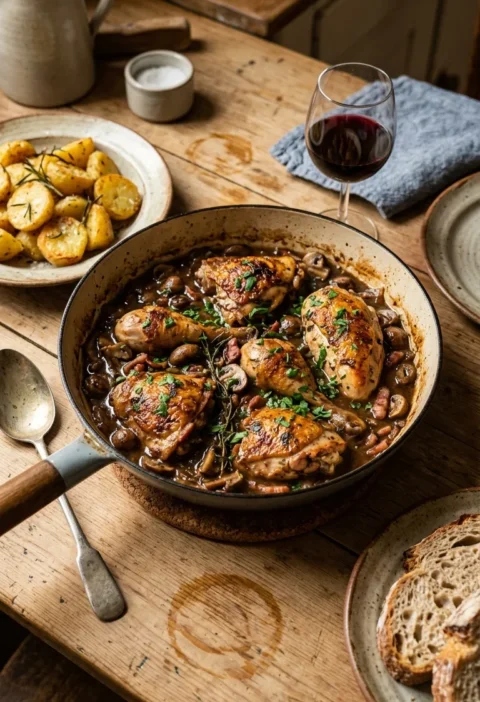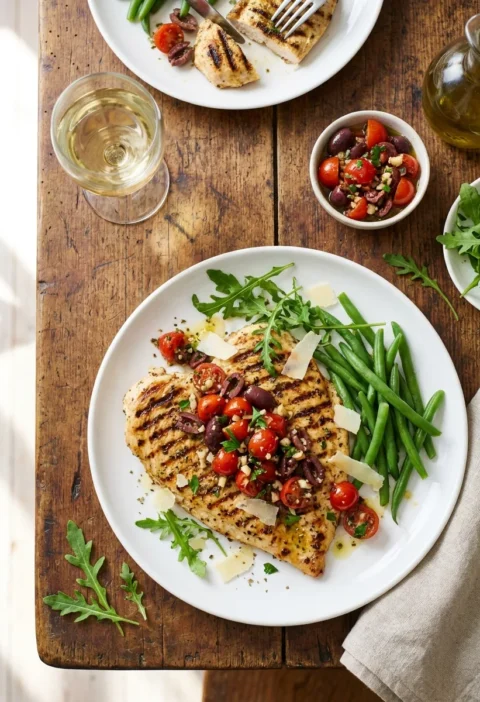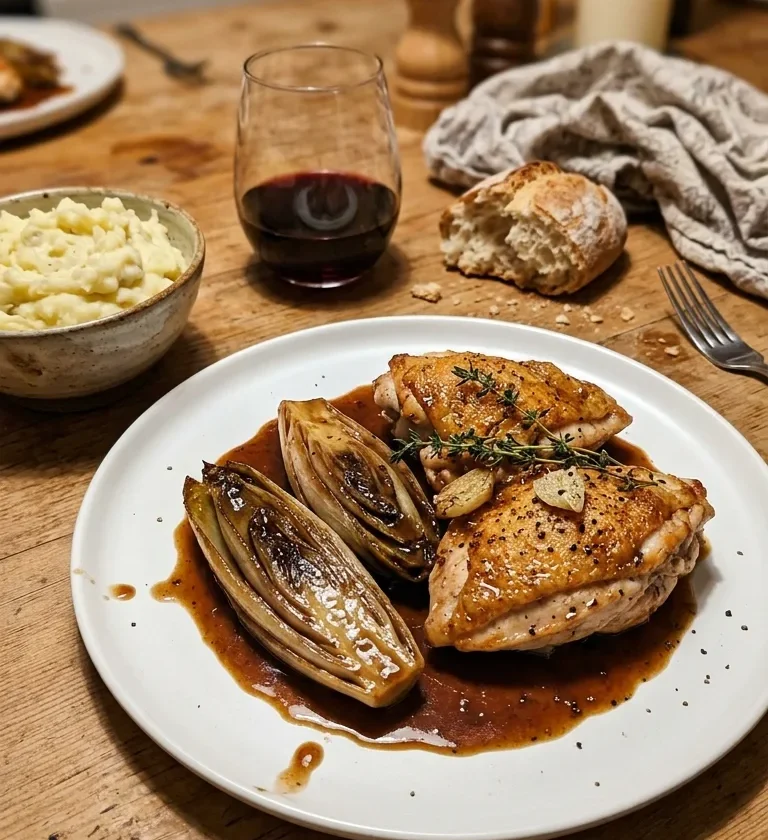
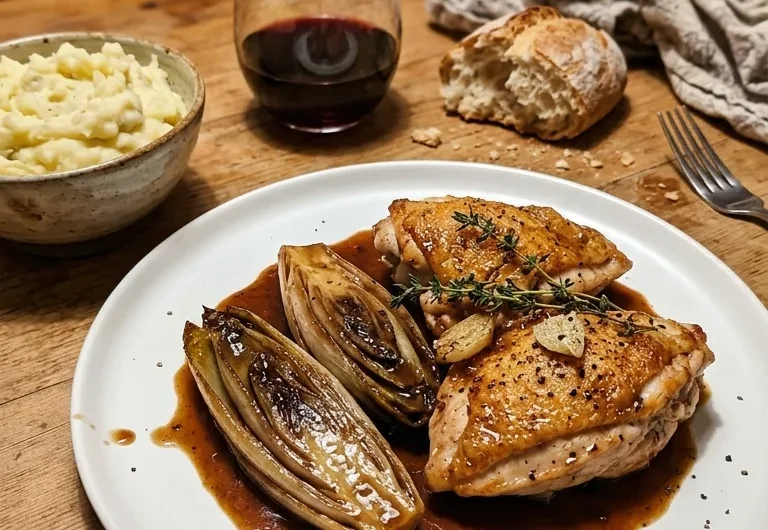
Gordon Ramsay’s chicken marsala is skin-on chicken breast seared until the skin is dark golden, then braised in Marsala wine, chicken stock and butter for 10 minutes until the sauce turns rich and glossy. He serves it with chicory cooked in the same pan, which soaks up all the marsala flavour. Ready in under 20 minutes.
The recipe is from his Ultimate Cookery Course, where he says “chicken breasts can easily dry out. Here it is coloured in a pan and then braised in chicken stock, butter and Marsala.” He also explains that “Marsala is a fortified wine from Sicily, and can be substituted with Madeira or medium-sweet sherry.” You can watch him make the full recipe in his Chicken and Chicory in Marsala Sauce video.
The technique Ramsay uses on The F Word for his veal marsala applies here too: deglaze the pan with the wine, then “reduce that down to a syrup. The reason why is that body, that weight for the sauce.” Reducing before adding the stock concentrates the marsala flavour into something deep and sticky rather than thin and boozy.
Cooked this recipe? Send a photo or tell me what you changed at fans@gordonramsayrecipes.uk and I’ll share your experience live on this page.
Gordon Ramsay Chicken Marsala
Course: DinnerCuisine: ItalianDifficulty: Easy2
servings5
minutes15
minutes420
kcal20
minutesSkin-on chicken breast braised in Marsala wine, chicken stock and butter from the Ultimate Cookery Course. Served with chicory cooked in the same pan. The same marsala sauce technique Ramsay uses across two cookbooks and three videos. Under 20 minutes.
Ingredients
2 chicken breasts or supremes, skin on
2 heads of chicory, trimmed and cut in half lengthways
4 thyme sprigs
1 garlic clove, peeled and lightly crushed
3 tbsp Marsala wine
150ml chicken stock
Butter
Olive oil, for frying
Sea salt and freshly ground black pepper
Directions
- Sear the chicken: Heat a heavy-based pan over a medium heat and add a little oil. Season the chicken on both sides. Place skin-side down in the hot pan. Add the chicory cut-side down, 2 thyme sprigs and the garlic. Cook for 3-4 minutes until the chicken skin is dark golden.
- Deglaze with Marsala: Turn the chicken and chicory over. Pour in the Marsala to deglaze the pan, scraping up the bits from the bottom. Let it bubble for 30 seconds to reduce slightly.
- Braise: Add the chicken stock and a couple of knobs of butter. Cook over a medium heat for 10 minutes, occasionally spooning the sauce over the chicken, until just cooked through.
- Serve: Place the chicken and chicory on warm plates. Spoon over the sauce and garnish with the remaining thyme sprigs.
Notes
- Source: Ultimate Cookery Course (Hodder & Stoughton, 2012). Marsala sauce technique confirmed across Quick and Delicious (Veal Saltimbocca) and The F Word (Veal Marsala). Three YouTube videos show the method.
FAQs
Why does Ramsay reduce the Marsala before adding stock?
On The F Word he explains it clearly: “Reduce that down to a syrup. The reason why is that body, that weight for the sauce.” If you add the stock straight away without reducing the wine first, the marsala flavour gets diluted and the sauce stays thin. The reduction concentrates it into something sticky and deep. Then the stock loosens it back to a sauce consistency but the concentrated flavour stays.
In the UCC version the reduction is quicker because he uses just 3 tablespoons of Marsala. In his veal marsala on The F Word he uses a full glass and flambés it before reducing. Both end up at the same place: a rich, glossy sauce.
What does the chicory do?
Chicory has a gentle bitterness that works brilliantly against the sweet wine and butter. Because it goes in the same pan as the chicken, it picks up all those caramelised bits from the skin, then softens as it braises in the sauce.
Most chicken marsala recipes use mushrooms instead. If you prefer that, swap the chicory for 150g sliced chestnut mushrooms. Sear them until golden before adding the Marsala, exactly as Ramsay does in his veal marsala on The F Word: “The secret here is that you got to get a bit of colour on those mushrooms.”
What is the difference between chicken marsala and chicken piccata?
They start the same way: sear the chicken, build a sauce in the same pan. But marsala goes sweet and rich with the fortified wine and butter, while chicken piccata goes sharp and bright with lemon juice and capers. Completely different mood on the plate.
I reach for marsala when it’s cold outside and piccata when it’s warm. Both take under 20 minutes, so there’s no reason not to have both in your rotation.
Can you use a different cut of chicken?
Ramsay uses skin-on breast in the UCC recipe because the skin crisps up during the sear and adds so much flavour to the sauce. Boneless thighs are more forgiving though, because they stay juicier even if you overshoot the timing. Either way, the pan-searing method is the same.
On The F Word he makes this dish with veal escalopes instead of chicken: flattened thin between parchment, dusted in seasoned flour with smoked paprika, seared 30 seconds each side. “Overcook it, it’s like leather. Cook it beautifully, and it tastes incredible.”
What should you serve with chicken marsala?
Ramsay serves his with fettuccine and green beans with blistered tomatoes on The F Word, which looks incredible but is a lot of pans for a Tuesday. Honestly, rice or mash with the sauce spooned over is all you need.
And bread. Always bread. That sauce is too good to leave on the plate.
Does Marsala wine go off once opened?
Because it’s fortified, an opened bottle lasts months in a cool cupboard. You only need a few tablespoons at a time for pan sauces, and it’s brilliant in tiramisu too. A bottle runs about £7-8 at Tesco and will last you ages.
If you can’t find Marsala, Ramsay says Madeira or medium-sweet sherry both do the job.