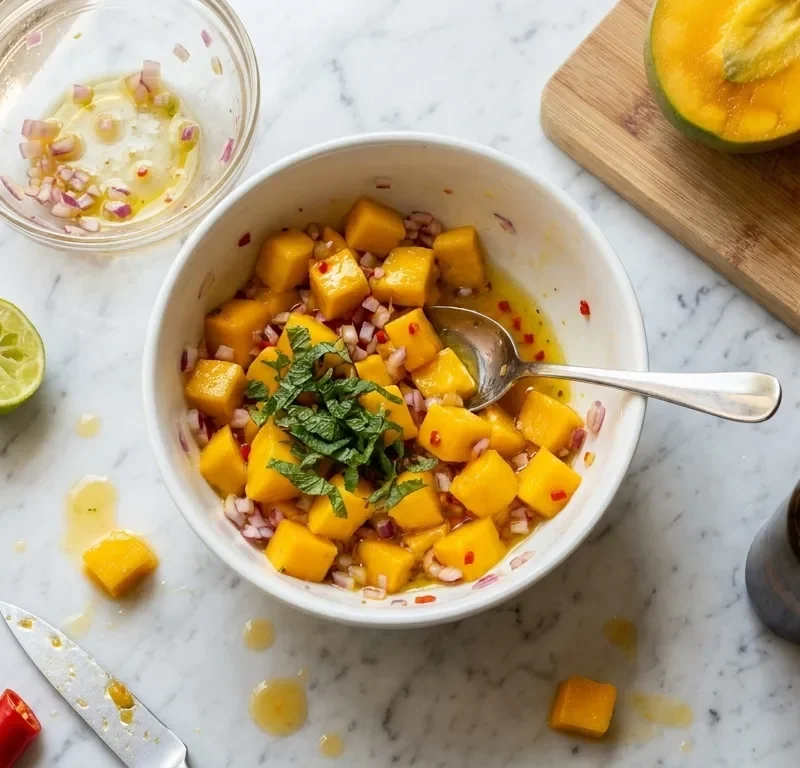
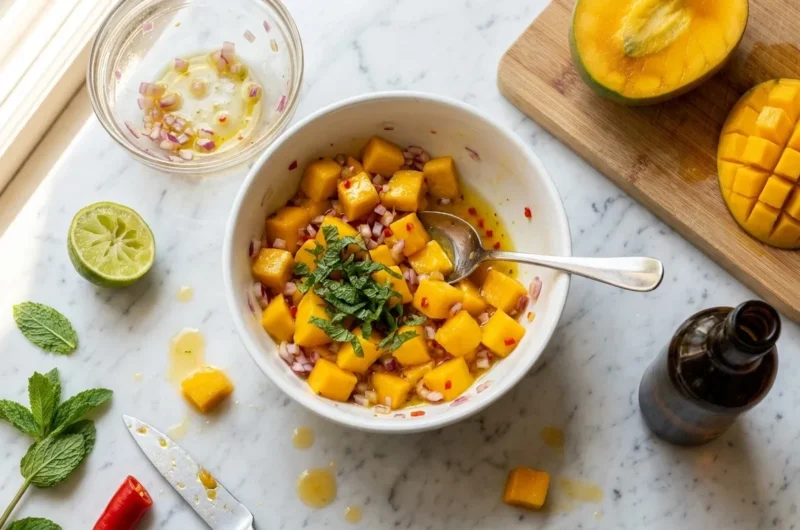
Gordon Ramsay’s mango salsa is two ripe mangoes cubed into a sharp base of red chilli, red onion, lime and sesame oil. Shredded mint goes through it last. Ten minutes of knife work, no cooking, and it serves six as the bright side of a starter.
It’s from Sunday Lunch, where it sits under his crab wraps, and the recipe has a rule most people would never guess: the mango and mint wait until the last minute. His headnote: “to keep the mango fresh and vibrant, I suggest you add it to the other salsa ingredients with the mint, at the last minute.”
The two-stage build is the technique. The chilli, onion, lime and oils sit together first, giving the lime time to mellow the raw onion’s bite. The mango and mint join only at serving, bright and intact instead of drowning in lime juice.
Cooked this recipe? Send a photo or tell me what you changed at fans@gordonramsayrecipes.uk and I’ll share your experience live on this page.
Gordon Ramsay Mango Salsa (Two-Stage Fresh Salsa)
Course: AppetizerCuisine: BritishDifficulty: Easy6
15
minutes15
minutes110
kcal30
minutesThe salsa from his crab wraps in Sunday Lunch: a punchy base of chilli, red onion, lime and two oils that does the waiting, while the mango and mint arrive fresh at the table. Built for crab, brilliant against anything spicy, and the make-ahead starter trick of his whole menu chapter.
Ingredients
2 large ripe mangoes, peeled and cubed
½ red chilli, deseeded and very finely diced
1 small red onion, peeled and very finely diced
Juice of 1 lime
1 tbsp sesame oil
1 tbsp olive oil, plus extra to drizzle
Handful of mint leaves, shredded
Sea salt and freshly ground black pepper
Directions
- Build the base first: Combine the chilli, red onion, lime juice, sesame oil and olive oil in a bowl. Season lightly with salt and pepper and set aside for at least 15 minutes, so the lime softens the onion’s raw edge.
- Cube the mango: Peel the mangoes and cut the flesh into neat cubes, working around the stone. Keep the pieces chunky rather than fine, and hold them separately until you’re ready to serve.
- Finish at the last minute: Just before serving, stir the mango cubes and shredded mint into the base. Taste and adjust the seasoning.
- Serve immediately: Spoon onto a serving plate or alongside whatever it’s cooling down. The salsa is at its absolute best in the first half hour.
FAQs
Why does the mango go in last?
Because lime juice and salt start breaking the fruit down on contact, pulling out juice and dulling the colour. Hold the mango back and the base gets all the marinating benefit, the onion mellows and the chilli infuses the oil, while the fruit stays firm and bright. The book makes this its one explicit instruction.
The same logic covers the mint: shredded mint blackens within the hour in acidic dressings. Both go in at service and the salsa looks cut-to-order even when the base was made at breakfast.
What does he serve it with in the book?
Crab wraps: white crabmeat bound with wholegrain mustard mayonnaise, chilli, shallot and coriander, rolled inside flattened iceberg lettuce strips, with the salsa spooned underneath. It’s the starter of a full Sunday Lunch menu, and the sweet mango against sweet crab is the pairing logic.
If you’re building a seafood starter spread, his crab cakes run on the same crab-plus-sharp-fruit logic, and his prawn cocktail covers the retro corner of the same table.
Can you make it ahead for a party?
Yes, and the book’s own menu planner answers this precisely: prepare the base several hours in advance, but “don’t add the mango or mint at this stage,” then toss both in just before serving. Cube the mango ahead too if you need to, just keep it covered in its own bowl.
That split is what makes it a hosting recipe: five seconds of stirring at service, and the salsa tastes like it was made the moment guests sat down.
Why is there sesame oil in a mango salsa?
The same reason it’s in his tomato salsa: one tablespoon of toasted sesame adds a savoury depth that olive oil alone can’t, and it stops a fruit salsa tipping into fruit salad. It’s a quiet signature across his fresh salsas, the same measure both times, doing the same job against lime and chilli.
His tomato salsa is the proof: different fruit, same backbone of citrus, chilli, olive oil and that single spoon of sesame.
What else does it go with?
Anything rich, fatty or hot. He pairs a mango salsa with his pork neck curry, where the cold sweet fruit plays against slow-cooked heat, and elsewhere in his books a minty mango salsa turns up next to a dessert parfait he calls “one of my favourites.” Grilled chicken, duck, pork chops and oily fish all take it well.
The rule from his own menus: mango salsa goes where cream or yoghurt would otherwise go, cooling and freshening instead of coating.
How do you pick and cube a ripe mango?
Smell the stem end: a ripe mango smells like mango from across the worktop, and the flesh gives slightly under a thumb without bruising. Colour means almost nothing, some varieties stay green when perfectly ripe.
To cube, stand the fruit on its end and slice the two cheeks off either side of the flat stone, score a grid into each cheek without cutting the skin, then push the skin inside-out and slice the cubes off. Any flesh clinging to the stone is the cook’s share.