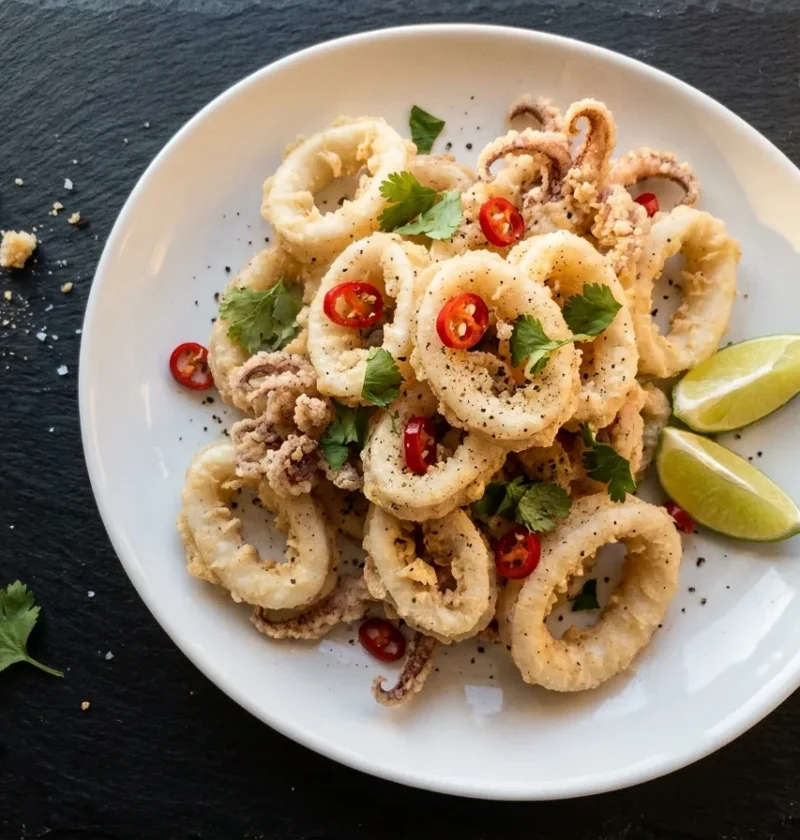
Gordon Ramsay’s salt and pepper squid is tender rings in a crisp Szechuan-pepper coating, deep-fried golden in two to three minutes. It comes from his Bread Street Kitchen book, where it is the house sharing snack, ready in about half an hour.
In the book he calls it a popular bar snack to pick at over a cold drink. The Szechuan peppercorns are the point: he says they give the squid “its distinct flavour and mouth-numbing tingle.” Takeaways skip them and lean on white pepper.
The detail that sets his apart comes before the flour. He dips the squid in whole milk first, which is not what most recipes do. That milk step is the reason his coating behaves differently from the rest, and I will get into it below.
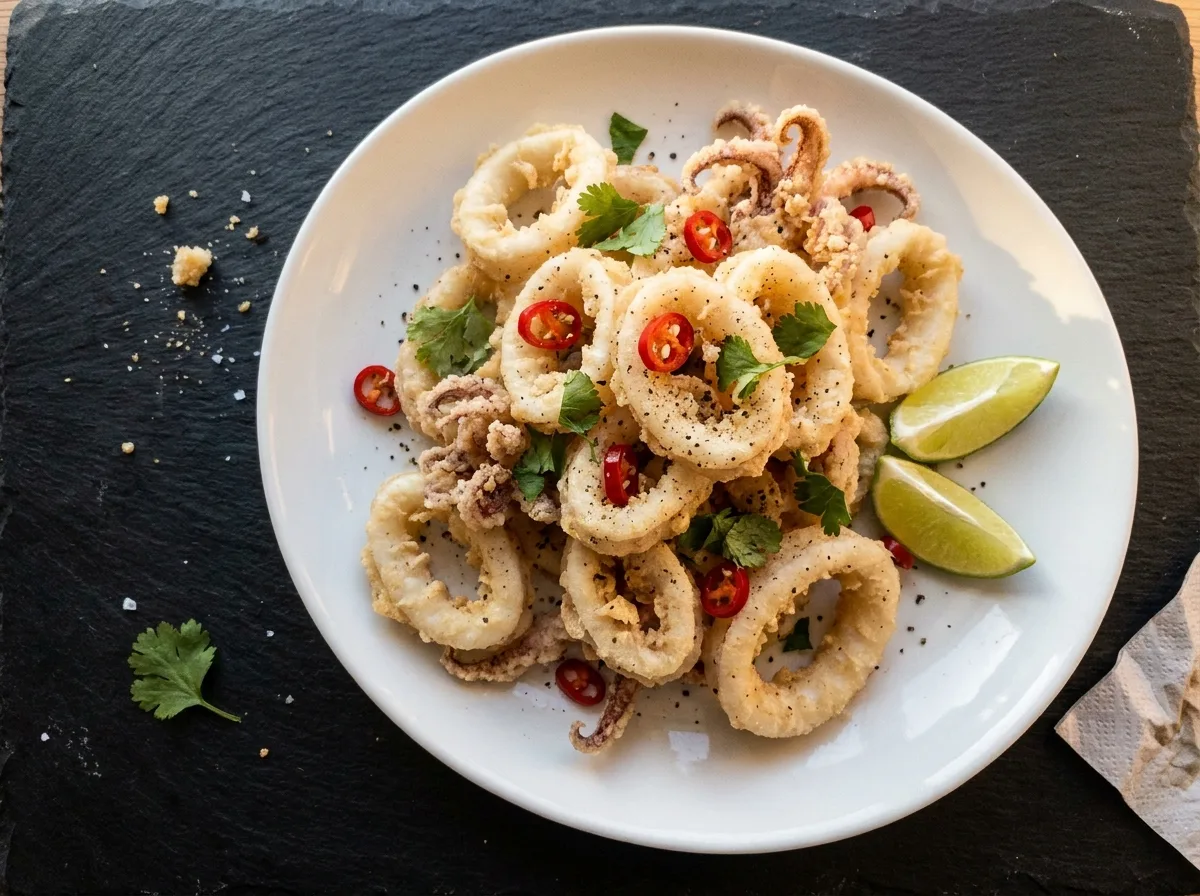
Gordon Ramsay Salt and Pepper Squid (Fried Calamari)
Course: Appetizer, SnackCuisine: ChineseDifficulty: Medium4-6
servings15
minutes15
minutes300
kcal30
minutesGordon Ramsay’s salt and pepper squid from Bread Street Kitchen, made crisp by a milk dip before the seasoned flour. It serves four to six as a sharing plate, at around 300 calories a serving.
Ingredients
- For the coating:
2½ tsp Szechuan peppercorns
50g plain flour
50g cornflour
50g semolina
¾ tsp sea salt
- For the squid:
12 small squid (about 550g), cleaned, patted dry and sliced into rings
120ml whole milk
Vegetable oil, for deep-frying
- To serve:
1 red chilli, deseeded and finely sliced
Large handful of fresh coriander leaves
Lime wedges
Directions
- Toast the pepper: Dry-fry the Szechuan peppercorns over a medium-high heat for a few minutes until fragrant, then grind to a fine powder.
- Mix the coating: Stir 2 tsp of the ground pepper into the flour, cornflour, semolina and salt. Keep the rest back for sprinkling.
- Heat the oil: Bring the oil to 180C (350F), or until a cube of bread browns in 30 seconds.
- Milk then flour: Dip the squid rings in the milk, shake off the excess, then coat in the flour mix and shake again.
- Fry in batches: Deep-fry for 2 to 3 minutes until golden, drain on kitchen paper and keep warm. Bring the oil back up to temperature between batches.
- Serve: Scatter with the chilli and coriander, add lime wedges and a little of the reserved pepper.
FAQs
Why does Gordon Ramsay dip the squid in milk?
Most recipes online use a wet batter or a splash of rice wine to make the coating stick. Ramsay skips both and uses whole milk, so the rings go into the milk first, then straight into the flour, cornflour and semolina.
The milk does two jobs. It grips the flour so the coating clings evenly to every ring, and it adds a faint sweetness that balances the salt and pepper. Shake off the excess each time, though, or the coating turns gluey instead of crisp.
Is this the same as Chinese takeaway salt and pepper squid?
Not quite, and the coating is where they split. Takeaway and most Cantonese versions use a cornflour or batter coat with plain salt and white pepper. Ramsay builds his on toasted Szechuan peppercorns and that semolina mix, which gives more crunch than a plain cornflour coat.
He also keeps a lighter version up his sleeve. On The F Word he shallow-fries the squid with Chinese five-spice instead of Szechuan and serves it with a cucumber salad. You can watch his crispy salt and pepper squid if you want the quicker pan-fried take.
Is Gordon Ramsay’s salt and pepper squid the same as calamari?
Pretty much, yes, because calamari is just the restaurant name for fried squid. The difference is the seasoning. Most calamari comes Italian-style with marinara or aioli, while his is the Chinese salt and pepper take with Szechuan and chilli.
His own maze Grill restaurant serves a Szechuan pepper squid along the same lines, with chilli flakes through the coating. So whether the menu says calamari or salt and pepper squid, it is the same crisp fried rings, just dressed differently.
How do you stop salt and pepper squid going rubbery?
Squid turns rubbery when it cooks too long, and that is the only real trap here. Ramsay fries these rings for the two to three minutes in the recipe and no more, then pulls them straight out. Small squid help too, because they stay tender where big ones go tough.
He makes the same point in his seafood paella, where the squid goes in last and needs only two minutes. Hot oil and a quick fry are what matter, so get the oil up to temperature before the first batch goes in.
What do you serve with salt and pepper squid?
Ramsay keeps it simple and skips a heavy dipping sauce, which is where takeaways tend to overdo it. He finishes the rings with fresh chilli, coriander and a squeeze of lime instead. That bright finish is the point, so a thick sauce would only bury it.
It also works as part of a seafood spread for sharing. His garlic prawns sit right alongside it, peeled at the table with your fingers. If you want the seafood timings right, my guide on cooking prawns like Ramsay covers the rest.
How do you clean squid for this recipe?
If you buy whole squid rather than ready rings, this is the bit to get right before the milk dip. Ramsay shows it on Hell’s Kitchen: pull the tentacles and head away, then reach inside for the guts and the clear quill. Rinse the tube until it is completely clean inside.
Then peel the thin skin off the outside and turn the tube inside out to check for tears. He wants it whole with no holes, so it slices into neat rings. Most shop-bought rings are already cleaned, so you can skip straight to the coating.
Can you reheat salt and pepper squid?
Not well, and I would not plan around it. Fried squid is best the minute it leaves the oil, because that crisp coating softens within the hour as steam builds underneath. The squid itself also toughens the second time round.
If you must, a hot oven or air fryer for a few minutes revives the crunch better than a microwave, which just turns it chewy. Better to fry only what you will eat and serve it while everyone is still standing in the kitchen.