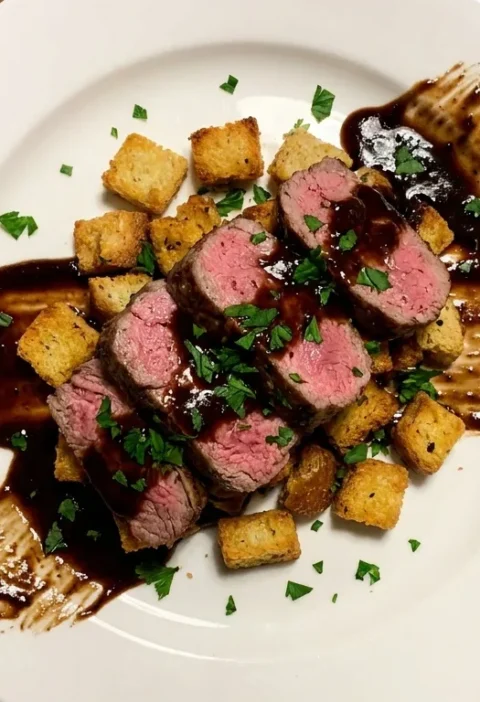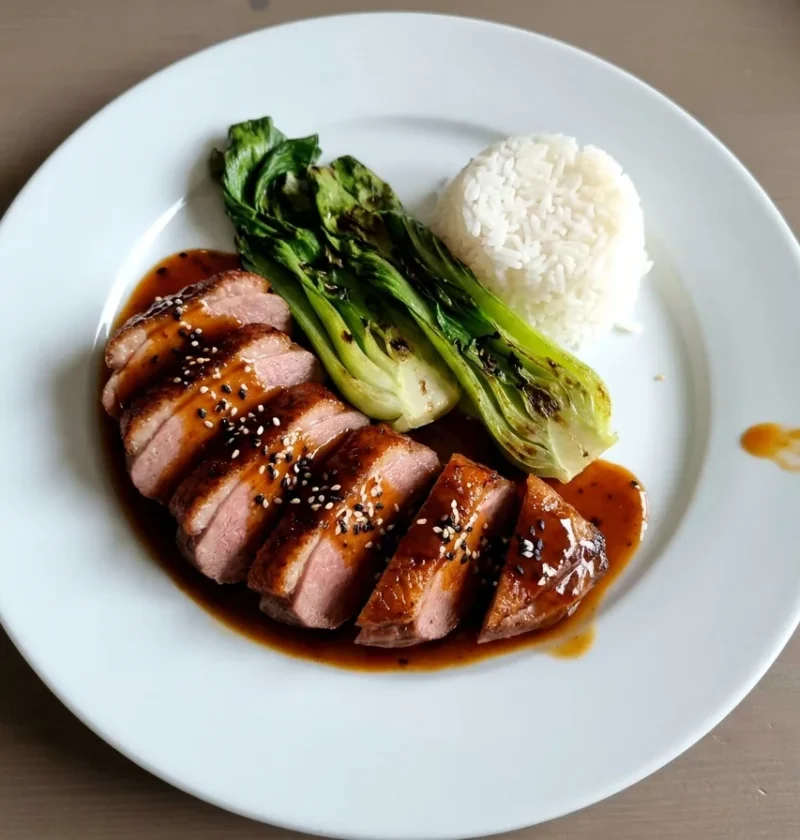
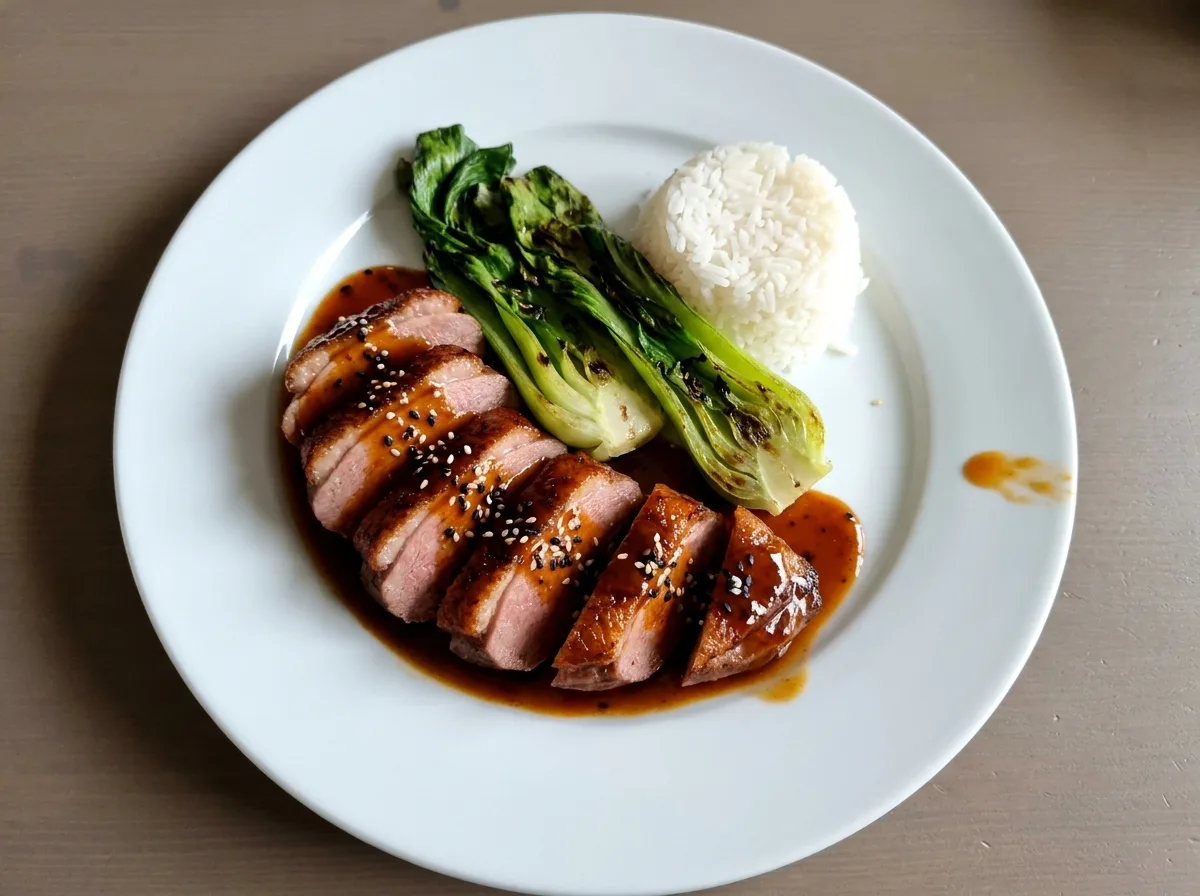
Gordon Ramsay’s duck a l’orange is a crisp-skinned duck breast in a glossy orange sauce, sharpened with soy, honey and ginger. It comes together in about 25 minutes, all in one pan. This is his lighter, fresher take, not the heavy French classic most people picture.
It’s from his Quick & Delicious book, where he’s open that he’s reworking the old dish on purpose. He calls duck and orange “a tried-and-tested combination,” but says the soy, honey and ginger “freshen up the old French classic.” He’s no fan of the dated original either, having once branded duck a l’orange “the culinary equivalent of flared trousers.”
The clever part is the sauce, which he builds in the same pan the moment the duck comes out. You char the pak choi in those leftover duck juices first, then pour in the orange juice and soy and let it reduce to a syrup. Nothing is wasted, so the sauce carries every bit of flavour the duck left behind.
Cooked this recipe? Send a photo or tell me what you changed at fans@gordonramsayrecipes.uk and I’ll share your experience live on this page.
Gordon Ramsay Duck a l’Orange
Course: Main, DinnerCuisine: French, BritishDifficulty: Easy4
servings10
minutes15
minutes540
kcal25
minutesGordon Ramsay’s modern duck a l’orange from his Quick & Delicious book, crisp duck breast sliced over charred pak choi with a quick orange, soy and ginger sauce. Serves four and ready in around 25 minutes.
Ingredients
4 duck breasts
4 pak choi, halved
250ml (1 cup) orange juice
50ml (3½ tbsp) soy sauce
2cm piece fresh root ginger, peeled and grated
50g (3½ tbsp) butter
50g (2½ tbsp) runny honey
1 tbsp black and white sesame seeds
Sea salt and freshly ground black pepper
Cooked rice, to serve
Directions
- Heat the oven: Preheat to 200°C (400°F / Gas 6) and slide a baking tray inside to heat up.
- Score and season: Score the duck skin in a diamond pattern with a sharp knife, cutting the fat but not the meat. Season well with salt and pepper.
- Crisp the skin: Lay the breasts skin-side down in a cold ovenproof frying pan, then set it over medium-high heat. Cook for about 7 minutes, until the fat has rendered and the skin is crisp and golden.
- Finish in the oven: Turn the breasts over and move the pan to the oven for 3 to 4 minutes. Lift the duck onto a warm plate and rest for 2 to 3 minutes.
- Make the sauce: Return the pan to the hob, add the pak choi and cook for 2 minutes until it takes some colour. Pour in the orange juice, soy, ginger and butter, bring to a simmer, then stir in the honey and reduce to a thick sauce.
- Serve: Slice the duck at an angle, plate with the pak choi and rice, spoon the sauce over and scatter with sesame seeds.
FAQs
Does Gordon Ramsay actually make a classic duck a l’orange?
Not the traditional one, no, and he’s never hidden his low opinion of it. He’s dismissed the old version as hopelessly dated, the kind of dish that had its moment decades ago and never moved on. So when he cooks duck and orange now, he reworks it on purpose.
His version keeps the orange but drops the heavy, sugary sauce of the seventies original. Soy, ginger and honey go in instead, which is why the book describes it as freshening up the old French classic rather than recreating it.
How do you make a more traditional orange sauce instead?
If you want the classic French style, you build it around a gastrique rather than soy. Melt a tablespoon of sugar to a light caramel, add a splash of vinegar, then the juice of two oranges and a strip of zest, and reduce it down.
Finish it with a knob of butter to give that glossy, restaurant shine, and a splash of Grand Marnier if you have it. It’s richer and sweeter than Gordon’s version, so taste as you go, because the line between balanced and cloying is thin.
How do you get the duck breast skin really crispy?
Start it in a cold pan, which sounds wrong but is the whole trick. Bringing the pan up slowly from cold gives the thick fat layer time to melt out gently, so the skin dries and crisps instead of seizing and going leathery.
Scoring helps as well, since the cuts give that fat an easy way to escape. Don’t rush this stage or move the duck around, because the skin only crisps properly if it sits still and renders in its own fat.
What goes well with it besides pak choi and rice?
The pak choi and rice make it a full plate on their own, but the dish takes easily to swaps. Steamed greens, plain noodles or a sharp watercress salad all work, since you mainly want something to soak up that orange sauce. For a more European plate, serve it with creamy dauphinoise potatoes and skip the rice.
Orange isn’t his only duck breast sauce either, so if you want something darker and richer, his duck breast with cherry sauce is the one to try. The sweet-sharp balance is similar, but cherry and port take it somewhere more wintery.
Should you use fresh or carton orange juice?
Either works, though they behave differently. Fresh juice is brighter and a touch more bitter, which balances the honey nicely, while carton juice is sweeter and reduces to a slightly stickier sauce. In a UK supermarket, a smooth not-from-concentrate carton is the easy middle ground.
Whichever you use, reduce it properly until it coats the back of a spoon. Under-reduced sauce slides straight off the duck and tastes thin, so give it the few extra minutes it needs.
Can you make duck a l’orange with a whole duck instead?
You can, and that’s actually how the classic French dish was always meant to be done, as a whole roasted bird. If that’s what you’re after, his whole roast duck recipe is the better starting point, then you’d spoon a separate orange sauce over the carved meat.
Using breasts the way Gordon does is just quicker and easier to cook evenly. The whole bird looks more of an occasion, but it takes far longer and needs more care to stop the breast drying out before the legs are done.