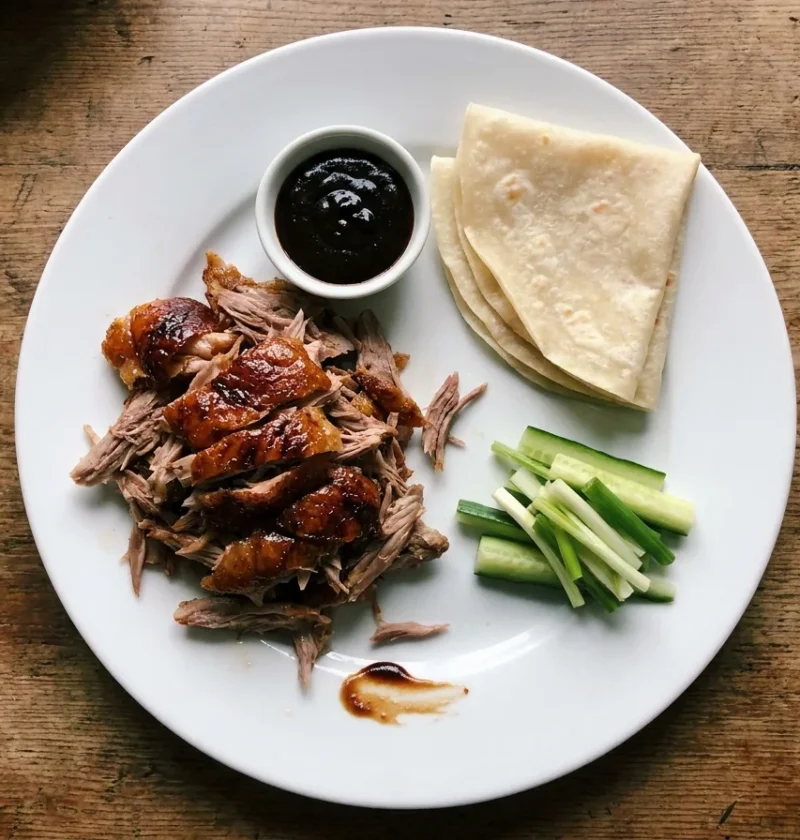
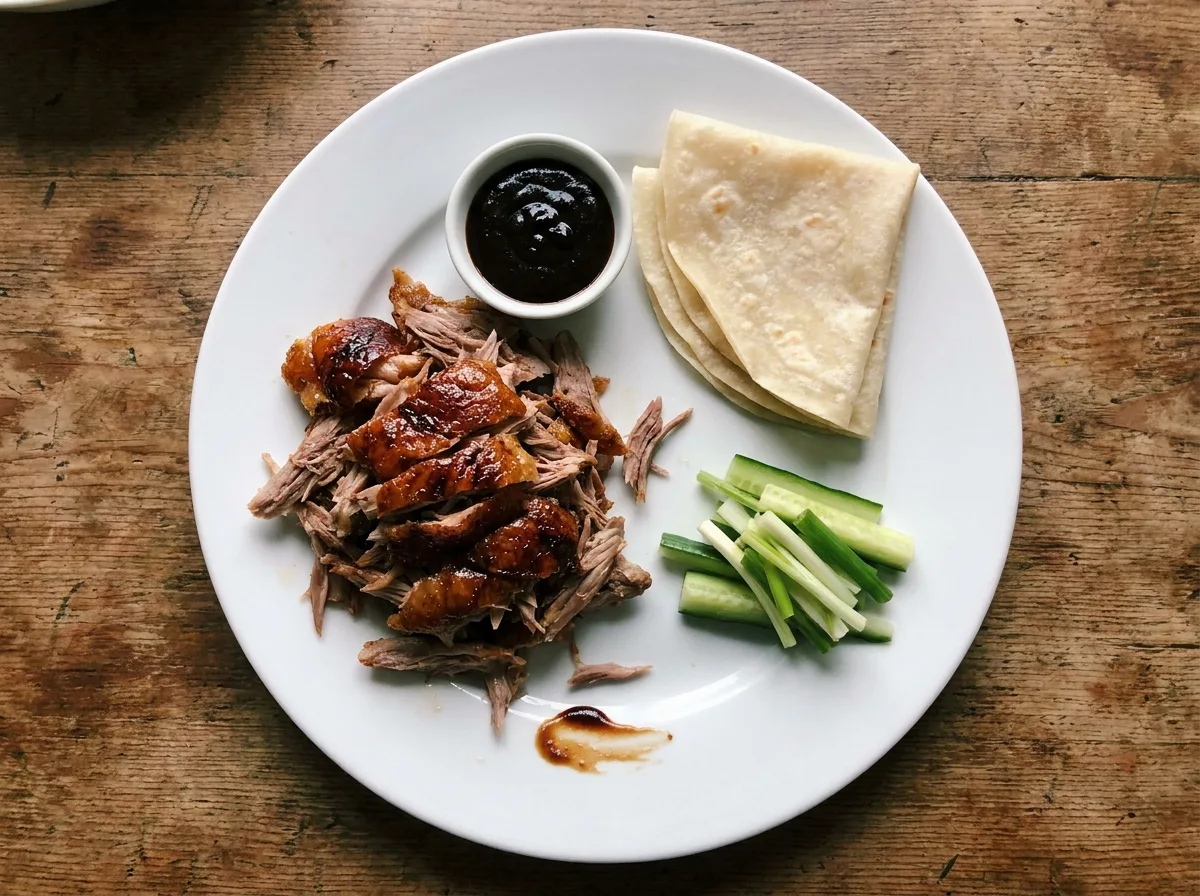
Gordon Ramsay’s crispy duck is a whole bird rubbed in Chinese five-spice and slow-roasted until the meat pulls apart in soft shreds and the skin turns crisp. You serve it in warm pancakes with a black bean dipping sauce. It takes around four hours, but nearly all of that is the oven’s work, not yours.
It’s his recipe from Ultimate Home Cooking, and he also cooks it on his YouTube channel with his daughter Megan. His twist is the dipping sauce, black bean instead of the usual hoisin, which gives it a deeper, savoury edge. He also stuffs the cavity with star anise, ginger and spring onion, because as the duck roasts they “create this really nice perfume aroma inside.”
The whole thing rests on the long, low roast. An hour at 160°C, then two and a half to three hours at 140°C, slowly renders the thick layer of fat so the skin crisps while the meat stays tender enough to shred with two forks. Rush it and you get the opposite, soft skin and tight, dry meat.
Cooked this recipe? Send a photo or tell me what you changed at fans@gordonramsayrecipes.uk and I’ll share your experience live on this page.
Gordon Ramsay Crispy Aromatic Duck
Course: Main, DinnerCuisine: Chinese, BritishDifficulty: Easy4-6
servings15
minutes3
minutes500
kcal4 hr
Gordon Ramsay’s crispy duck, the pull-apart-at-the-table kind you wrap in pancakes, slow-roasted from a whole bird in his Ultimate Home Cooking. Serves four to six as a help-yourself feast.
Ingredients
- For the duck:
1 whole duck
4 tbsp Chinese five-spice powder
4 star anise
2 garlic cloves, bashed
4cm piece fresh root ginger, peeled and sliced
4 spring onions, trimmed and halved
20 Chinese pancakes
Sea salt and freshly ground black pepper
- For the black bean dipping sauce:
Groundnut oil, for frying
2 garlic cloves, peeled and chopped
3-4 tbsp black bean sauce
2 tsp rice vinegar
1-2 tbsp soy sauce
½-1 tbsp runny honey
Directions
- Season the duck: Preheat the oven to 160°C (325°F / Gas 3). Cut off the flap of fat over the cavity, pat the inside dry and season. Rub the whole duck with the five-spice, massaging it into the skin, then tuck the star anise, garlic, ginger and spring onions inside the cavity.
- Slow-roast: Sit the duck on a rack over a roasting tin and roast for 1 hour. Turn the oven down to 140°C (275°F / Gas 1) and roast for another 2½ to 3 hours, until the meat is really tender and the skin is crisp.
- Make the dipping sauce: Heat a dash of oil in a small pan and fry the garlic until soft but not coloured. Add the black bean sauce, vinegar, soy and honey, then cook over low heat for 3 to 4 minutes. Taste and adjust with more soy or honey.
- Rest: Move the duck to a plate, cover loosely with foil and rest for 15 minutes.
- Serve: Warm the pancakes, then flake the duck off the bone by pulling it apart with two forks. Serve with the pancakes and the dipping sauce.
FAQs
Is this the same as Peking duck?
Not quite, and it’s worth knowing the difference before you start. True Peking duck is a days-long restaurant process. The bird is pumped with air, scalded, coated in a sugar glaze and dried for hours before it ever roasts, usually in a special oven you won’t have at home.
What Gordon makes is crispy aromatic duck, the pull-apart version British Chinese takeaways serve. It hits the same flavours though, five-spice, crisp skin and pancakes, just through a simple slow roast. So it’s the realistic home version of what most people mean by Peking duck. If you want a traditional Western roast instead, that’s his whole roast duck.
Do you score the skin first?
No, and that surprises people who’ve cooked duck breast. With a breast you score the skin to help the fat escape, but here you skip that and just rub the five-spice all over, massaging it in so the flavour goes deep. The long, low roast is what renders the fat this time, not the scoring.
What does matter is sitting the duck on a rack or trivet, so the fat drips away as it melts instead of pooling underneath. That’s the difference between skin that crisps all over and skin that stews in its own fat. If you want the scored, quick-cook approach, that’s his duck breast, a 30-minute dish rather than a four-hour one.
Why black bean sauce instead of hoisin?
This is Gordon’s own twist on the takeaway classic. Most crispy duck comes with sweet hoisin, but he builds a quick black bean dipping sauce instead, which is saltier and more savoury and cuts through the rich duck better.
It takes minutes: soften garlic in a little oil, then stir in black bean sauce, rice vinegar, soy and a touch of honey to balance it. Taste as you go, because black bean sauces vary in saltiness, so you adjust the soy and honey to suit the jar you’ve got.
What do you serve with crispy duck pancakes?
The classic build is shredded duck, a smear of the dipping sauce, then cucumber and spring onion rolled up in a warm pancake. Cut the cucumber and spring onion into thin strips so they tuck in neatly and add a fresh crunch against the rich meat.
If you want more on the table, a sharp cucumber salad or some steamed greens work well. You mostly want fresh, light things alongside, since the duck and pancakes are rich enough on their own.
What can you do with leftover crispy duck?
This is where the duck pays you back, because the shredded meat is brilliant the next day. Toss it through a quick duck stir fry with greens and a splash of soy. Or pile it into noodles, since the five-spice flavour is already in the meat.
It keeps for three days in the fridge and reheats fast, so warm it in a hot pan to crisp the edges again rather than the microwave. If you’d rather a duck dish you can make well ahead, his duck confit keeps for weeks stored in its own fat.
Can you make it ahead for a dinner party?
Yes, and Gordon points out it’s ideal for a relaxed, help-yourself supper. The duck happily sits in the oven a bit longer if your guests are late, and you can roast it earlier in the day, then crisp the skin in a hot oven just before serving.
The dipping sauce also keeps, so make it ahead and warm it through when you’re ready. Then it’s just heating pancakes and pulling the duck apart at the table, which takes the pressure off completely.