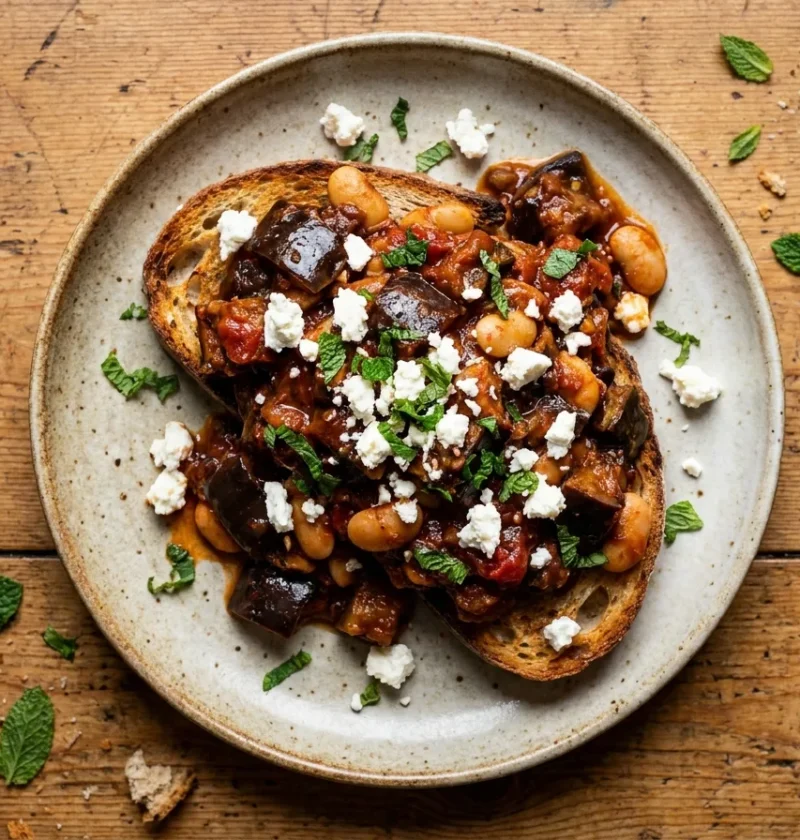
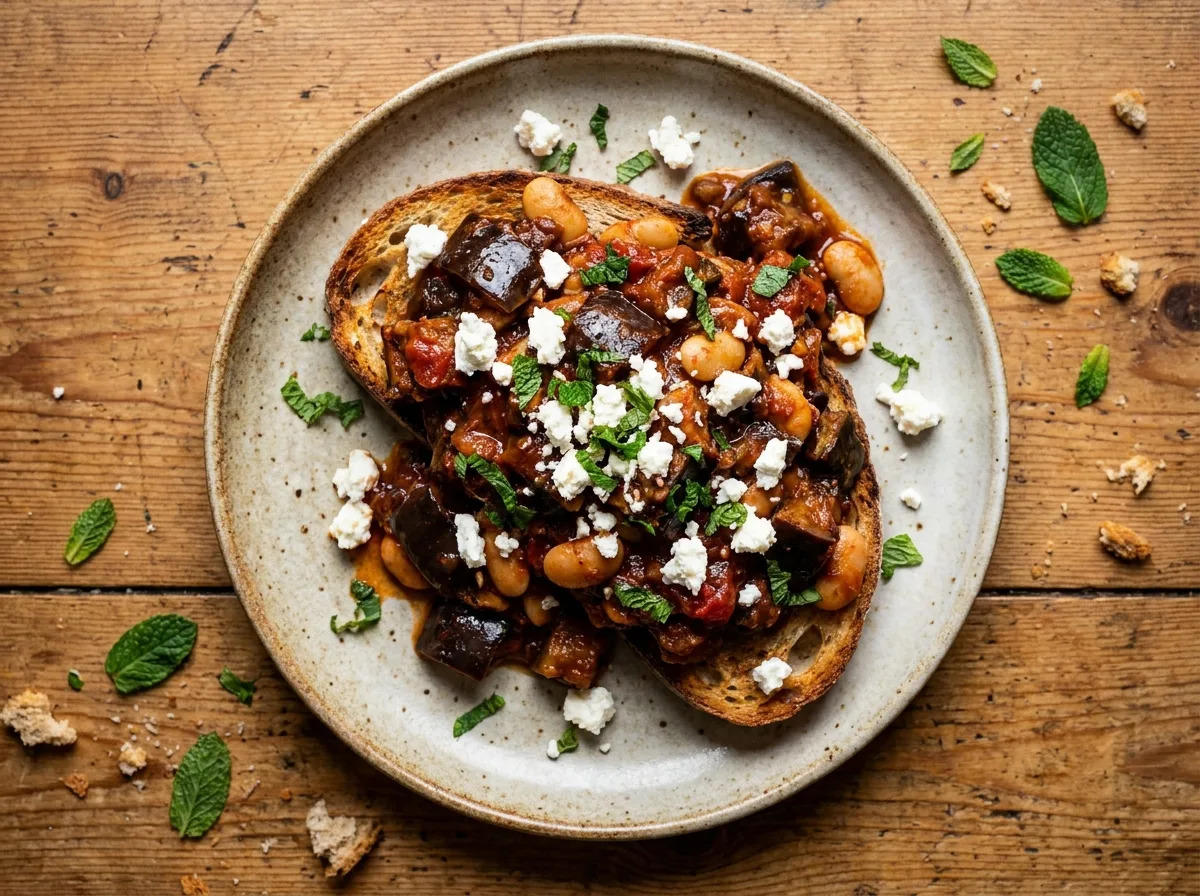
Gordon Ramsay’s slow cooked aubergine (eggplant) is chunky aubergine simmered with butter beans, pomegranate molasses and tinned tomatoes until soft and silky. Piled onto toasted sourdough with crumbled feta and chopped mint, it serves 4-6 as a starter in about 55 minutes.
The recipe comes from the Ultimate Cookery Course, where Ramsay writes it is “such a simple combination of ingredients, but they undergo this amazing transformation during cooking.” He also says it “just gets better and better the longer you allow the flavours to mingle.”
The step most people rush is frying the aubergine first. Three to four minutes on high heat colours all sides and builds a caramelised base that carries the whole stew. Skip it and the aubergine steams instead, giving you a flat, one-note result.
Cooked this recipe? Send a photo or tell me what you changed at fans@gordonramsayrecipes.uk and I’ll share your experience live on this page.
Gordon Ramsay’s Slow Cooked Aubergine (Eggplant)
Course: Starter, SideCuisine: British, MediterraneanDifficulty: Easy4-6
servings10
minutes45
minutes230
kcal55 minutes
Vegetable stew from the Ultimate Cookery Course. Aubergine, butter beans, pomegranate molasses and tomatoes simmered until collapsed and glossy, served on toast with feta and mint.
Ingredients
2 aubergines (eggplants), trimmed and cut into 3cm (1 inch) chunks
Olive oil, for frying
3 garlic cloves, peeled and chopped
1 red onion, peeled and diced
1 x 400g (15 oz) tin butter beans, drained and rinsed
2 tbsp pomegranate molasses
1 x 400g (14 oz) tin chopped tomatoes
Pinch of caster sugar (superfine sugar)
Sea salt and freshly ground black pepper
- To serve:
1 loaf of crusty bread such as sourdough or country bread, sliced and toasted
Small bunch of mint, leaves roughly chopped
100g (3½ oz) feta cheese, crumbled
Directions
- Fry the aubergine: Heat a heavy-based casserole dish over high heat with a generous glug of olive oil. Fry the aubergine chunks for 3-4 minutes until coloured on all sides.
- Soften the aromatics: Add the garlic and red onion and fry for another 5 minutes until the onion is tender.
- Build the stew: Stir in the butter beans and pomegranate molasses with a generous pinch of salt and a grinding of pepper. Add the tinned tomatoes and sugar.
- Simmer: Bring to the boil, then lower the heat and simmer uncovered for 40-45 minutes until the aubergine is tender and collapsed and the stew is reduced and full of flavour. If the mixture dries out too much, add a couple of tablespoons of water.
- Serve: Toast slices of sourdough or crusty bread on both sides until golden. Stir the chopped mint through the aubergine, spoon onto the toast and scatter over the crumbled feta. Serve warm.
Notes
- Ramsay writes that this dish “just gets better and better the longer you allow the flavours to mingle.” Make it a day ahead and reheat gently for deeper flavour. The UCC also includes a tip on salting aubergines before frying: sprinkle with 1 tsp salt, leave 30 minutes, rinse and pat dry to draw out moisture so they absorb less oil.
FAQs
What does pomegranate molasses do in this recipe?
It adds a sweet, sharp tanginess that tinned tomatoes alone cannot match. Pomegranate molasses is just pomegranate juice boiled down to a thick, dark syrup, and Ramsay reaches for it across three recipes in the UCC whenever he wants that sweet-sour depth.
You can find it in the international aisle at most supermarkets. If you cannot get it, a tablespoon of balsamic vinegar with a teaspoon of honey gets close, though it lacks the fruity sharpness that makes this stew distinctive.
How is this different from aubergine caviar?
The technique is the opposite. Aubergine caviar roasts the aubergine whole, scoops the flesh and chops it into a smooth dip you serve cold on crostini. This slow cooked version dices the aubergine into chunks and simmers it in a tomato stew with butter beans, so you get a warm, chunky texture piled onto toast.
Both improve when made ahead, but they sit in different places on the table. If you want a dip for a cheese board or drinks, the caviar is the one. If you want something closer to a meal, this stew does the job. For another vegetable starter that comes together quickly, the minestrone uses a similar simmer-and-serve approach.
Can you serve this as a main course?
Ramsay writes it as a starter for 4-6, but double the bread and it feeds 3-4 as a main without any trouble. The butter beans give it enough protein to hold up on its own, which is why it works so well as a vegetarian centrepiece.
If you want meat alongside, slow cooked lamb shanks from the same book turn this into a full Mediterranean spread. A Greek salad on the side adds crunch and ties the feta together across both dishes.
What bread works best for serving?
The UCC says sourdough or pain de campagne, which is a rustic country bread with a firm crust. You need something that holds the weight of the stew without going soggy underneath, so sliced white won’t cut it here.
Ramsay’s own sourdough takes days to make, so a good bakery loaf does the same job. Toast both sides until properly golden, then spoon the stew on while the bread is still warm so the feta starts to soften.
Does slow cooked aubergine keep well?
Better than most stews because Ramsay designed it that way. He writes that the flavours improve the longer they sit, so making it a day ahead is not a compromise but actually the best approach.
Refrigerate in a sealed container for up to 4 days, and it freezes well for 3 months without the bread, feta or mint. Add those fresh when you serve. The lentil soup from the same book follows the same make-ahead logic if you want to batch cook a full week of lunches.