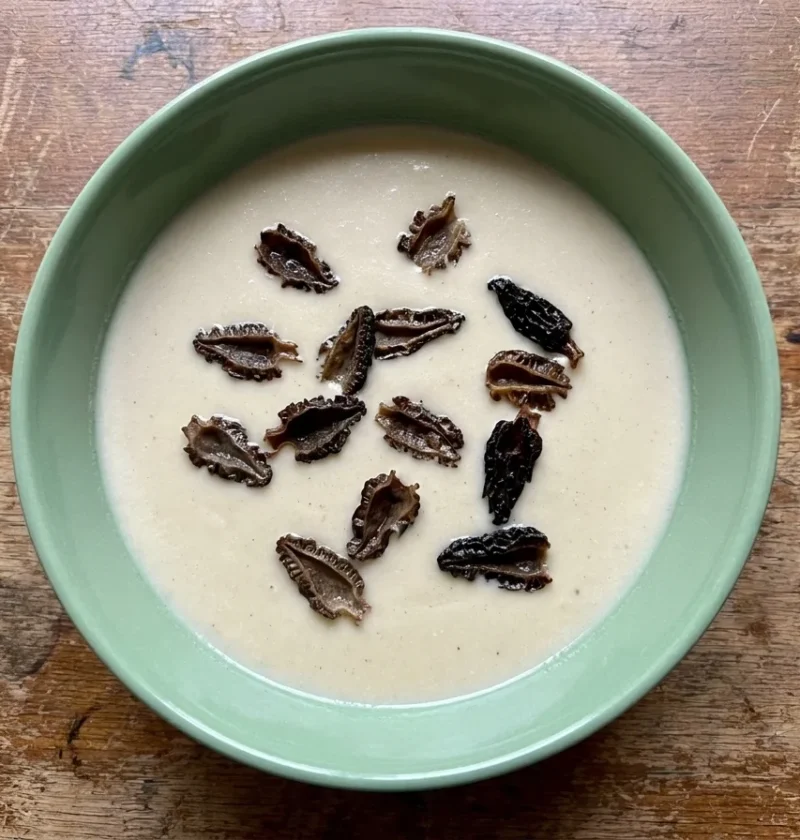
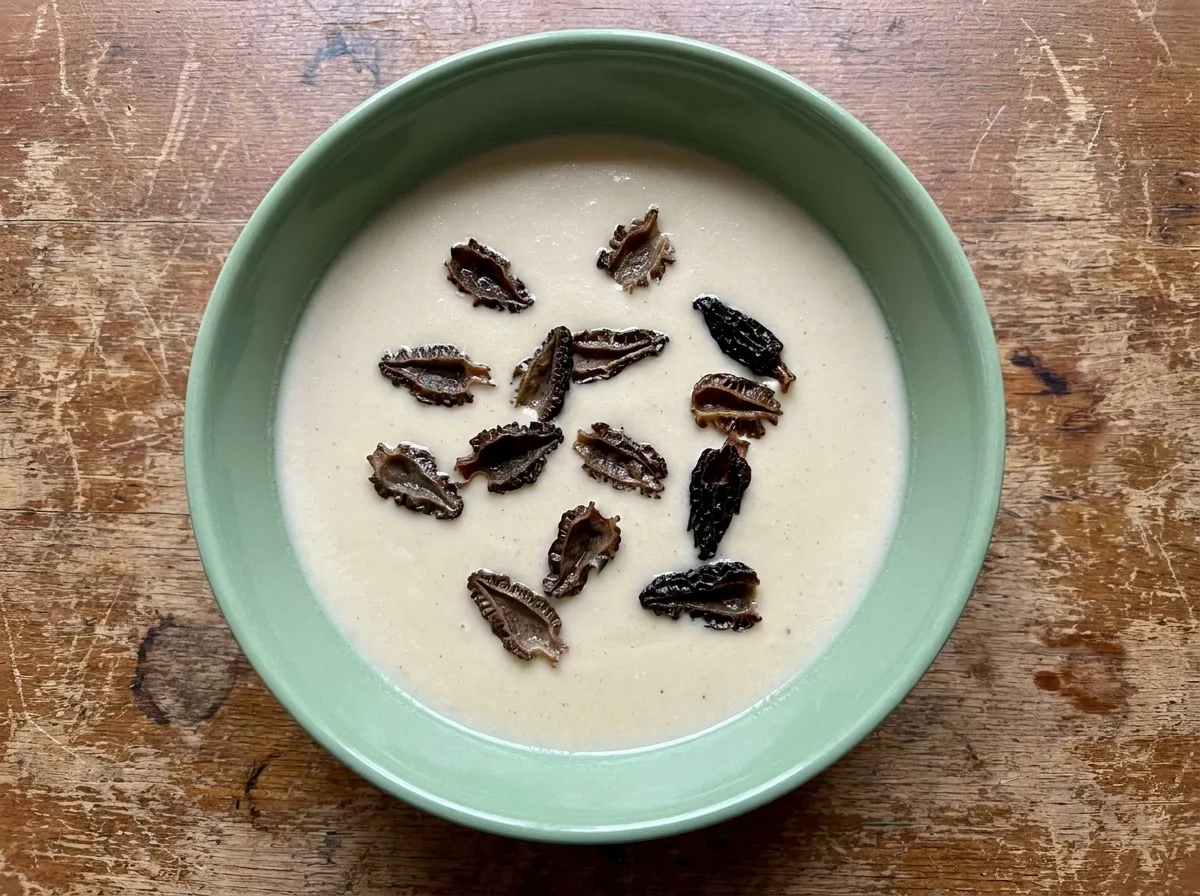
Gordon Ramsay Jerusalem artichoke soup is blended smooth with white wine, chicken stock and cream, then scattered with morels fried in butter and nutmeg. It serves four as a starter and takes about two hours from start to table.
The recipe is from A Chef for All Seasons, page 20. Ramsay writes that Jerusalem artichokes were “once regarded as a boring winter vegetable” and are now enjoying a revival. He borrows the prep from Daniel’s in New York.
Whether you peel decides the colour. Scrub the roots for a rustic pale grey-beige soup, or peel them thinly for something paler. Ramsay leaves that open, and does the same with the morels, offering 50g dried out of season.
Cooked this recipe? Send a photo or tell me what you changed at fans@gordonramsayrecipes.uk and I’ll share your experience live on this page.
Gordon Ramsay Jerusalem Artichoke Soup with Morels
Course: SoupsCuisine: BritishDifficulty: Medium4
servings20
minutes40
minutes460
kcal1
hour2 hr
A spring starter from A Chef for All Seasons. Jerusalem artichokes softened in white wine and stock, blended and passed through a sieve, then finished with cream and a scatter of buttered morels.
Ingredients
150g small fresh morels (5¼ oz)
400g fresh Jerusalem artichokes (14 oz sunchokes)
Juice of 1 small lemon
3 tbsp olive oil
2 shallots, chopped
100ml dry white wine (scant ½ cup)
1 litre light chicken stock or vegetable nage (4¼ cups)
150ml double cream (⅔ cup heavy cream)
25g butter (2 tbsp)
A little freshly grated nutmeg
Sea salt and freshly ground black pepper
Directions
- Prepare the morels: Cut the morels in half lengthways, then rinse well in cold running water to extract all the sand. Pat dry on kitchen paper and leave for 1 hour to dry completely.
- Prepare the artichokes: Either scrub the artichokes or peel thinly with a swivel peeler. Fill a bowl with cold water and add the lemon juice. Cut each artichoke into slices and drop immediately into the acidulated water. Leave to soak for 5 minutes, then drain and pat dry.
- Sauté: Heat 2 tablespoons of the oil in a large saucepan and gently sauté the shallots for 5 minutes. Add the artichoke slices and cook for another 5 minutes.
- Add wine and stock: Add the wine and cook until it has all evaporated. Pour in the stock or nage. Bring to the boil, season and simmer for 15 minutes, until the artichoke slices are softened.
- Blend and sieve: Whiz in a food processor or blender, then pass through a sieve, rubbing with the back of a ladle. Return to the pan and mix in the cream. Heat until on the point of boiling, then set aside.
- Fry the morels: Heat the remaining oil with the butter in a frying pan and sauté the morels for about 5 minutes, stirring often. Season and sprinkle with a little freshly grated nutmeg. Drain on kitchen paper.
- Serve: Reheat the soup if necessary. Ladle into four warmed soup plates and scatter over the morels. Serve quickly.
Notes
- Vegetable nage is a light aromatic vegetable stock, given on page 212 of the same book alongside his light chicken stock. Fresh morels have a very short season, so out of season Ramsay uses 50g dried, rehydrated first in warm water. The soup freezes at the end of step 5, once the cream is in and before the morels are cooked. He says it needs no garnish beyond the morels.
FAQs
Do you need to peel Jerusalem artichokes for soup?
Ramsay gives you both. Step two says either scrub them or peel thinly with a swivel peeler, and the difference shows up in the colour rather than the flavour. Scrubbed leaves the soup a rustic pale grey-beige, peeled turns it paler.
He picked up the scrubbing from Daniel’s in New York, where they skip peeling entirely. Either way the slices go straight into cold water with lemon juice, because cut artichokes brown within minutes. The parsnip soup handles prep differently again and grates the root instead of slicing.
Are sunchokes the same as Jerusalem artichokes?
Yes, identical. Sunchoke is the American name for the same knobbly tuber, so you will see both depending on where the recipe was written.
The name misleads twice over. It has nothing to do with Jerusalem, and it is not an artichoke at all. What you are cooking is the root of a sunflower.
Why does Ramsay wash the morels an hour before cooking?
Because of sand. He writes that his are grown in sand, and that even a few grains will ruin what he calls a sublimely smooth soup. Halving them lengthways opens the hollow centre, which is where the grit hides.
The hour is for drying, not soaking. Wet morels steam in the pan instead of frying, so they need to go in properly dry before the oil and butter.
Can you use dried morels instead of fresh?
Yes, and the swap is Ramsay’s own: 50g dried morels, rehydrated in warm water. Fresh morels have a very short season, so out of season this is the version you will actually cook.
Dried fungi concentrate flavour rather than deliver texture. The mushroom soup uses that deliberately, putting dried porcini alongside fresh chestnut mushrooms to deepen the base.
What does Jerusalem artichoke soup taste like?
Sweet and nutty, closer to a globe artichoke heart than a potato. One honest warning: Jerusalem artichokes are high in inulin, which a lot of people find hard to digest. A starter portion really is the right size.
The sieving is what makes it feel expensive, pushed through with the back of a ladle after blending. The watercress soup skips that step deliberately because he wants texture there. The celeriac soup goes further still, using no cream and letting the vegetable thicken itself.
Can you freeze Jerusalem artichoke soup?
Yes, and Ramsay marks the exact point. Freeze it at the end of step five, once the cream is in and the soup is sieved, before the morels go near a pan.
Cook the morels fresh on the day you serve. The parsnip purée works the same way. The base holds fine, but anything meant to be crisp on top has to be done at the last minute.