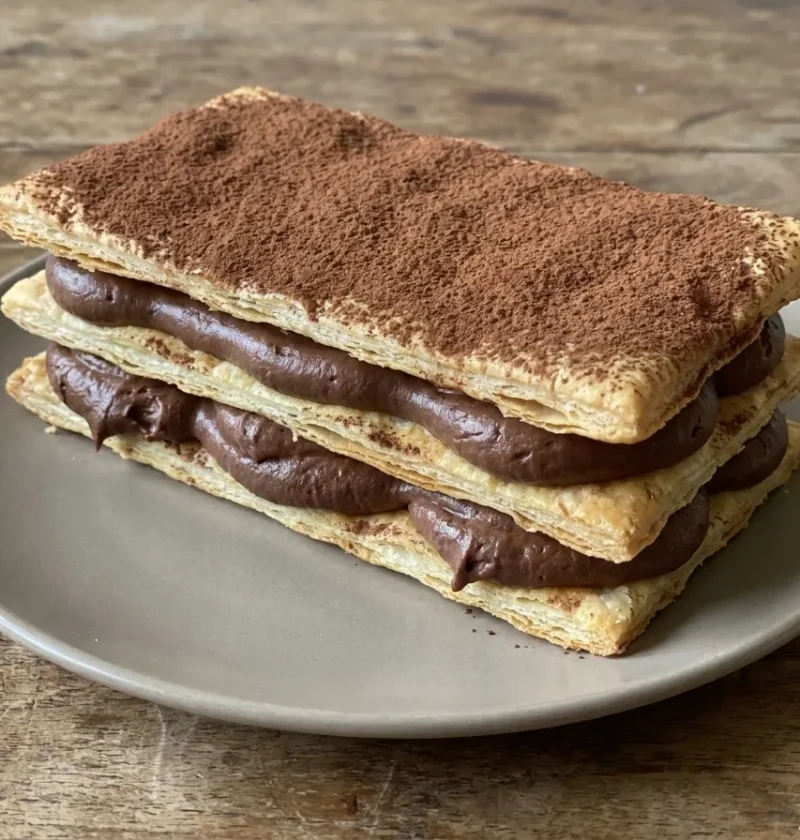
Gordon Ramsay chocolate mille feuille layers crisp puff pastry with a dark chocolate cream steeped in lavender, then dusts the top with cocoa. It serves four and takes about two hours, most of that waiting.
The recipe is from A Chef for All Seasons, page 100. Ramsay writes that lavender is “a herb we normally associate with bathing, not baking”. He points out it goes into bread doughs and sweet baking across Provence and Norfolk.
The pastry bakes under a second baking sheet. Ten minutes uncovered, then the weight goes on for another ten to twelve. That stops the puff rising into a pillow, and even layers are the whole point here.
Cooked this recipe? Send a photo or tell me what you changed at fans@gordonramsayrecipes.uk and I’ll share your experience live on this page.
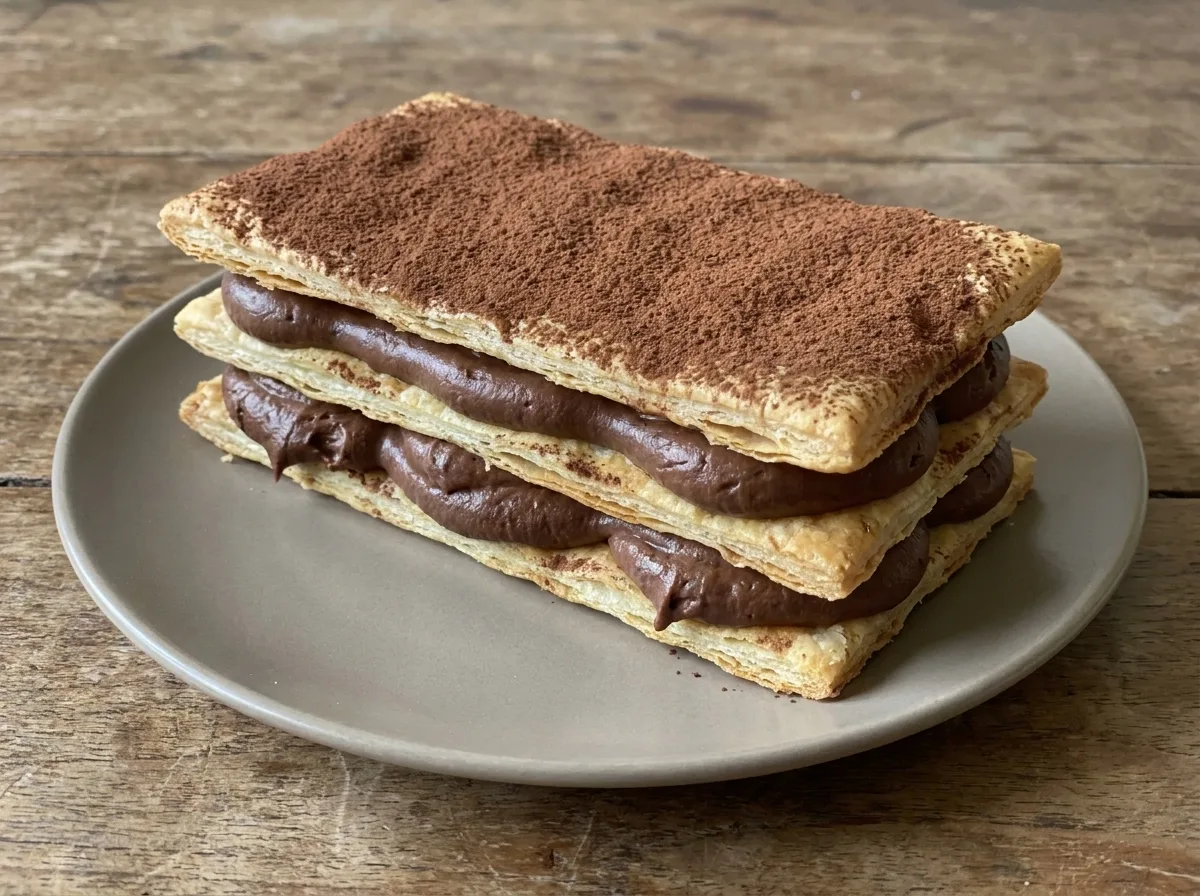
Gordon Ramsay Chocolate Mille Feuille with Lavender
Course: DessertCuisine: FrenchDifficulty: Medium4
servings30
minutes22
minutes1020
kcal30
minutes2 hr
A summer dessert from A Chef for All Seasons. Crisp puff pastry rectangles layered with a dark chocolate cream infused with dried lavender flowers, dusted with cocoa and served with lavender ice cream.
Ingredients
About 300g home-made puff pastry (10½ oz), or 1 x 375g pack ready-rolled (13 oz)
200ml crème anglaise (scant 1 cup)
1 dessertspoon dried lavender flowers
300g dark chocolate, 60% cocoa solids, broken into small chunks (10½ oz)
200ml double cream (scant 1 cup heavy cream)
Cocoa powder, to finish
Directions
- Roll and cut the pastry: Roll out the pastry to a rectangle slightly larger than 30 x 40cm (12 x 16 in), which allows enough excess to trim the edges neatly. Cut into four long rectangles of 30 x 10cm (12 x 4 in). Using a long palette knife, lift these onto a baking sheet and score each across into four equal rectangles. Chill for 20 minutes while you heat the oven to 200°C (400°F), Gas 6.
- Bake under weight: Bake for 10 minutes, then place another heavy baking sheet on top of the pastry rectangles to keep them flat. Bake for another 10 to 12 minutes until golden brown and crisp. Remove and cool on a wire rack.
- Steep the lavender: Warm the crème anglaise gently and stir in the lavender flowers. Leave to steep off the heat for 30 minutes, then strain and discard the flowers.
- Melt the chocolate: Return the crème anglaise to a gentle heat to warm again, then remove and stir in the chocolate. Leave until melted, then whisk until shiny. Set aside to cool.
- Fold in the cream: Whip the double cream until it is softly stiff. Fold into the chocolate mixture.
- Assemble: Make four layered sandwiches with the pastry rectangles and chocolate cream, either spreading or piping the cream between the layers. Dust the top with cocoa powder. Serve with small scoops or quenelles of lavender or vanilla ice cream.
Notes
- Ramsay uses Valrhona for the chocolate. The puff pastry, crème anglaise and ice cream all come from page 214 of the same book, though he gives a 375g ready-rolled pack as the shortcut on the pastry. For the lavender ice cream he uses his thyme ice cream recipe, swapping a dessertspoon of dried lavender flowers for the thyme sprigs.
FAQs
Why put a second baking sheet on top of the pastry?
Puff pastry is designed to rise. Left alone it puffs into a pillow, and a pillow will not stack. The second sheet goes on after the first 10 minutes, once the layers have set but before they climb.
You want thin, flat, brittle rectangles that shatter cleanly under a fork. The raspberry millefeuille reaches the same result from a different angle. It dusts the raw pastry with icing sugar so it caramelises as it flattens.
How many pieces of pastry does this make?
Sixteen. You cut four long strips of 30 x 10cm, then score each strip across into four, which gives you four rectangles per person.
Score them before baking, not after. Baked puff shatters under a knife, and Ramsay is clear that even shapes are what make the finished stack look right.
What does lavender taste like in chocolate?
Floral and slightly resinous, and it cuts the richness of 60% dark chocolate rather than sweetening it. One dessertspoon, steeped 30 minutes and then strained out, is deliberate restraint on Ramsay’s part.
He treats other herbs the same way. The mint chocolate truffles steep fresh mint into cream before the chocolate goes in. The rosemary shortbread lists edible lavender among the flavourings he builds onto that base.
Can you use shop-bought puff pastry?
Yes, and Ramsay says so himself. He offers a 375g pack of ready-rolled as the alternative to about 300g of home-made puff, so this is his shortcut rather than a compromise.
Buy all-butter if you can, because pastry is one of only three things you taste here. Roll it slightly larger than 30 x 40cm and trim the edges back, since neat edges are what hold the stack square.
What is crème anglaise, and can you skip it?
It is a pouring custard of milk, egg yolks and sugar, and it does two jobs. It carries the lavender while steeping, and it loosens the melted chocolate into something you can pipe.
Skip it and you have plain ganache, which sets much harder between the layers. If you make your own, it needs to reach 82°C. That is the custard temperature fix a reader found by trial, before spotting the same figure in Just Desserts.
Which chocolate should you use?
Ramsay specifies 60% cocoa solids and names Valrhona. The percentage matters more than the brand here. Push much higher and the filling stiffens against the pastry instead of staying pipeable.
Milk chocolate goes the other way and loses the balance against the cocoa dusting on top. The chocolate tarts run into the same narrow band, where the ganache only stays glossy within a certain range of cocoa solids.
Does chocolate mille feuille go soggy?
The pastry softens, though slower than most versions. The filling here is set with chocolate rather than being plain whipped cream, so it holds its shape and releases less moisture.
Assemble it just before serving anyway. Bake the pastry earlier and keep it in a tin. The profiteroles work the same way, with choux made ahead and filling going in last.