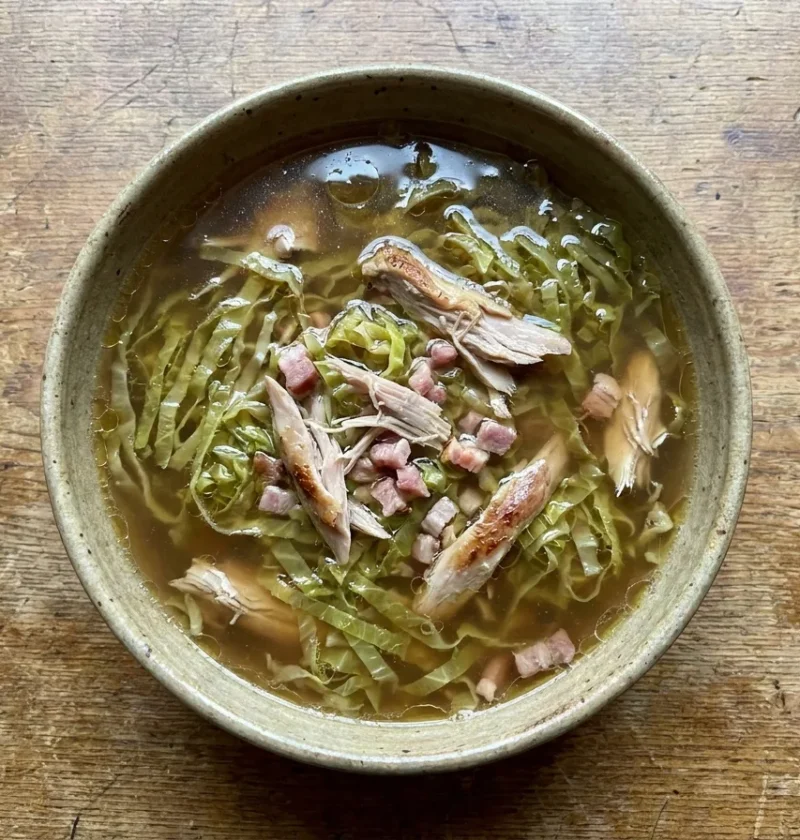
Gordon Ramsay cabbage soup starts with rabbit legs cooked slowly in goose fat until they shred, which is what gives the broth its body. Savoy cabbage, smoked bacon and garlic go in around them, and the whole thing serves four in about an hour and three quarters.
It comes from A Chef for All Seasons, page 172, where Ramsay admits most of us do not think of cabbage as soup. He gets round that by cooking the rabbit first, because the flesh has to fall into tender shreds before it goes near the pot.
The garlic is where it gets interesting, though, since six cloves go into boiling water three times with fresh water each round. That sounds fussy until you taste what it does, because the harshness boils away and leaves the cloves soft enough to mash. Without it the soup turns sharp.
Cooked this recipe? Send a photo or tell me what you changed at fans@gordonramsayrecipes.uk and I’ll share your experience live on this page.
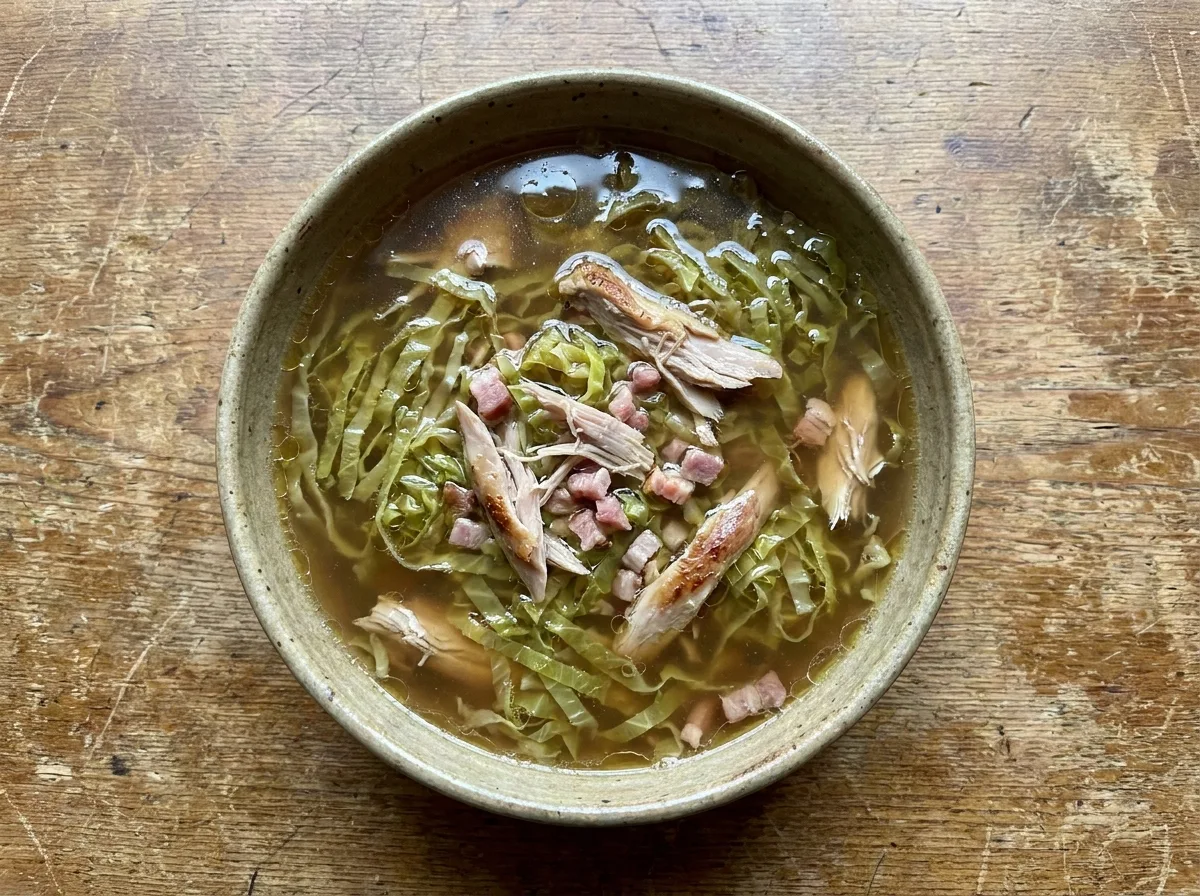
Gordon Ramsay Cabbage Soup with Rabbit Shreds
Course: SoupsCuisine: BritishDifficulty: Medium4
servings20
minutes1
hour10
minutes390
kcal1 hr 45 min
A winter starter from A Chef for All Seasons, where the rabbit cooks slowly in goose fat until it shreds, then goes into Savoy cabbage and smoked bacon with garlic blanched three times to take the edge off.
Ingredients
About 300g goose fat (10½ oz), or a 340g can (12 oz can)
2 rabbit legs, about 250g each (9 oz each)
1 small Savoy cabbage
6 large garlic cloves, peeled
40g butter (3 tbsp)
1 medium onion, chopped
50g smoked bacon, chopped (1¾ oz)
1 litre dark chicken stock (4¼ cups)
Sea salt and freshly ground black pepper
Directions
- Confit the rabbit: Bring the goose fat to the boil in a saucepan, then drop in the rabbit legs. Turn the heat to its lowest setting and confit for 30 to 40 minutes, until the meat comes away from the bones easily.
- Brown and shred: Lift the legs out of the fat and pat dry with kitchen paper. Heat the grill and brown the meat on all sides. Cool, then pull the meat off the bones in shreds and set aside.
- Prepare the cabbage and garlic: Quarter the cabbage, remove the core and shred the leaves finely. Blanch the garlic in boiling water three times, changing the water each time, to remove the pungency. Mash the cloves with a fork.
- Build the soup: Melt the butter in a large saucepan and gently sauté the onion, bacon and garlic for about 5 minutes. Stir in the cabbage and cook for another 5 minutes until wilted. Pour in the stock, bring to the boil, season and simmer for 10 minutes.
- Finish: Stir in the rabbit and simmer for a further 5 to 10 minutes. Serve as it is, with crusty bread.
Notes
- If you have cooked Puy lentils or haricot beans to hand, Ramsay suggests dropping a handful in with the rabbit, though the soup stands up fine without them. The dark chicken stock comes from page 212 of the same book. Calories are calculated from the ingredients since the book gives none, assuming only a little of the goose fat is absorbed.
FAQs
Why confit the rabbit in goose fat first?
Rabbit legs are lean and threaded with connective tissue, so a fast cook just tightens them up. Sitting in fat on the lowest heat for 30 to 40 minutes breaks it down instead, which is how you get shreds rather than chunks.
Ramsay says outright that this is the best way to do it. The same method sits behind the duck confit, where the legs cook in fat rather than liquid until they pull apart with a fork.
Why blanch the garlic three times?
Because six cloves of raw garlic would flatten everything else in a soup this delicate. Boiling them three times over, with fresh water each round, pulls the harshness out and leaves the sweetness sitting there.
It softens them too, so they mash with a fork and melt into the base rather than sitting in it as pieces. That is a restaurant trick, and as I said up top, it is the one thing separating this from an ordinary cabbage soup.
Do you have to use goose fat?
Not really, though it is what Ramsay calls for, about 300g or a standard 340g can. Duck fat behaves the same way and turns up more often in British supermarkets.
Whichever you use, strain it afterwards and keep it in the fridge, because it will do another confit or a tray of roast potatoes. Fat like this only gets better the more you cook in it.
Why grill the rabbit after confiting it?
Because confit meat comes out pale and soft with no colour on it whatsoever. A few minutes under a hot grill browns the outside and gives the shreds enough backbone to hold together in the broth.
Pat the legs dry first, though, or they steam rather than brown. Then let them cool before you pull the meat apart, because hot confit meat falls into mush instead of shreds.
What cabbage should you use?
Savoy, and a small one, because the crinkled leaves hold their shape through ten minutes of simmering. A white or pointed cabbage would go limp in the same time.
Cut the core out before you shred, since it stays tough however long you cook it. Savoy is what he reaches for in the minestrone as well, for exactly the same reason.
Can you make this ahead?
The rabbit, yes, and that is really the point of confiting it in the first place. Sealed under its own fat it keeps for several days in the fridge, so that part can be done well in advance.
The soup itself wants eating fresh, though, because reheated cabbage loses its bite and goes drab. If you want rabbit that holds better, the rabbit fricassée has a sauce you can make two days ahead.