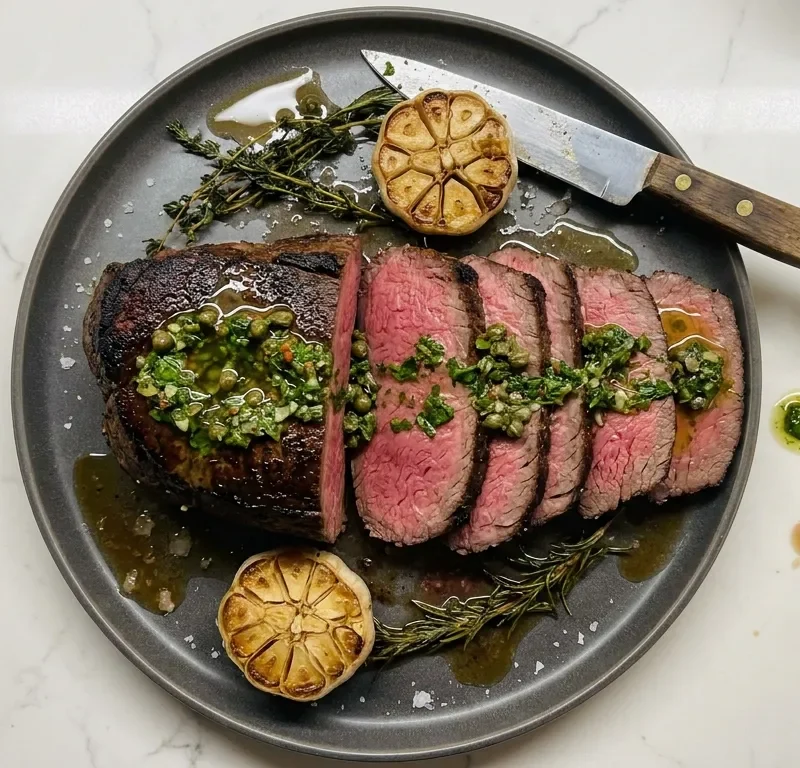
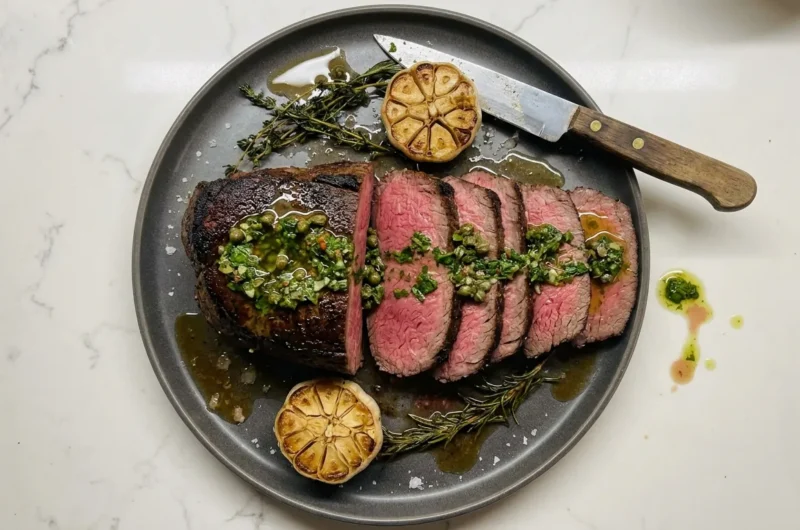
Gordon Ramsay’s beef fillet is a whole 1kg piece seared with two heads of garlic, thyme, and rosemary, basted in butter, then roasted at 200°C for just 10 to 12 minutes for rare. A sharp anchovy salsa verde goes over it as it rests, all done in about 45 minutes including the rest.
The recipe is from his Ultimate Home Cooking book, and he opens it with a warning: “The Rolls-Royce cut from the Rolls-Royce of meats: it would be sacrilege to mess around with this much. I like to serve fillet rare, so you can appreciate its almost buttery sweetness… But please, not well done. That would be a travesty.”
Speed is the whole technique here. In the video version he explains why: “Because it’s a fillet of beef, there’s hardly any fat on there, so you sear it quickly.” A fierce sear, a butter baste through the herbs, a short blast in the oven, and the timing rule is strict because there’s no fat to protect the meat if you go long.
Cooked this recipe? Send a photo or tell me what you changed at fans@gordonramsayrecipes.uk and I’ll share your experience live on this page.
Gordon Ramsay’s Roast Beef Fillet with Salsa Verde
Course: DinnersCuisine: BritishDifficulty: Easy6
15
minutes20
minutes470
kcal45
minutesA whole tenderloin from Ultimate Home Cooking, browned with garlic and herbs, butter-basted, and roasted in minutes rather than hours, with a pounded anchovy, caper, and herb salsa verde that soaks into the meat while it rests.
Ingredients
- For the beef:
Olive oil, for frying
1kg piece of beef fillet, cut from the thick end
2 heads of garlic, halved horizontally
4 thyme sprigs
2 rosemary sprigs
Butter, for basting
Sea salt and freshly ground black pepper
- For the salsa verde:
5 anchovy fillets, some of their oil reserved
1½ tbsp capers
2 garlic cloves, peeled and crushed
1½ tbsp Dijon mustard
1½ tbsp sherry or red wine vinegar
Extra virgin olive oil
Bunch of parsley, leaves only
Small bunch of mint, leaves only
Freshly ground black pepper
Directions
- Preheat: Preheat the oven to 200°C (400°F/Gas 6).
- Sear the fillet: Place a heavy-based ovenproof frying pan over a medium heat and add a dash of olive oil. Season the beef all over, then brown on all sides for a minute or two. Add the garlic, thyme, and rosemary and roll the beef around with the herbs. Add a couple of knobs of butter and, once melted, baste the beef in it.
- Roast: Transfer the pan to the oven and roast for 10 to 12 minutes for rare, or 15 to 17 minutes for medium rare.
- Make the salsa verde: Put the anchovies with a teaspoon of their oil, the capers, garlic, a pinch of salt, and half the herbs in a mortar and pound to a paste. Stir in the mustard and vinegar, loosen with a little olive oil, then stir in the rest of the herbs. Taste and adjust the seasoning.
- Rest and serve: Baste the beef in the pan juices, transfer to a warm plate, and spoon over a couple of spoonfuls of salsa verde. Cover loosely with foil and rest for 10 minutes, then slice thickly and serve with more salsa verde alongside.
FAQs
Is beef fillet the same as beef tenderloin?
Yes, fillet is the British name and tenderloin is the American one, for the same long, lean muscle that runs along the spine. Master butcher Danny Lidgate explained why it costs what it does when Ramsay visited his shop: “The fillet does the least amount of work than all the other muscles. It’s tucked away in the rib cage. This means that when you find a fillet, it’s incredibly soft, like butter. It’s the most expensive, but you get what you pay for.”
Ask your butcher for a 1kg piece cut from the thick end, sometimes sold as the centre cut or chateaubriand end, because the thick end cooks evenly while the thin tail end overcooks before the rest is done. That evenness is the entire reason this recipe can be so fast.
How long do you cook a whole beef fillet?
The book says 10 to 12 minutes at 200°C for rare, or 15 to 17 for medium rare, after a hard sear of a minute or two per side. In the video version Ramsay goes even shorter, “Into the oven. 8 to 10 minutes, that’s all,” so treat the lower numbers as the target for a properly rare centre and trust a thermometer over the clock if you’re nervous.
What matters more than the oven time is what happens around it. His technique note in the book is blunt: “Because beef fillet is so lean, it can easily dry out. It’s important to keep basting it, not just before it goes in the oven, but also once it comes out and is resting.” The same butter-basting rhythm drives his cast iron steak method, just scaled down to single steaks.
What is Ramsay’s fillet of beef with mushroom gratin?
It’s his F Word version, where individual thick rounds of fillet get a crust of three mushrooms, cream, egg yolk, chives and Parmesan, then bake for 7 minutes. The full recipe with quantities and his three-mushroom logic is on his filet mignon page, which uses individual steaks rather than a whole roasted fillet.
The key difference is the cut: this page covers a whole 1kg piece for a dinner party, while the mushroom gratin version uses thick rounds for two. Both come from the same muscle but the cooking method changes with the size.
How does Ramsay make his fillet steak sandwich?
For what he calls his ultimate steak sandwich, he uses this same cut, seared and butter-basted with garlic and thyme, finished in the oven the same way as the main recipe, then rested for as long as it cooked. The fillet gets sliced and layered into toasted ciabatta with a mustard mayonnaise, lettuce, and a quick relish of red onion, chilli, cherry tomatoes, basil, and sherry vinegar.
Resting for the full cooking time is the sandwich-specific trick, since juices that would make bread soggy settle back into the meat instead. It’s also the best use for any leftover fillet from this recipe the next day, served cold and sliced thin.
What do you serve with beef fillet and salsa verde?
The book pairs it with baked new potatoes with truffle and Parmesan, the recipe printed right after it: 1kg baby new potatoes roasted at 180°C for 30 to 35 minutes, tossed with 30g grated Parmesan and black truffle shavings. Ramsay’s logic is that if you’ve already bought the most expensive cut, you might as well go all the way.
The salsa verde does double duty while the meat rests, and in the video he points out why the timing matters: “As the beef cools down, that salsa verde marinades.” If your table prefers a creamy sauce over a sharp one, his peppercorn sauce recipe is made in the same pan in 10 minutes.
What else can you make with a whole fillet?
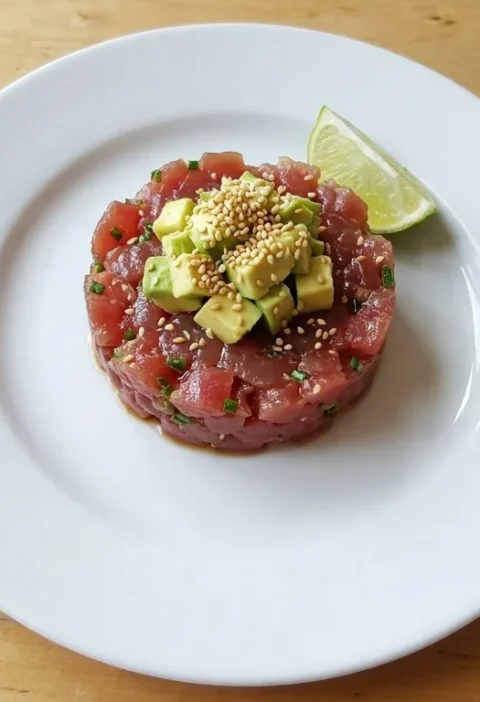
This cut is the foundation of half his repertoire. The same searing-and-resting logic, plus mushrooms and pastry, becomes his beef wellington recipe, which is the showpiece route for the same money. Going the opposite direction, the fillet served completely raw and hand-diced is his beef tartare recipe, where the tenderness you paid for does all the work uncooked.
He also has a lighter gremolata version and a pan-only butter-baste technique for individual steaks, both covered on his filet mignon page with full methods and video links.