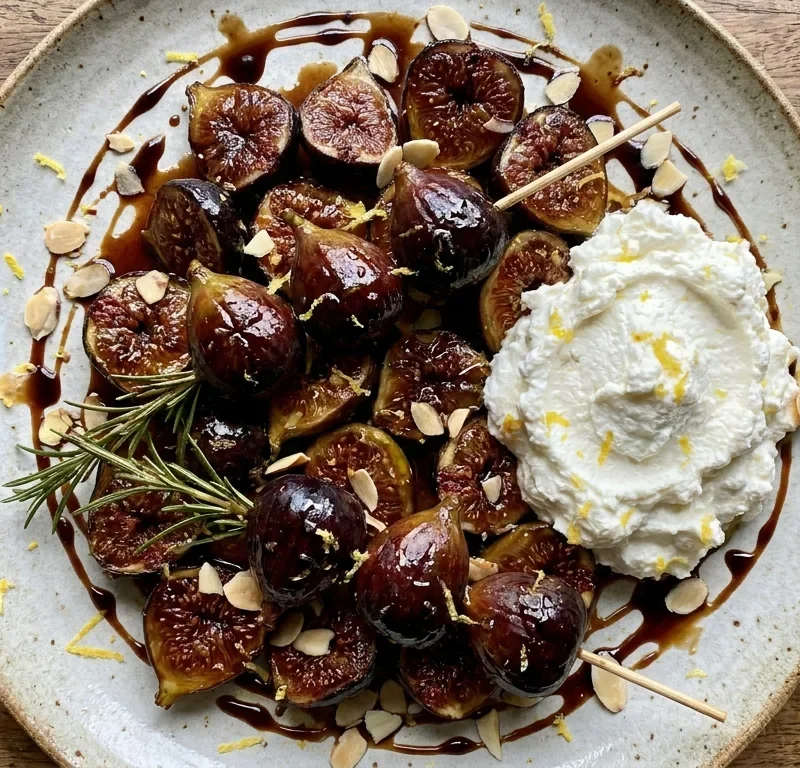
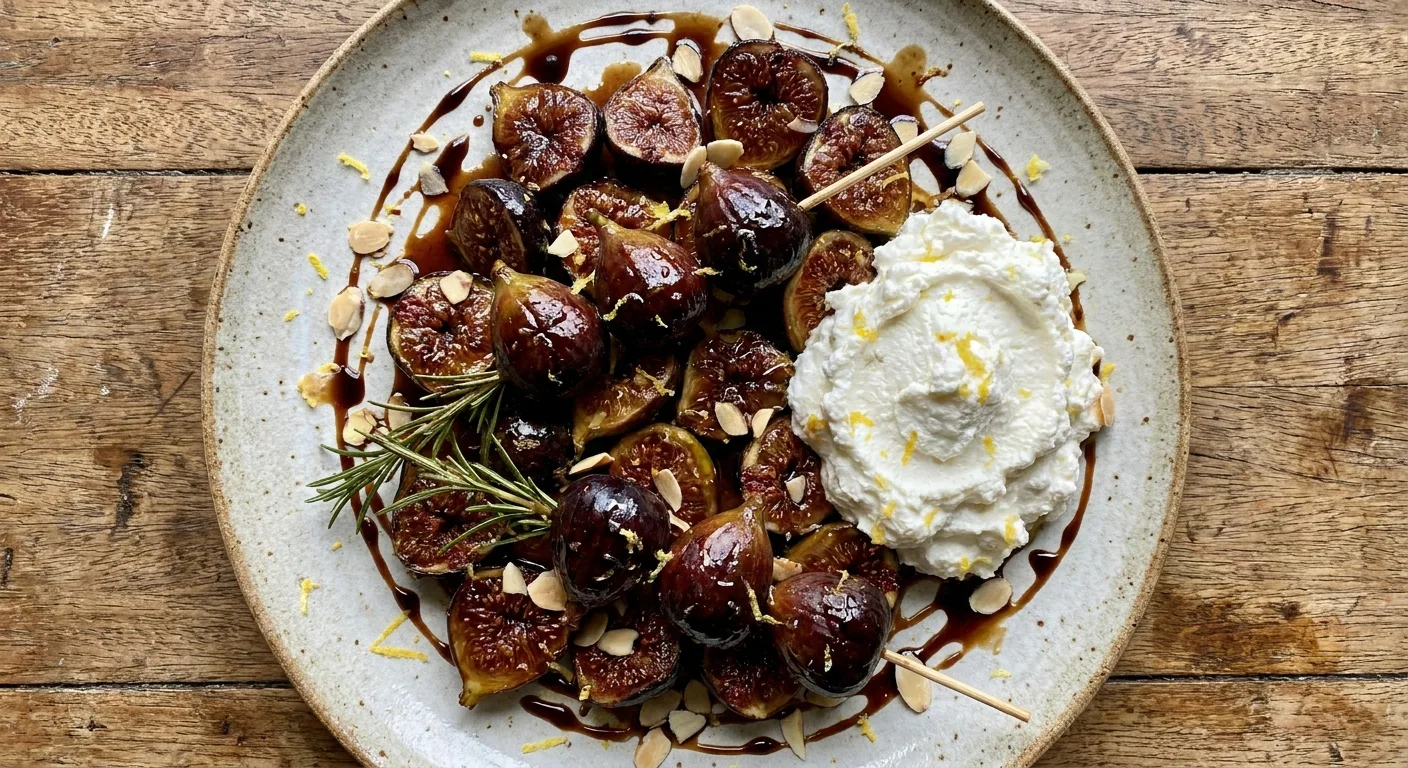
Black figs threaded onto rosemary stems, roasted in a balsamic caramel and served with fresh ricotta, lemon zest and flaked almonds. Ramsay calls this “an amazing way of taking figs to a completely new level” and the whole thing takes about 25 minutes.
He makes it in his YouTube video and says black figs are best for roasting because the thick dark skin holds together in the heat. The rosemary stems work as skewers that release fragrance as the figs cook, so the herb flavour comes from the stick itself rather than any leaves in the pan.
The caramel needs your full attention for about two minutes. Ramsay says to watch the sugar melt “almost like a lake defrosting” from the edges in, then pull it off the heat at dark amber and whisk in butter to stop the cooking. He says balsamic in a dessert “sounds odd but trust me, it gives the dish a fantastic sweet and sour taste.”
Cooked this recipe? Send a photo or tell me what you changed at fans@gordonramsayrecipes.uk and I’ll share your experience live on this page.
Gordon Ramsay’s Caramelised Figs with Ricotta
Course: DessertCuisine: Italian, BritishDifficulty: Easy4
servings10
minutes15
minutes380
kcal25 minutes
Black figs skewered on rosemary, roasted in balsamic caramel and served with fresh ricotta. From Ramsay’s YouTube video. A dinner party dessert ready in 25 minutes.
Ingredients
- For the figs:
12 ripe black figs
4-6 rosemary sprigs, leaves stripped to leave bare stems
Icing sugar (powdered sugar), for dusting
Generous splash of balsamic vinegar
- For the caramel:
4-5 tbsp caster sugar (superfine sugar)
A knob of unsalted butter
A glug of balsamic vinegar
A small splash of water
- To serve:
Fresh ricotta cheese
Zest of 1 lemon
Nibbed almonds (slivered almonds)
Directions
- Thread the figs: Preheat oven to 190°C (375°F). Strip the rosemary leaves to leave bare stems with a point at one end. Thread 3 figs gently onto each skewer through the top.
- Marinate: Lay the skewered figs in a roasting tin (roasting pan). Dust with icing sugar (powdered sugar), then drizzle with a generous splash of balsamic vinegar. Leave for 5 minutes to soak in.
- Make the caramel: Spread the sugar in an even layer in a dry frying pan (skillet) over medium heat. Do not stir or shake. Let it melt from the outside in until it turns a dark amber colour. Take the pan off the heat, whisk in the butter, then add a glug of balsamic vinegar and a small splash of water to loosen.
- Roast: Place the figs in the caramel and spoon the balsamic marinade over them. Baste well and roast at 190°C (375°F) for 10 minutes until the figs have almost doubled in size and the skin is crispy.
- Serve: Lift the fig skewers onto plates. Drizzle with the pan caramel. Spoon fresh ricotta alongside, then finish with lemon zest and nibbed almonds (slivered almonds).
Notes
- Ramsay says “the secret behind any good caramel is just stopping it from overcooking.” The Passion for Flavour cookbook has a different roasted fig recipe using a spiced honey and balsamic syrup with cinnamon, star anise, vanilla and orange zest, baked at a lower 150°C for 30 minutes. That version is slower and more aromatic, while this video version is quicker and built around the caramel.
FAQs
Why does Ramsay put balsamic vinegar in a dessert?
He says in the video “I know it sounds odd to use vinegar in your dessert, but trust me.” The acid cuts through the caramel and the natural sweetness of the figs, so the dish tastes rich and layered rather than just sweet. The vinegar also darkens as it reduces, which gives the caramel that deep colour.
The strawberry glory from The F Word uses the same balsamic-and-fruit trick, because the acid draws out juice and creates a depth that sugar on its own cannot match.
How do you stop the caramel from burning?
Spread the sugar flat in the pan and leave it completely alone. Ramsay says “the one thing you don’t do is shake the pan rapidly” because that creates hot spots that burn. Watch the sugar melt from the edges toward the centre and take the pan off the heat the moment it hits dark amber.
Whisking in the butter drops the temperature instantly, which is the same method the sticky toffee pudding uses to stop its toffee sauce at exactly the right moment. Both recipes depend on controlling that narrow window between amber and burnt.
Why thread the figs onto rosemary?
The bare stems release their oils as the figs roast, which gives a subtle herbal fragrance without any leaves floating in the caramel. Ramsay trims the tip to a point so it pierces the fig cleanly, then threads three per skewer so they stay upright in the tin.
It also makes plating easier because you lift the whole skewer onto the plate rather than chasing individual figs through sticky caramel. The presentation looks like a restaurant dish even though it spent 10 minutes in the oven.
Can you use green figs instead of black?
Ramsay says in the video that black figs “are suited to slow cooking and roasting” because the outer skin is so durable. Green figs have thinner skin and would collapse in the caramel before the inside cooks through.
The Passion for Flavour cookbook offers a separate honey-only version for green figs that drops the balsamic and the spices entirely. The rhubarb crumble takes the same approach of matching the fruit to the right level of heat, because forcing a gentle fruit through a harsh cooking method ruins the texture.
What can you serve instead of ricotta?
Mascarpone makes it richer, crème fraîche makes it tangier, and vanilla ice cream adds a temperature contrast that works well with the hot caramel. Ramsay picks ricotta because its clean freshness lets the balsamic caramel stay the star.
The summer pudding serves with plain whipped cream for the same reason: a simple dairy element that frames the fruit rather than competing with it. The panna cotta would work as a make-ahead pairing since the figs reheat and the panna cotta serves cold from the fridge.