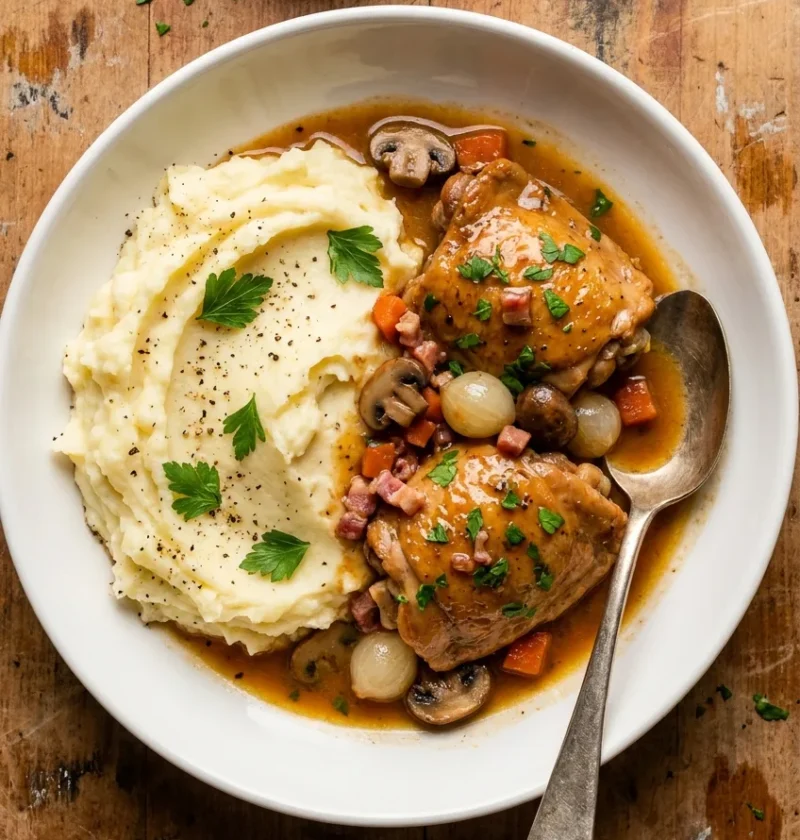
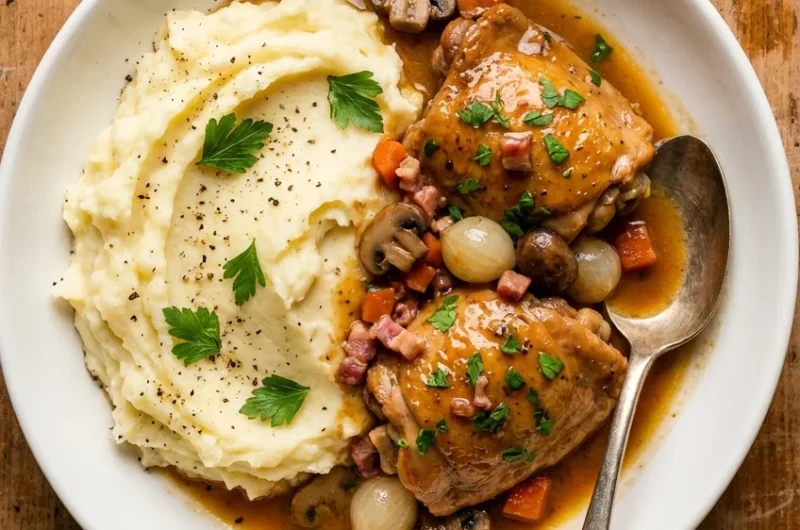
Gordon Ramsay’s coq au vin is chicken thighs browned in pancetta fat, flambéed with brandy, then braised in red wine with pearl onions, mushrooms and herbs. The sauce turns dark and glossy in about 90 minutes of gentle cooking.
I built this from Ramsay’s chicken fricassée in Ultimate Home Cooking. The traditional French coq au vin uses the same base: browning, pancetta, mushrooms, garlic bashed whole, and a brandy flambé. I made the traditional swap, red wine for stock, with pearl onions and a bay leaf.
The technique that makes or breaks the sauce comes from Ramsay’s beef short ribs video, where he says to “bring the wine up to the boil and reduce it, this burns off the alcohol and concentrates the flavour.” Five minutes of hard boiling before the stock goes in.
Cooked this recipe? Send a photo or tell me what you changed at fans@gordonramsayrecipes.uk and I’ll share your experience live on this page.
Coq au Vin (Ramsay’s Fricassée Method)
Course: DinnerCuisine: FrenchDifficulty: Medium5
servings20
minutes1
hour10
minutes709
kcal90
minutesTraditional French chicken braised in red wine, built from Gordon Ramsay’s fricassée and slow-braising techniques across Ultimate Home Cooking and his YouTube videos. Pancetta, mushrooms and pearl onions with the wine reduced first for a glossy, rich sauce. Approximately 709 kcal per serving.
Ingredients
- For the Braise:
8 bone-in, skin-on chicken thighs
150g (5.5 oz) smoked pancetta, cut into lardons
1 tbsp olive oil
200g (7 oz) frozen pearl onions
4 garlic cloves, peeled and bashed whole
1 tbsp tomato paste
50ml (2 fl oz) brandy or cognac
500ml (17 fl oz) red wine (Pinot Noir or Burgundy)
250ml (9 fl oz) chicken stock
3 thyme sprigs
2 rosemary sprigs
1 bay leaf
Sea salt and freshly ground black pepper
- For the Mushrooms:
200g (7 oz) chestnut mushrooms, halved
15g (0.5 oz) butter
- For the Beurre Manié:
15g (0.5 oz) butter, softened
15g (0.5 oz) plain flour
Handful of flat-leaf parsley, chopped
Directions
- Render the pancetta: Place the lardons in a cold Dutch oven or casserole dish and set over a medium heat. Cook for 5 to 6 minutes until crispy and the fat has rendered. Remove with a slotted spoon and set aside, leaving the fat in the pan.
- Brown the chicken: Season the thighs with salt and pepper. Increase the heat and lay the chicken skin-side down in the pancetta fat. Cook for 4 to 5 minutes without moving until deeply golden. Flip for 2 minutes on the other side. Remove and set aside.
- Cook the aromatics: Reduce heat to medium. Add the pearl onions and cook 3 to 4 minutes until colouring. Add the bashed garlic and tomato paste, stirring for 1 minute until the paste darkens. This cooks out the raw tartness.
- Flambé: Pour in the brandy and tilt the pan toward the flame to ignite, or light with a long match. Let the flames die down completely.
- Reduce the wine: Pour in the red wine, increase the heat and boil hard for 5 minutes until reduced by about a third. This burns off the raw alcohol and concentrates the flavour.
- Braise: Add the chicken stock, thyme, rosemary and bay leaf. Return the chicken skin-side up. Bring to a simmer, cover with the lid slightly cracked, and transfer to a preheated oven at 160°C (320°F) for 50 to 60 minutes.
- Sauté the mushrooms: While the chicken braises, melt 15g of butter in a separate pan over high heat. Halve the mushrooms and cook 3 to 4 minutes until golden. Set aside.
- Finish the sauce: Remove the chicken. Discard the herbs and bay leaf. Place the pot on the hob over medium heat. Mash the softened butter and flour into a beurre manié, whisk it into the sauce and simmer 2 to 3 minutes until glossy.
- Serve: Return the chicken, pearl onions, sautéed mushrooms and crispy pancetta to the pot. Scatter with parsley and serve with mashed potatoes or crusty bread.
FAQs
What wine should you use for coq au vin?
A medium-bodied Pinot Noir or Burgundy works best because the tannins are soft enough to braise without turning bitter. Avoid heavy oaked wines like Cabernet Sauvignon, which overwhelm the chicken and make the sauce harsh.
Ramsay says in his slow-cooking video “don’t use an expensive bottle red wine, there’s no need.” Pick one you’d drink, though, because the wine concentrates as it reduces and any off-flavours get louder, not quieter.
Why reduce the wine before adding stock?
Pouring wine straight in and braising gives you a raw, purple-tasting sauce because the alcohol hasn’t cooked off. Boiling it hard for 5 minutes strips the harshness and builds a deeper base, which is why the traditional French method always reduces the wine first.
Ramsay uses this exact approach in his red wine jus, reducing a whole bottle almost to a syrup before stock goes in. You don’t need to take it that far for a coq au vin, but those 5 minutes of bubbling are what turn wine into a proper sauce.
Why flambé the brandy?
Flambéing burns off the raw alcohol in seconds rather than the 20 minutes of simmering it would take otherwise. What’s left is a concentrated, slightly sweet depth you can’t get from adding brandy cold to the pot.
In the fricassée video, Ramsay tilts the pan and says “all the cognac has been flambéed so there’s no raw alcohol anywhere.” The fire looks dramatic, but the purpose is flavour: it strips the harshness and leaves a clean, woody sweetness underneath the wine sauce.
What should you serve with coq au vin?
Something starchy to soak up the wine sauce. Buttered egg noodles are the most traditional French pairing, and Ramsay’s dauphinoise potatoes are the richer option if you want a proper dinner party side.
A simple green salad with a sharp vinaigrette cuts through the richness of the wine and pancetta. Crusty bread works too because the beurre manié makes the sauce thick enough to cling to it without running off your plate.
Does coq au vin taste better the next day?
Yes, and this is one of the best braises to make ahead. The chicken absorbs more wine sauce overnight, and the flavours settle into each other in a way a single cook can’t match. Most French home cooks make it the day before on purpose.
Cool the whole pot, cover it, and keep in the fridge. Reheat gently on the hob over low heat for 20 minutes, adding a splash of stock if the sauce has thickened. The pancetta and mushrooms go back in during reheating so they keep their texture.