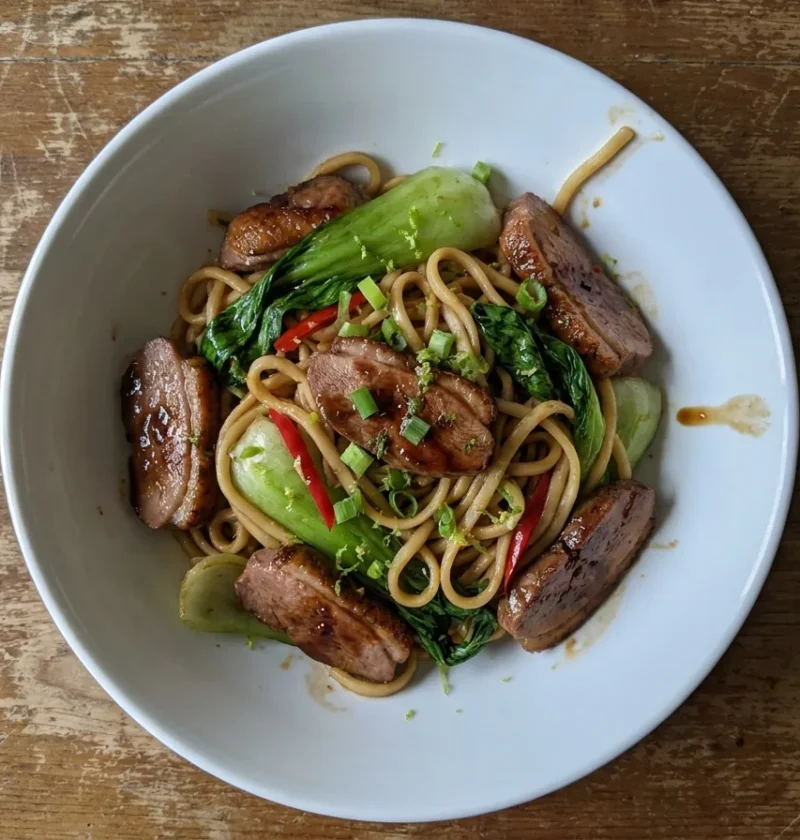
Gordon Ramsay’s duck stir fry is sliced duck breast tossed in five-spice, garlic and ginger, seared fast and folded through noodles with pak choi, chilli and lime. It’s his quick stir-fry for two, on the table in about 15 minutes. The duck cooks in barely two minutes, so everything is prepped before the pan goes on.
It comes from one of his quick-cook books, where he calls it a quick and easy special stir-fry for two. The clever part is the sauce, oyster and soy thickened with a little cornflour, which clings to the duck and coats the noodles instead of pooling at the bottom. A squeeze of lime at the end lifts the whole thing.
The one rule with duck this fast is to undercook it at first. He sears the slices for barely a minute until golden at the edges but still raw inside, then pulls them out. They finish later in the sauce, so they stay pink and tender instead of turning to rubber in a hot wok.
Cooked this recipe? Send a photo or tell me what you changed at fans@gordonramsayrecipes.uk and I’ll share your experience live on this page.
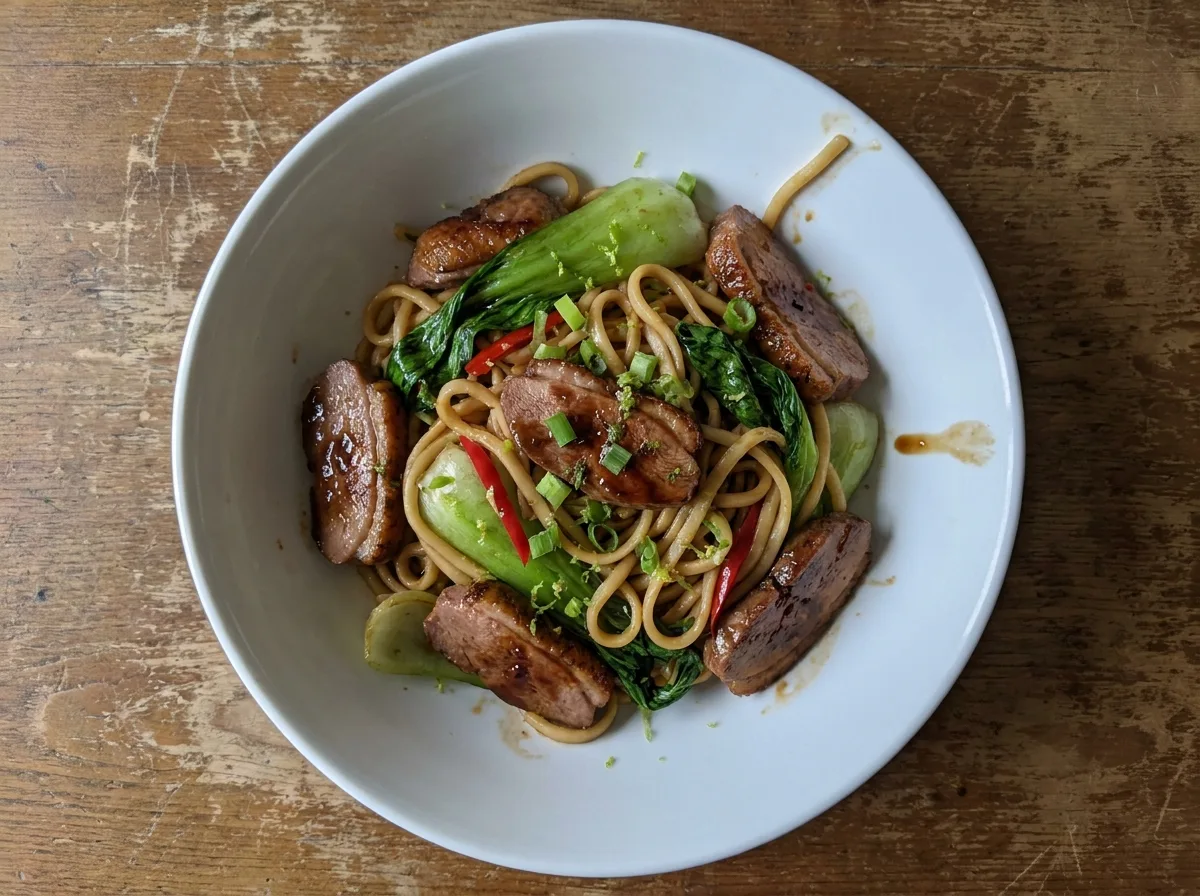
Gordon Ramsay Duck Stir Fry with Noodles
Course: Main, DinnerCuisine: Asian, BritishDifficulty: Easy2
servings10
minutes5
minutes520
kcal15
minutesGordon Ramsay’s quick duck stir fry for two, sliced duck breast in five-spice with an oyster and soy sauce, egg noodles, pak choi, chilli and lime. Ready in about 15 minutes.
Ingredients
2 skinless duck breasts, about 140g (5 oz) each, trimmed
1 garlic clove, peeled and finely grated
3cm knob of fresh root ginger, peeled and finely grated
1 tsp five-spice powder
Sea salt and black pepper
3 tbsp oyster sauce
1 tbsp dark soy sauce
2 tsp cornflour, mixed with 2 tbsp water
2 portions dried noodles (thin udon or Chinese egg noodles), about 65g each
Sesame oil, to drizzle
1-2 tbsp olive oil
1 long red chilli, trimmed and sliced on the diagonal
2 heads pak choi, leaves separated
3 spring onions, trimmed and chopped
Grated zest of 1 lime, plus a squeeze of juice
Directions
- Season the duck: Slice the duck breasts thickly and toss with the grated garlic, ginger, five-spice and a little salt and pepper. In a small bowl, stir the oyster sauce, soy sauce and cornflour mixture together.
- Cook the noodles: Bring a pot of water to the boil. Add the noodles and cook for 2 minutes less than the packet time. Drain well and toss straight away with a drizzle of sesame oil.
- Sear the duck: Heat a wok or large non-stick pan with a little olive oil. When hot, fry the duck over high heat for 1 to 1½ minutes, until golden at the edges but not cooked through. Lift out onto a plate and set aside.
- Build the sauce: Add a little more oil, then the chilli and pak choi. Stir-fry for a minute, pour in the sauce, and bring to a simmer. Return the duck and cook for another minute, until the sauce thickens.
- Finish: Add the noodles and spring onions, tossing over the heat until the noodles are warmed through. Squeeze over a little lime juice, scatter with the lime zest and serve at once.
FAQs
What noodles work best for duck stir fry?
He calls for thin udon or Chinese egg noodles, and either holds up well to the sauce. Egg noodles give a softer, springier bite, while udon are thicker and chewier, so pick by what you like. Both are in the world-food aisle of any UK supermarket.
The trick is to undercook them, two minutes short of the packet time, because they finish cooking in the hot pan with the sauce. Drain and toss them in sesame oil straight away, which stops them clumping while you sear the duck.
How do you keep the duck tender in a stir fry?
Speed is everything, because duck breast turns tough the moment it overcooks. You sear the slices for barely a minute, just until golden at the edges, then take them out while the centres are still raw. They sit on a plate while you make the sauce.
They go back in only at the end, for one more minute in the simmering sauce, which finishes them gently. That two-stage cooking keeps them pink and tender, the same care he gives a whole duck breast in the pan.
Why thicken the sauce with cornflour?
The cornflour and water mix is what turns oyster and soy sauce into a glaze instead of a puddle. As it hits the hot pan it thickens fast, so the sauce clings to the duck and coats every noodle rather than sliding to the bottom of the bowl.
Stir it into the sauce bowl before you start, because once the pan is going there’s no time to mix it. If your sauce thickens too far, a splash of water loosens it straight back.
Can you use leftover roast or crispy duck?
Yes, and it’s a brilliant shortcut, because cooked duck only needs warming through. Shred or slice leftover crispy duck or roast duck, skip the searing step, and add it at the end with the noodles so it just heats in the sauce.
Push it any longer and already-cooked duck dries out. So treat it gently, fold it through the hot noodles for a minute, and the five-spice flavours in the meat carry straight into the dish.
What can you swap in this stir fry?
The pak choi is easy to change, so use any quick greens like shredded cabbage, spring greens or tenderstem broccoli. Mangetout and sliced peppers work too, since they cook in the same minute or two over high heat.
The oyster and soy base is the part to keep, because that’s what makes it taste like his. If you want more heat, leave the chilli seeds in. For a sweeter, teriyaki-style version, try his teriyaki duck instead.