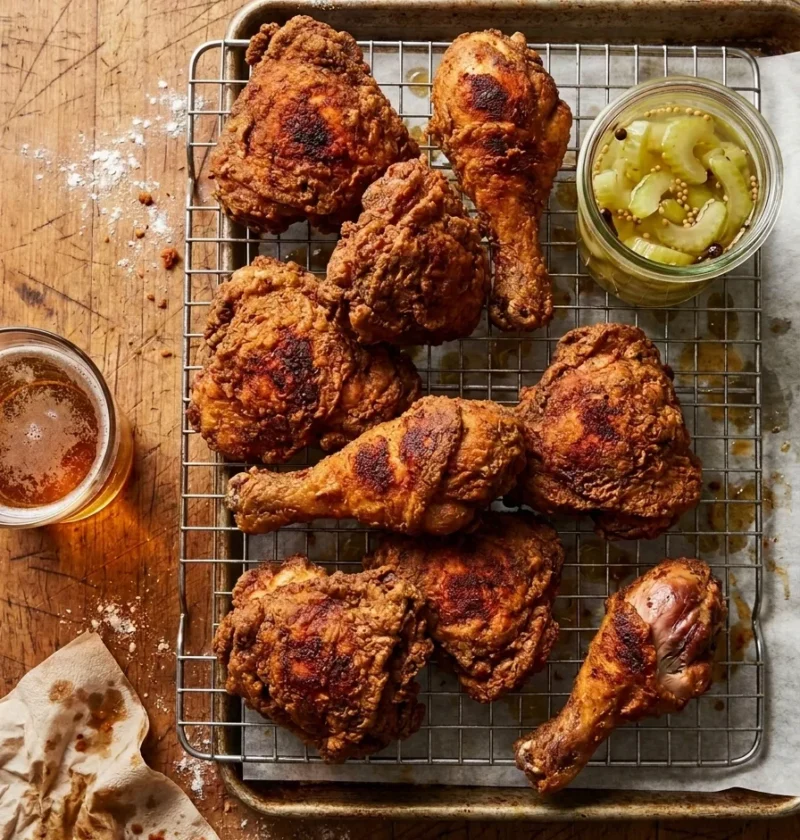
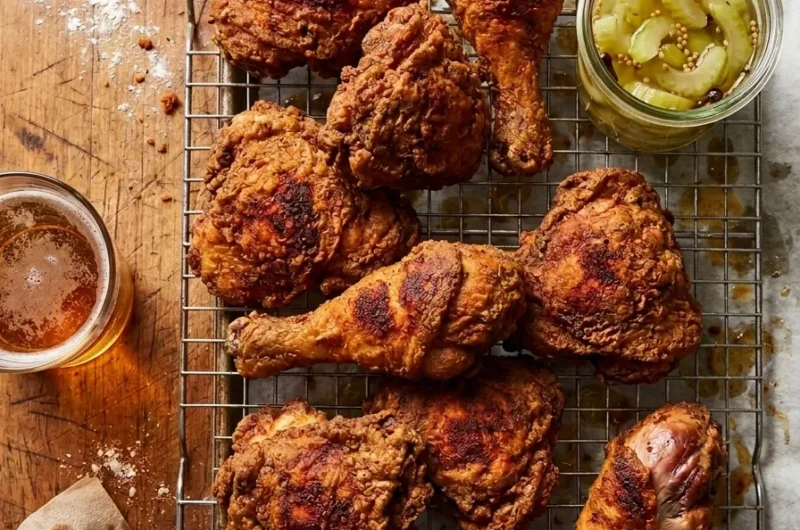
Gordon Ramsay’s fried chicken is bone-in thighs and drumsticks soaked in buttermilk, coated in spiced flour and shallow fried for 25 to 30 minutes until the crust shatters and the meat stays juicy on the bone. The spice blend is simple: smoked paprika, garlic powder and cayenne.
This recipe comes from Ultimate Home Cooking, where Ramsay says he doesn’t know what the colonel puts in his secret blend, but his version with smoked paprika, garlic and cayenne “knocks the socks off” KFC. In the F Word episode he takes it further, double-dredging the chicken through the flour twice for an even thicker, crunchier shell.
The buttermilk does two jobs. It tenderises the chicken through its acidity, and it gives the flour a wet, sticky surface to cling to. Without it you get thin, patchy coating that flakes off in the oil. Ramsay’s word for what you want: “blistery.”
Cooked this recipe? Send a photo or tell me what you changed at fans@gordonramsayrecipes.uk and I’ll share your experience live on this page.
Gordon Ramsay Buttermilk Fried Chicken
Course: DinnerCuisine: AmericanDifficulty: Medium4
servings15
minutes30
minutes520
kcal45
minutesFrom Gordon Ramsay’s Ultimate Home Cooking with additional techniques from his F Word episode. The buttermilk marinade tenderises the chicken overnight while the spiced flour creates that shattering crust. Double-dredge for maximum crunch.
Ingredients
- For the Buttermilk Marinade:
4 free-range chicken thighs
4 free-range chicken drumsticks
500ml buttermilk
Sea salt and freshly ground black pepper
- For the Spiced Flour:
300g plain flour
1–2 tsp smoked paprika
½ tsp garlic powder
1–2 tsp cayenne pepper
Sea salt and freshly ground black pepper
- For Frying:
Flavourless oil (sunflower or groundnut), for shallow frying
Directions
- Marinate the chicken: Place the thighs and drumsticks in a large bowl. Season with salt and pepper, pour over the buttermilk and mix well so every piece is coated. Cover with cling film and refrigerate overnight, or for at least 30 minutes. Bring back to room temperature before cooking.
- Season the flour: Mix the flour with the smoked paprika, garlic powder, cayenne and a good pinch of salt and pepper on a large plate or shallow bowl.
- Coat the chicken: Remove each piece from the buttermilk, shaking off the excess. Press into the seasoned flour, turning to coat all sides. For a thicker, crunchier crust, dip back into the buttermilk and through the flour a second time. Ramsay says the double dredge makes the coating “mind-blowing.”
- Heat the oil: Pour a 1.5cm depth of oil into a heavy-based sauté pan or casserole dish. Heat to 170°C (340°F) over a medium heat. Test by dropping a pinch of flour in: it should sizzle immediately.
- Fry the chicken: Lay the pieces in a single layer, leaving a five-second gap between each one so the coating sets before the next piece goes in. Fry for 25 to 30 minutes, turning constantly, until evenly golden brown and cooked through. If the oil gets too hot, add a splash of cold oil or turn down the gas.
- Drain and serve: Transfer to a wire rack or kitchen paper. Serve warm while the crust is still crackling.
Notes
- Recipe from Gordon Ramsay’s Ultimate Home Cooking. Double-dredge and oven-finish techniques from the F Word episode. Honey-peppercorn glaze variation also from the F Word.
FAQs
What is the double dredge and should you do it?
In his F Word episode, Ramsay coats the chicken in flour, dips it back into the buttermilk, then through the flour again. He says the coating comes out “slightly scrappy” and “as that hits the oil, it blisters beautifully.”
The double layer gives you a thicker, craggier crust that stays crunchier longer. It’s also the technique behind Korean fried chicken, which takes it further with a second fry at a higher temperature. One extra minute of work and the difference is obvious.
Why does Ramsay only use dark meat for fried chicken?
He’s clear about this in the video: “When you fry chicken traditionally it’s always going to be done with the dark meat. Cooking on the bone keeps it even more moist.” Thighs and drumsticks have more fat and connective tissue than breast, so they handle the long fry time without drying out.
Breast can work but it overcooks faster. Cut the frying time by about 10 minutes and check the internal temperature reaches 74°C (165°F).
Can you finish fried chicken in the oven?
Ramsay does exactly this in the F Word. He fries first to set the crust, then transfers to the oven for six to seven minutes. He says this is “to get it even crispier and really beautifully moist inside.”
It works especially well for large batches. Fry in rounds, keeping finished pieces warm and crisping in the oven while the next batch fries.
What does Ramsay serve with his fried chicken?
In Ultimate Home Cooking, he pairs it with quick sweet pickled celery: celery sliced on the diagonal, poached in sugar, white wine vinegar, cloves and mustard seeds. In the video with Jack he calls it “a soulful street food feast.” The pickle cuts through the richness of the fried coating.
His green bean salad works as a lighter alternative, and a sharp rocket salad gives you that peppery bite against the crispy chicken. For dipping, his tartar sauce is the natural choice.
How does Ramsay’s honey-peppercorn glaze work?
This is from the F Word. He grinds pink and black peppercorns in a pestle and mortar, drizzles honey over them, ties a small bunch of rosemary together, slices through the bottom to make a brush, and paints the glaze straight onto the hot chicken.
The pink peppercorns add sweetness and gentle heat rather than sharp spice. It has to go on straight from the oven because “when you let chicken sit, it goes soft.” Nobody in the SERP mentions this finish.
What is GFC sauce and can you make it at home?
After years of saying his fried chicken “knocks the socks off” KFC, Ramsay launched his own fried chicken brand called GFC (Gordon’s Fried Chicken), served at his Street Pizza restaurants in the UK and Gordon Ramsay Burger in Las Vegas. The signature GFC sauce is described on the menus as creamy and spicy, and it goes on everything from fried chicken pizza to wings to sandwiches.
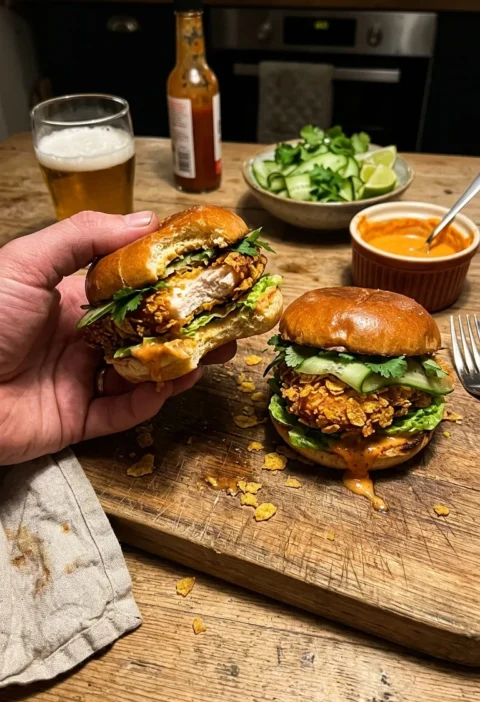
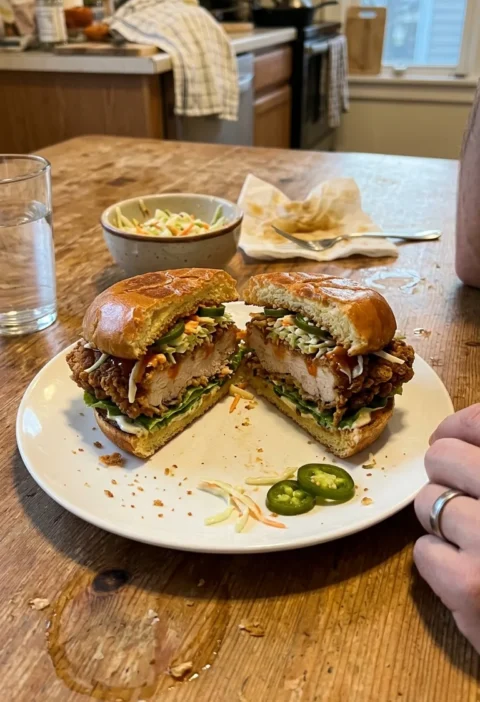
The sauce recipe has never been published in any cookbook or video, so every “GFC sauce recipe” online is guesswork from other sites, not sourced from Ramsay. The closest published fried chicken sauce he does have is the gochujang mayo on his cornflake chicken sliders from Ramsay in 10, which mixes gochujang, honey, mirin, apple cider vinegar, sesame oil, soy sauce and garlic. If you want a creamy, spicy dip for this buttermilk fried chicken, that gochujang mayo is the closest Ramsay-sourced option until he publishes the real thing.
Does fried chicken store well?
Better than most fried food because the bone-in pieces hold moisture. Store covered in the fridge for up to two days.
Reheat on a wire rack in a 200°C (400°F) oven for 12 to 15 minutes. The crust comes back surprisingly well on bone-in pieces. For a quicker chicken dinner that stores even better, his chicken cacciatore is worth bookmarking.