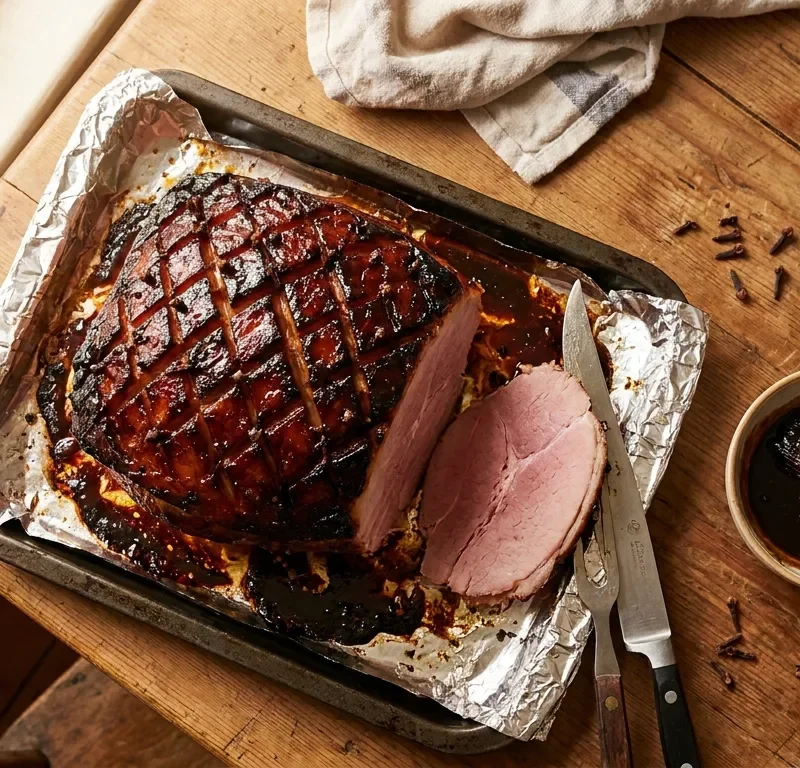
Gordon Ramsay’s gammon is poached in stout with cinnamon and bay, then roasted with a treacle, Dijon and soy glaze until dark and sticky. The recipe comes from Ultimate Cookery Course, serves eight and takes about 3 hours.
He has four gammon glazes across four cookbooks, from treacle and stout to marmalade and ginger, so there’s a version for every occasion. Ramsay writes that he’s “always loved gammon, not just hot with mashed potato and a cider gravy, but cold with salads and pickles.”
The technique every version shares is blanching the joint first: boil in plain water, pour off the scum, then re-poach in the flavoured liquid. Most home cooks skip this step, which is why their gammon ends up too salty and the poaching liquid turns murky instead of clear.
Cooked this recipe? Send a photo or tell me what you changed at fans@gordonramsayrecipes.uk and I’ll share your experience live on this page.
Gordon Ramsay’s Treacle-Glazed Gammon
Course: Main CourseCuisine: BritishDifficulty: Medium8
20
minutes3
minutes310
kcal3 hr 20 min
The UCC version poached in stout, one of four gammon glazes compared across four of Ramsay’s cookbooks. He says to save the poaching liquor for soups, sauces and risottos since it’s “packed with flavour.”
Ingredients
- For the gammon:
1 unsmoked boneless gammon joint, about 2kg, soaked overnight
1 large onion, peeled and roughly chopped
1 large carrot, peeled and roughly chopped
1 large leek, trimmed and roughly chopped
1 large cinnamon stick
2 bay leaves
1 tsp black peppercorns
2 x 500ml bottles stout
Cloves, to stud
- For the glaze:
60ml treacle
2 tbsp Dijon mustard
1 tbsp soy sauce
1 tbsp Worcestershire sauce
60g light soft brown sugar
Directions
- Blanch the gammon: Place the gammon in a stockpot, cover with cold water and bring to the boil. Skim off any froth and scum, simmer for a few minutes, then carefully pour off the water.
- Poach in stout: Add the onion, carrot, leek, cinnamon, bay and peppercorns to the pot. Pour in the stout and top with cold water until the gammon is covered. Simmer partially covered for 2.5 hours, skimming and topping up with boiling water as needed.
- Prepare the joint: Remove the gammon and rest until cool enough to handle. Preheat oven to 190°C (375°F / Gas 5). Peel off the skin, leaving a 5mm layer of fat. Score in a diamond pattern at 1.5cm intervals and stud each diamond with a clove.
- Glaze and roast: Mix all glaze ingredients together. Brush half over the gammon. Roast for 15 minutes, then pour over the rest and roast for a further 10-15 minutes, basting every 5 minutes.
- Rest and carve: Give a final baste with pan juices. Leave to rest before carving into thin slices. Save the poaching liquor for soups, sauces and risottos.
FAQs
What is Gordon Ramsay’s Christmas gammon recipe?
The Christmas book version uses a different glaze: Demerara sugar, Madeira, sherry vinegar and honey simmered into a “glossy dark syrup.” Ramsay says “Christmas wouldn’t be the same without a beautiful delicious honey glazed ham.” He serves it with a pear and saffron chutney made from Williams pears, ginger, nutmeg and cinnamon.
The method is the same poach-then-roast, but honey caramelises faster than treacle so the Christmas version needs more basting. He bastes every 5 minutes for the final 35 minutes, which gives the surface that deep amber colour you see in the video. Serve with his cranberry sauce for the full Christmas table.
What is the difference between the four gammon glazes?
The UCC glaze uses treacle, Dijon, soy and Worcestershire with brown sugar, which gives the darkest, most savoury result. The Christmas version uses honey with Madeira and sherry vinegar for a sweeter, more festive flavour. The GBPF glaze uses cider in the poach and muscovado sugar for depth.
The ALL-NEW version takes an Asian turn with marmalade, grated ginger and soy sauce. It works brilliantly with the fresh pineapple salsa served on the side rather than a traditional chutney. If you’re unsure, the GBPF cider version is the most crowd-pleasing since the honey and mustard balance is hard to get wrong.
How do you cook a gammon steak?
Completely different from a roast joint, because gammon steaks are thin slices cooked in minutes rather than hours. The GBPF recipe snips the fat at 2cm intervals to stop curling, brushes with melted butter and grills 3-4 minutes each side.
Ramsay serves them with caramelised pineapple rings fried in butter and caster sugar, topped with a fried duck egg. He calls the combination “our idea of heaven on a fork,” and the rich yolk from the duck egg acts as a sauce. There’s also a treacle-glazed version from Ramsay in 10, and I’ve written up the full gammon steaks recipe with the gunpowder potatoes. Pair with his oven chips for the full pub plate.
Why does Ramsay poach gammon in stout?
The stout replaces most of the water in the poaching liquid, which infuses the meat with a dark, malty depth that plain water can’t match. The GBPF version uses cider instead for a lighter, sweeter flavour, so the choice of poaching liquid sets the tone for the whole dish.
Both books blanch the gammon first in plain water and pour off the scum before adding the stout or cider. This step removes excess salt and impurities, which is why the finished ham tastes clean rather than harsh. The leftover poaching liquor makes an incredible base for his pea and ham soup, which two of his cookbooks specifically recommend.
How long does cooked gammon keep?
The UCC book gives specific storage advice: boiled gammon keeps up to 2 days, and once roasted it lasts a couple more. If you’re not roasting it straight away, he says to leave it cooling in the poaching liquor “so that it absorbs even more flavour.”
The GBPF version says to rest for 30 minutes covered in foil, and notes that leftover ham is “delicious served cold with salad and pickles.” Leftovers are genuinely part of the plan here, since cold gammon with pickles is as good as the hot version. Pair with his roast potatoes for the full Christmas spread.