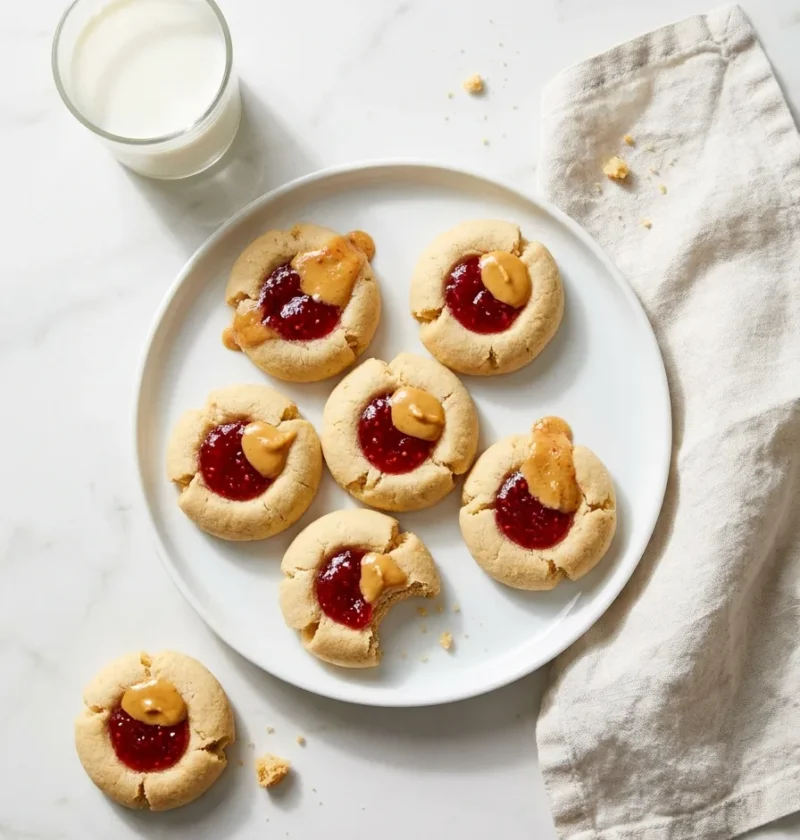
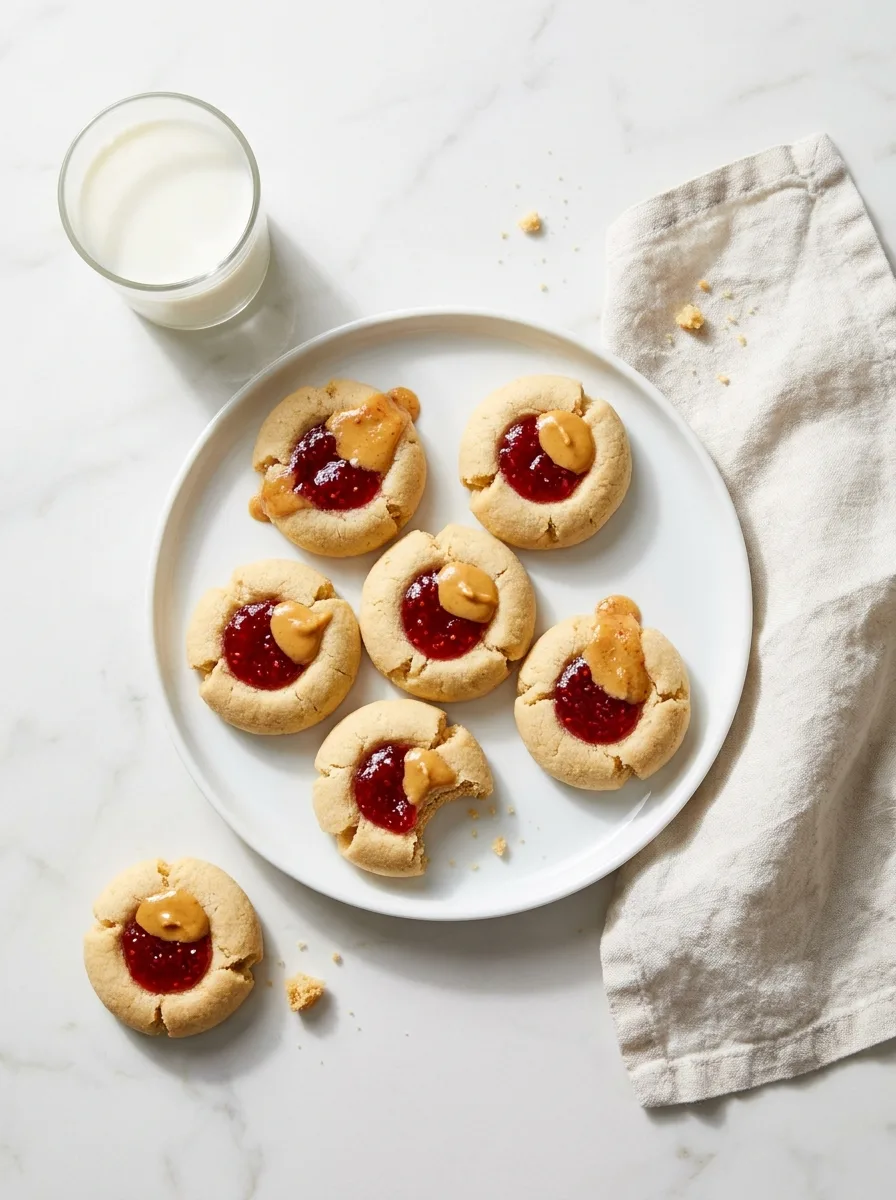
Gordon Ramsay’s peanut butter and jam cookies are thumbprint-style biscuits filled with raspberry jam and a spoon of extra peanut butter, baked at 180°C for 10–12 minutes. The dough uses 325g of peanut butter total, so every bite is properly loaded.
The recipe comes from his Ultimate Home Cooking cookbook, where he calls it “another American-inspired combo” and admits he used to love peanut butter and jam sandwiches for tea as a kid, much to his mum’s horror. He says the same flavours work just as well in a chewy cookie.
The technique that makes these work is the thumbprint. You press a shallow dip into each ball of dough before it goes in the oven, then fill it with jam and peanut butter so the filling bakes into the cookie rather than sliding out the sides.
Cooked this recipe? Send a photo or tell me what you changed at fans@gordonramsayrecipes.uk and I’ll share your experience live on this page.
Gordon Ramsay’s Peanut Butter and Jam Cookies
Course: DessertCuisine: British, AmericanDifficulty: Easy30
cookies20
minutes12
minutes145
kcal32
minutesFrom Gordon Ramsay’s Ultimate Home Cooking. Thumbprint peanut butter cookies filled with raspberry jam and extra peanut butter, using light muscovado sugar and real vanilla seeds. Makes 30.
Ingredients
185g plain flour
1 tsp baking powder
Pinch of sea salt
125g unsalted butter, softened
325g peanut butter, smooth or crunchy (200g for dough, 125g for filling)
185g light muscovado sugar
3 tbsp milk
1 vanilla pod, seeds scraped out (or 1 tsp vanilla extract)
1 large egg, beaten
125g raspberry jam
Directions
- Preheat and prep: Set the oven to 180°C (350°F)/Gas 4. Line two baking sheets with baking paper.
- Sift the dry ingredients: Sift the flour, baking powder, and salt into a bowl and set aside.
- Cream the dough: Put the butter, 200g of the peanut butter, and the muscovado sugar into a large bowl. Whisk until pale and fluffy. Add the milk, vanilla seeds, and beaten egg. Beat until smooth.
- Combine: Gradually sift the flour mixture into the wet ingredients and beat until just combined.
- Shape: With lightly floured hands, roll the dough into 30 balls slightly smaller than a walnut. Gently flatten each one on the baking sheet. Press down in the middle with one or two fingers to make a shallow indent.
- Fill: Place half a teaspoon of jam and half a teaspoon of the remaining peanut butter into each indent.
- Bake: Cook for 10–12 minutes until pale golden. Transfer to a wire rack with a spatula and cool before serving.
FAQs
Why does Ramsay split the peanut butter between dough and filling?
The recipe calls for 325g total, but only 200g goes into the dough. The other 125g is reserved for filling the thumbprint alongside the jam.
This means the dough holds its shape in the oven without being too soft, while the filling on top melts slightly and goes sticky during baking. If you put all 325g in the dough, it would spread flat and there’d be nothing left for the thumbprint.
Most recipes online list a single peanut butter amount and don’t explain the split. Getting the ratio wrong is why people end up with greasy, flat cookies. Compare this to the other four in our cookbook-verified cookie recipes roundup.
Why light muscovado and not regular brown sugar?
Muscovado is unrefined, so it still has molasses running through it rather than just sprayed on top like standard brown sugar. That gives the cookies a deeper, toffee-like flavour that pairs with peanut butter better than plain sweetness would.
Ramsay specifically calls for light muscovado in the book. Dark would push the flavour too far toward treacle and overpower the jam. Light hits the balance between richness and letting the peanut butter come through.
Why does Ramsay use a real vanilla pod instead of extract?
In the YouTube video, he scrapes the seeds from a whole vanilla pod straight into the dough. The seeds give tiny black flecks through the cookie and a more rounded, floral flavour than extract.
That said, the cookbook notes vanilla extract works as a substitute. The difference is subtle in a cookie this loaded with peanut butter and jam, so don’t skip the recipe just because you haven’t got a pod. A teaspoon of good extract does the job. In his sugar cookies from Make It Easy, he skips vanilla entirely and uses mixed spice instead, which shows how flexible these flavour choices are.
Can you use crunchy peanut butter instead of smooth?
Ramsay says either works. In the cookbook he writes “smooth or crunchy is fine.” Crunchy adds small peanut pieces through the dough, so you get extra crunch alongside the chewy cookie and sticky filling.
The only thing to watch is the thumbprint. Crunchy dough is slightly harder to press a clean indent into because the peanut pieces resist your finger. Flour your hands well and press firmly. If you want peanut butter doing even more of the heavy lifting, his oatmeal cookies use it as the actual binding agent instead of butter and eggs.