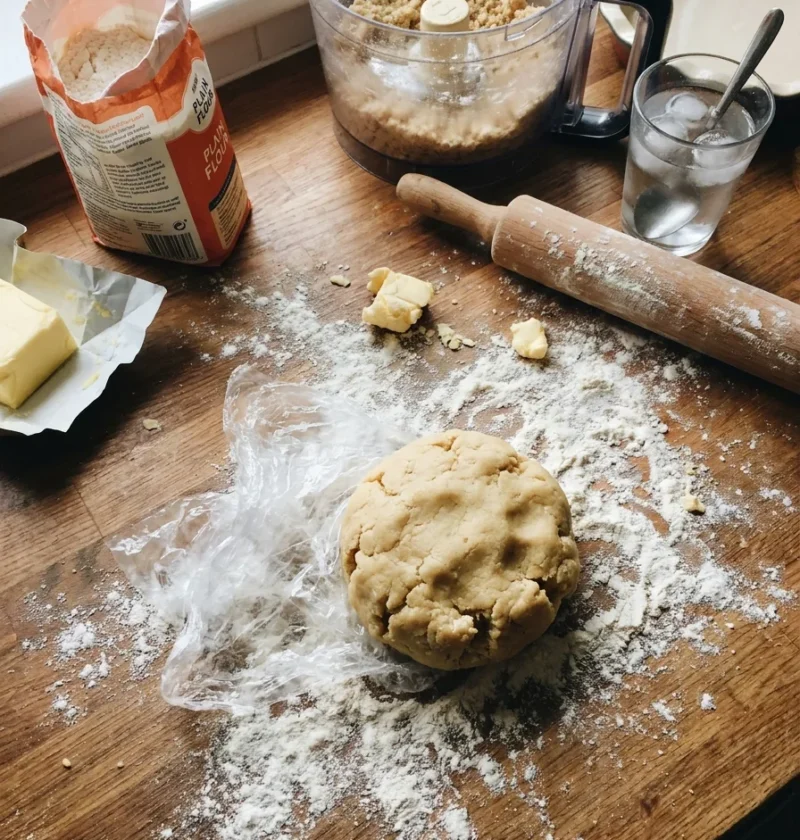
Gordon Ramsay’s pie crust is a simple shortcrust pastry: 400g flour, 200g cold butter, a pinch of salt and just under 100ml of ice water, blitzed in a food processor for 15 to 20 seconds and chilled for 30 minutes. It makes enough for a full pie with a base and a lid.
He’s blunt about pastry on his YouTube tutorial: “Making pastry’s like chemistry, you’ve got to follow the recipe from start to finish with exact measurements.” The reason he uses a food processor instead of his hands is practical: “Your hands tend to melt the butter in a way that ruins the texture.”
The thing most people get wrong is the water. Too much and the pastry goes tough and shrinks in the oven. Too little and it cracks when you roll it. Gordon adds two thirds of the water first, works the dough, then adds the rest only if it needs it.
Cooked this recipe? Send a photo or tell me what you changed at fans@gordonramsayrecipes.uk and I’ll share your experience live on this page.

Gordon Ramsay Pie Crust
Course: BasicsCuisine: BritishDifficulty: Easy~600g
pastry10
minutes220
kcal per 100gGordon’s shortcrust pastry from his YouTube masterclass. Cold butter, food processor, ice water, 30 minutes rest. Makes enough for a full top-and-bottom pie or two pie lids.
Ingredients
400g plain flour
Pinch of fine salt
200g cold unsalted butter, diced
Just under 100ml ice-cold water
Directions
- Blitz the crumb: Put the flour, salt and cold butter into a food processor. Blitz for 15 to 20 seconds until it looks like fine breadcrumbs. Tip into a cold bowl.
- Add the water: Make a well in the centre. Add two thirds of the water. Use your hand like a whisk, turning the mixture round, mopping up the flour and butter together. Add the remaining water if the dough needs it.
- Bring it together: Turn out onto a lightly floured surface. Push the pastry together gently and knead very lightly until smooth. Don’t overwork it.
- Chill: Wrap in cling film and rest in the fridge for at least 30 minutes before rolling.
The pastry should feel soft and pliable when you roll it, not sticky and not cracking. If it cracks, it’s too dry. If it sticks to the board, it’s too wet. You want the sweet spot where the butter is still cold but the dough moves easily.
FAQs
Why use a food processor instead of hands?
Speed. The longer you work pastry, the more the butter melts from the heat of your hands. Melted butter means tough pastry because the fat blends into the flour instead of staying in separate flakes.
Gordon blitzes for 15 to 20 seconds and the butter stays cold. If you don’t have a processor, use a butter knife to cut the butter into the flour, working as quickly as possible.
What about sweet pastry for dessert pies?
Gordon makes a separate sweet flan pastry in Great British Pub Food. Cream 125g softened butter with 90g caster sugar, beat in 1 egg, then fold in 250g flour. Chill 30 minutes.
The method is different from shortcrust: you cream the butter and sugar first instead of rubbing cold butter into flour. This gives a biscuity, crumbly base that suits tarts and sweet pies like his apple pie.
Does Gordon make his own puff pastry?
No. He says: “The only pastry I rarely make myself is puff pastry. I usually buy it from a good source.” In every pie recipe that uses puff, he calls for ready-made all-butter puff pastry.
If you’re making his steak and ale pie or chicken pie, buy good puff. Don’t waste time making it from scratch when the shop version is perfectly good.
What about hot water crust for pork pies?
A completely different pastry. You melt butter, lard and water together, pour the hot liquid into flour and work it warm. It sets firm when it cools, which is how a pork pie stands up without a tin.
It’s the opposite of shortcrust in every way: shortcrust needs cold butter and cold hands, hot water crust needs everything warm.
How do I stop a soggy bottom?
Two things: blind-bake the base first (line with baking paper and beans, 15 minutes at 200C), and make sure your filling is cold before it goes in. Hot filling steams the pastry from below and turns it soggy.
Gordon also brushes the inside of a blind-baked case with beaten egg white while it’s still warm. The egg sets in the heat and creates a seal that stops the filling soaking through.
Can I make it ahead?
Yes. Wrapped in cling film, the dough keeps in the fridge for two to three days, or the freezer for up to a month. Thaw overnight in the fridge before rolling.
Gordon often makes pastry in batches and freezes it in portions so it’s ready when he wants pie. Make the pastry on a quiet day, freeze it, and you’re halfway to a pie whenever you need one.