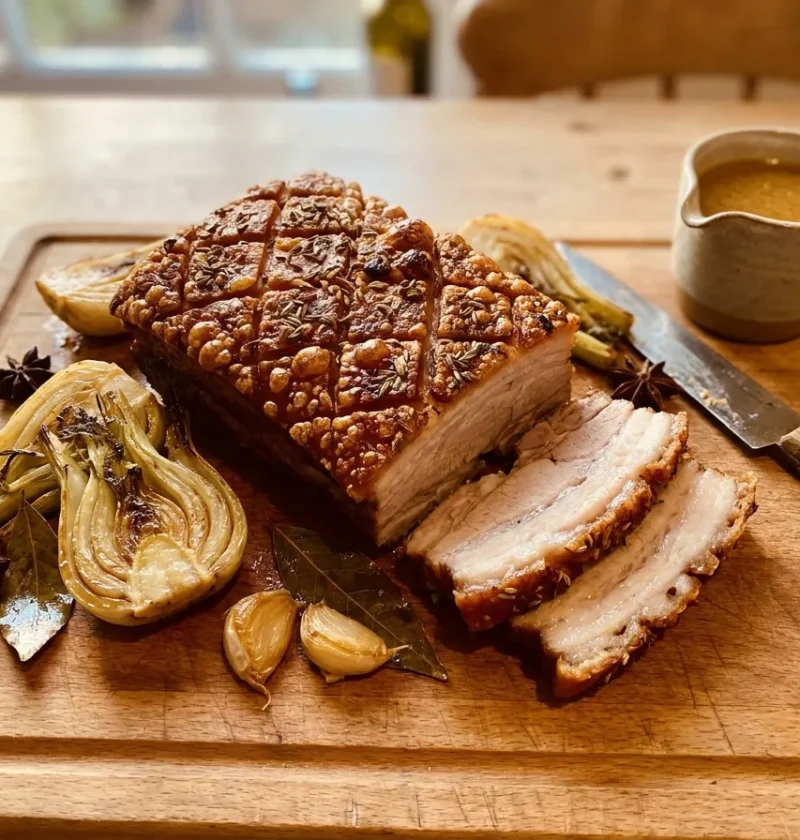
Gordon Ramsay’s pork belly is slow-roasted with fennel, star anise and cardamom until the crackling shatters and the meat beneath falls apart. The recipe comes from Ultimate Cookery Course and serves four, with the stock braising the meat while the skin crisps on top.
He has four completely different methods across four books, from a same-day slow-roast to a pressed version you prepare the night before. In the video, he calls it “an amazing way to cook a very cheap cut of meat.”
The technique that makes his version work is keeping the stock below the skin line so the top roasts dry while the bottom braises. He says to “bend it over” while rubbing in the salt, because that opens the diamond incisions and lets the seasoning penetrate deeper.
Cooked this recipe? Send a photo or tell me what you changed at fans@gordonramsayrecipes.uk and I’ll share your experience live on this page.
Gordon Ramsay’s Slow-Roasted Pork Belly with Fennel
Course: DinnerCuisine: BritishDifficulty: Medium4
15
minutes2
minutes620
kcal3 hr
The UCC slow-roast with fennel and star anise is the most popular of his pork belly recipes. This version braises in stock and wine while the diamond-scored skin roasts to a shatteringly crispy crackling above.
Ingredients
1kg pork belly
Sea salt and black pepper
1 fennel bulb, trimmed and roughly sliced
4 fresh bay leaves
3 garlic cloves, peeled and bashed
1 tsp cardamom pods, bashed
4 star anise
1 tbsp fennel seeds
Olive oil
325ml white wine
500-750ml chicken stock
1 tbsp wholegrain mustard
Directions
- Score the skin: Preheat oven to 180C (350F). Score the pork belly skin diagonally in a diamond pattern at 1.5cm intervals. Season generously with salt and pepper, bending the meat to open the cracks so the seasoning gets in.
- Sear the aromatics: Put the fennel, bay leaves, garlic, cardamom, star anise and half the fennel seeds in a hot roasting tray with oil. Heat for 2 minutes until aromatic.
- Sear the pork: Push the aromatics aside, add the pork skin-side down and sear for 5 minutes until golden. Flip over, season the skin again with salt and sprinkle with remaining fennel seeds.
- Add the liquid: Pour in the white wine and deglaze, scraping the bottom. Keep the wine away from the skin. Add enough stock to come just below the skin layer and bring to the boil.
- Slow-roast: Transfer to the oven and cook for 2.5 hours until the skin is crispy and the meat is tender.
- Make the sauce: Rest the pork on a board. Skim fat from the tray or drag bread across the surface to absorb it. Heat on the hob, whisk in the mustard, adjust seasoning and pour into a jug.
FAQs
How do you get crispy pork belly crackling?
Scoring in a diamond pattern at 1.5cm intervals is essential, because the cuts let the fat render out and the skin blister into crispy bubbles. The skin must stay completely dry during roasting, so never splash liquid onto it when deglazing.
The BSK version uses a three-temperature method for maximum crackling. Start at 240C for 25 minutes, drop to 160C for 1.5 hours, then blast back at 240C for 15 minutes.
What is Gordon Ramsay’s pressed pork belly?
A completely different technique from the Sunday Lunch book. The belly braises at 170C for 2 hours covered in foil with garlic, thyme and white wine. While still warm, you place a tray on top, weigh it down with tins and press it in the fridge for at least 6 hours or overnight.
The pressing compacts the layers of fat and meat so you can cut clean portions like “little caramel slices” as Ramsay calls them in the F Word video. The portions then go into a 240C oven for 15 minutes to crisp the skin. Serve with caramelised apple wedges fried in butter and caster sugar, a technique he also uses for his apple tarte tatin.
How does the braised pork belly recipe differ?
The Secrets version removes the skin entirely, bones the belly, rolls it up and ties it into a neat cylinder. Instead of roasting, the pork braises slowly in a cast-iron casserole with chopped carrot, onion, leek, celery and garlic.
The liquid is what sets it apart: sherry vinegar and soy sauce with brown chicken stock, star anise, coriander seeds and both white and black peppercorns. The result is Asian-influenced with a rich, dark, sticky glaze rather than crispy crackling. Ramsay says it “regularly appears on my menus” and serves it with truffle mash, and his red wine jus uses the same deglazing technique for the sauce.
How long does pork belly take to cook?
The UCC slow-roast takes 2.5 hours at 180C. The Sunday Lunch pressed version takes 2 hours at 170C plus overnight pressing plus 15 minutes crisping. The BSK three-temperature method takes about 2 hours total, while the Secrets braise is the longest at 3-4 hours in a covered casserole.
The common thread across all four is low, slow heat for at least 2 hours. Pork belly has thick layers of fat and connective tissue that need time to render and soften. Rushing at high heat leaves you with tough, chewy meat, so pair it with his fondant potatoes which cook in roughly the same time.
Why does Ramsay pair pork belly with fennel?
The aniseed flavour of fennel cuts through the richness of the fat, which is why the UCC recipe uses fennel bulb, fennel seeds and star anise together. Ramsay says pork is “a very sweet meat, so it’s nice to add the vibrant aniseed flavour of fennel.”
The Sunday Lunch version skips fennel entirely and uses thyme with caramelised apple, playing on the classic pork-and-apple pairing instead. Ramsay suggests dauphinoise potatoes alongside the UCC version, and his Brussels sprouts work well with any of the four because the bitterness balances the rich pork fat.