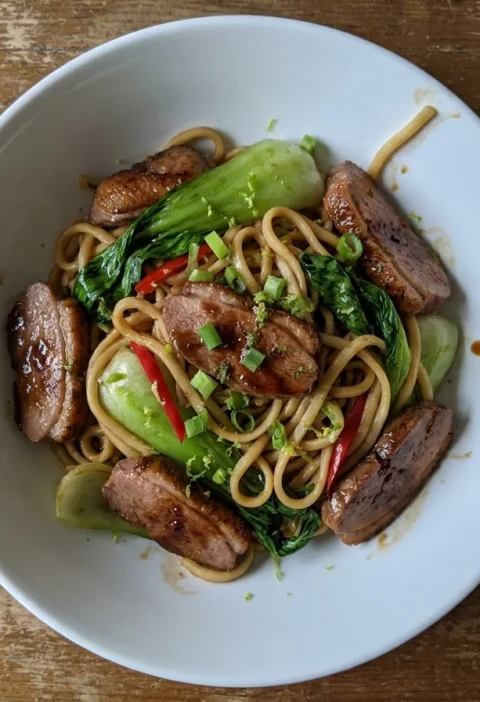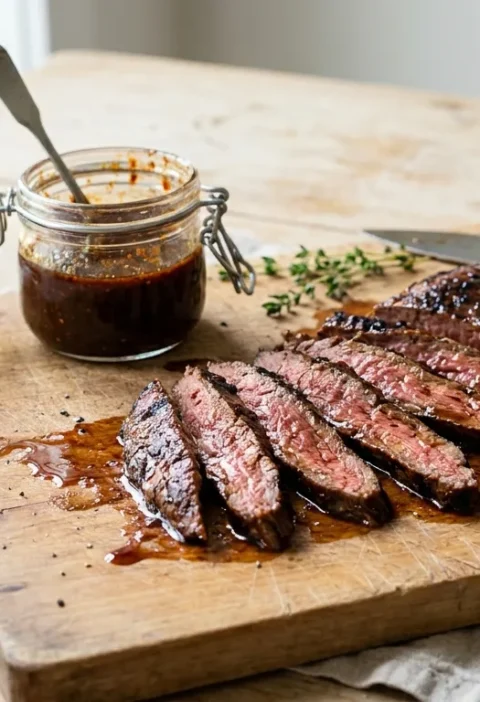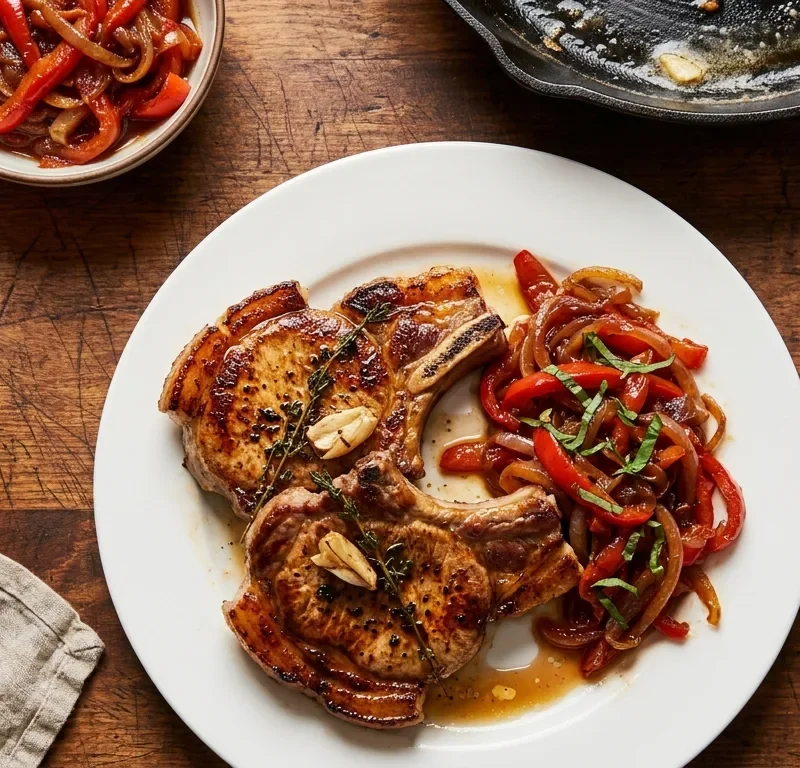
Gordon Ramsay’s pork chops are pan-seared with garlic and thyme, basted in foaming butter, then served with sweet and sour peppers. The recipe comes from his Ultimate Cookery Course, serves two and takes about 25 minutes.
He scores the fat 5mm deep at 3-4cm intervals before cooking, which stops the chop curling and makes it cook evenly. The peppers “really cut through the richness of the beautifully sautéed chops,” and he says to rest as long as you cooked.
The butter basting technique shows up in three of his four pan-seared pork chop recipes and works the same way he sears a steak. Knobs of butter go in towards the end, and you tilt the pan to spoon that foaming butter over the chops continuously.
Cooked this recipe? Send a photo or tell me what you changed at fans@gordonramsayrecipes.uk and I’ll share your experience live on this page.
Gordon Ramsay’s Pork Chops with Sweet and Sour Peppers
Course: DinnerCuisine: BritishDifficulty: Medium2
10
minutes15
minutes420
kcal25
minutesFrom the Ultimate Cookery Course, Ramsay’s go-to method for pan-searing pork loin chops with a butter and thyme baste. Five different pan-seared versions across three cookbooks and two videos. About £2.75 per serving.
Ingredients
For the sweet and sour peppers:
1 red onion, peeled and sliced
2 red peppers, deseeded and thinly sliced
Sea salt and freshly ground black pepper
1 tbsp caster sugar
3 tbsp red wine vinegar
1 tbsp extra virgin olive oil
Small bunch of basil, leaves shredded
For the pork chops:
2 pork chops, about 200g (7 oz) each
Olive oil, for frying
2 garlic cloves, skin on, crushed
Small bunch of thyme
Butter
Directions
- Make the peppers: Heat olive oil in a large frying pan. Add the onion and peppers, season, add the sugar and sauté over high heat for 4-5 minutes until soft and coloured. You should hear them hissing constantly in the pan.
- Finish the peppers: Add the red wine vinegar and let it bubble for 1-2 minutes until reduced. Turn down the heat, add the extra virgin olive oil and cook for 2-3 minutes. Stir in the shredded basil, cook 30 seconds, then transfer to a bowl.
- Score the fat: Using a sharp knife, make cuts into the fat about 5mm deep at 3-4cm intervals. Do not cut into the meat. Season really well on both sides, pushing the seasoning into the meat.
- Sear the chops: Wipe the pan clean and place over high heat. Add a dash of oil, then the chops, garlic and thyme. Fry for 2-3 minutes until coloured. Turn and fry for 2-3 minutes on the other side.
- Butter baste: Add 3 knobs of butter and baste the chops as they cook. Push the fatty edge towards the back of the pan to render the fat. Squeeze the garlic from its skin and place with herbs on top.
- Rest and serve: Remove and rest for as long as you cooked them so they tenderise and reabsorb their juices. Serve with the sweet and sour peppers.
FAQs
What is the Calvados mustard sauce version?
The F Word version uses a Calvados mustard sauce built in the same pan after searing. Drain the pan, sauté garlic and shallots, then deglaze with Calvados and flambé to burn off the alcohol.
Add chicken stock, reduce by half, stir in cream, then a teaspoon each of Dijon and grain mustard. The pork goes back in the sauce for 3-4 minutes on low heat to finish cooking. Serve with Granny Smith apples caramelized in brown sugar, star anise and cinnamon alongside glazed carrots or braised cabbage.
What is the garlic and herb butter version?
The Fast Food version uses 350g double loin chops, 4cm thick, the biggest chops in any of his recipes. Pan-fry 2½-3 minutes per side in olive oil with thyme, spooning pan juices over as they cook.
The trick is a compound butter: softened butter mixed with crushed garlic, chopped parsley and mint, rolled in cling film and frozen. Slice a thick disc and sit it on each hot chop so it melts into the meat as you serve. Pork and mint is a classic British pairing, and his cranberry sauce works well alongside too.
What are the sage versions?
The Great British Pub Food version fries sage leaves crispy first, then garlic slices, before using the infused oil for the chops. The chops are basted with butter and lemon juice, and served on champ with spring onions and crème fraîche.
The F Word Series 3 version also uses sage but adds a garam masala glaze and serves with warm radicchio and Braeburn apples. Ramsay recommends rare-breed pork like Gloucester Old Spot or Saddleback for the best flavour. Try his roast potatoes alongside either version.
How do you stop pork chops curling in the pan?
Score the fat 5mm deep at 3-4cm intervals, making sure you don’t cut into the meat. A heavy pan like cast iron holds heat best for an even sear. This stops the chop curling as the fat contracts, so it sears flat and cooks evenly.
The F Word video adds another step: stand the chop on its fat edge so the fat renders completely. Ramsay says “the more fat you render, the more flavoursome that pork is.” The same searing and basting approach works on his steaks too.
Should you use bone-in or boneless pork chops?
All four pan-seared recipes use bone-in chops because the bone keeps the meat juicier during cooking. The F Word video says to “hold the pork by the bone” when placing it in the hot pan.
Boneless chops cook faster but dry out more quickly since there’s less fat protecting the meat. If using boneless, reduce cooking time by a minute per side and add extra butter for basting. For a completely different cut, try his pork belly which uses slow rendering instead.