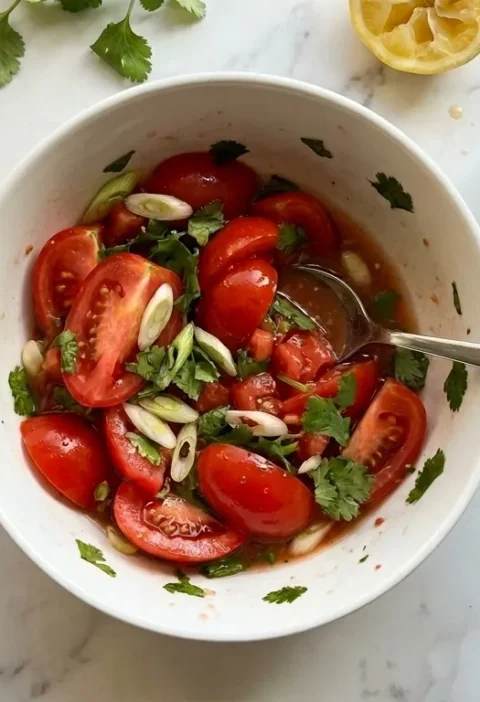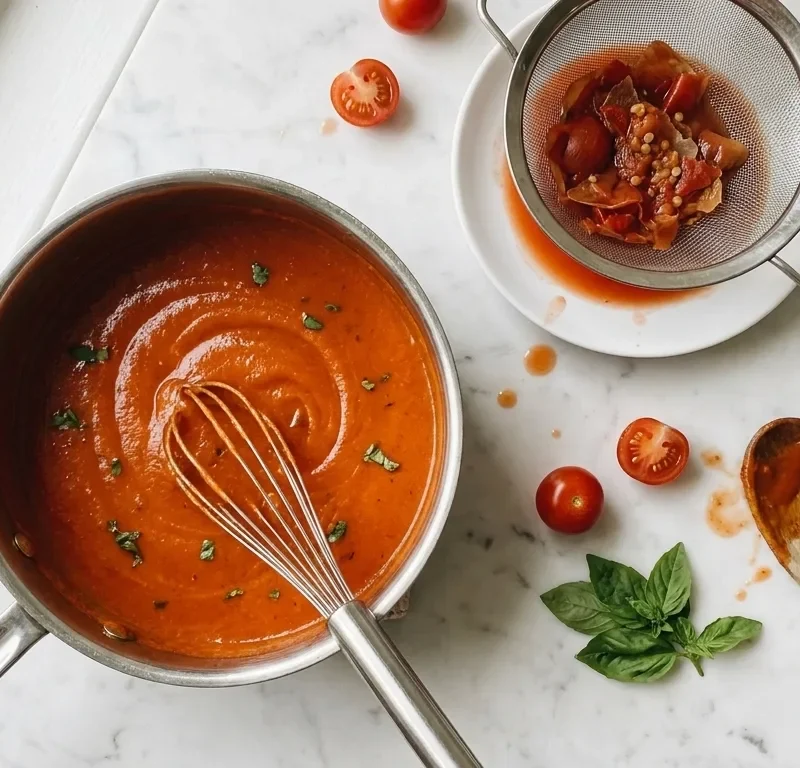
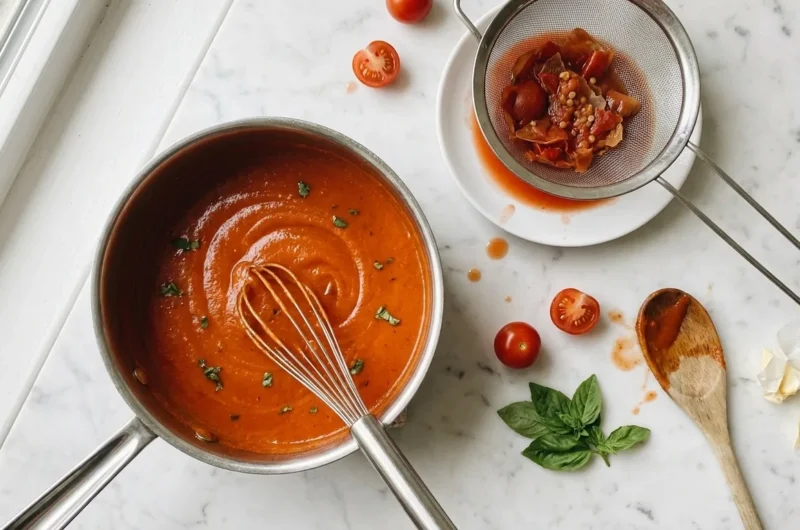
Gordon Ramsay’s tomato butter sauce is 125g of cherry tomatoes cooked low for 10 minutes, blended with sherry vinegar and a teaspoon of sugar, sieved silky, then finished with double cream and cold butter whisked through with fresh basil. A small pan of it takes 25 minutes and dresses dinner for two.
This comes from Make It Easy, where it’s the sauce under his wild sea trout with crushed potatoes, and the book calls it “tomato butter sauce” in its own ingredient list. I’d seen a dozen versions of this recipe online before finding the real one, and none of them mention the two things that define it: the sherry vinegar sharpening the tomatoes, and the sieve.
The sieve is the whole personality of this sauce. Blended tomatoes are a rustic purée full of skin and seeds, but passed through a sieve they become something closer to a restaurant sauce, smooth enough that the cream and butter turn it glossy instead of grainy. Skip it and you’ve made a different, lesser sauce.
Cooked this recipe? Send a photo or tell me what you changed at fans@gordonramsayrecipes.uk and I’ll share your experience live on this page.
Gordon Ramsay Tomato Butter Sauce (Silky Cherry Tomato and Basil)
Course: SauceCuisine: BritishDifficulty: Easy2
5
minutes20
minutes280
kcal25
minutesThe sauce from his sea trout dinner in Make It Easy: cherry tomatoes cooked down and blended with sherry vinegar and sugar, sieved until silky, then mounted with double cream, cold butter and basil. Five minutes of actual work, and it makes pan-fried fish look like you booked a table.
Ingredients
1 tbsp olive oil
125g vine-ripened cherry tomatoes
1 tsp sherry vinegar
1 tsp sugar
50ml double cream
25g butter, diced
1 tbsp chopped basil
Sea salt and freshly ground black pepper
Directions
- Cook the tomatoes low: Heat the olive oil in a small pan, add the cherry tomatoes whole and cook over a low heat for 10 minutes until they collapse and release their juices.
- Blend with the sharpeners: Transfer the tomatoes to a blender or food processor, add the sherry vinegar and sugar, and whiz to a purée.
- Sieve it silky: Pass the purée through a sieve back into the pan, pressing with the back of a spoon. Leave the skins and seeds behind, that’s the point.
- Add the cream: Stir in the double cream and simmer for a few minutes until the sauce coats the back of a spoon.
- Mount the butter: Take the pan off direct heat and whisk in the cold diced butter a piece at a time until the sauce turns glossy. Stir through the basil, season to taste, and keep warm without boiling.
FAQs
Why does the sauce get sieved?
Because the sieve is what separates a butter sauce from a crushed tomato dressing. Cherry tomato skins and seeds survive any blender, and they make a purée feel rustic and slightly bitter. Pushed through a sieve, the sauce comes out smooth enough for the cream and butter to emulsify into a gloss instead of clinging to debris.
It takes ninety seconds with the back of a spoon. Of all the versions of this sauce floating around, the sieve is the step they all skip, and it’s the step that makes his.
Is this the sauce from his butter chicken?
No, different sauce, same confusion everywhere. His butter chicken uses a spiced makhani-style tomato gravy with cream and butter, built on onions, garlic, ginger and garam masala. This one is a French-leaning fish sauce: no spices, no onion, just tomatoes sharpened with sherry vinegar and rounded with butter.
If you came here for the curry, the butter chicken page has the full version. This sauce belongs next to fish and spring vegetables, not naan.
What does he serve it with in the book?
Pan-fried wild sea trout with deeply scored crispy skin, sitting on new potatoes crushed with spring onions and vinaigrette, with steamed baby leeks and roasted cherry tomato halves. The sauce goes on the side, and the plate is the dinner-for-two chapter showing off.
The fish technique is the same skin-first method as his crispy skin salmon, and the whole plate has a cousin on this site in his salmon with smashed potatoes. Either fish works: the book itself lists “sea trout or salmon fillets.”
Can you make it without sherry vinegar?
Yes, but replace the sharpness, don’t drop it. The vinegar is doing the same job lemon does in hollandaise: cutting through cream and butter so the sauce tastes of tomato rather than dairy. White wine vinegar with a single drop of balsamic gets closest to sherry vinegar’s nutty edge.
The teaspoon of sugar works the opposite side, rounding out cherry tomatoes that aren’t at their summer best. Taste at the end: ripe August tomatoes might not need all of it.
Does it work as a pasta sauce?
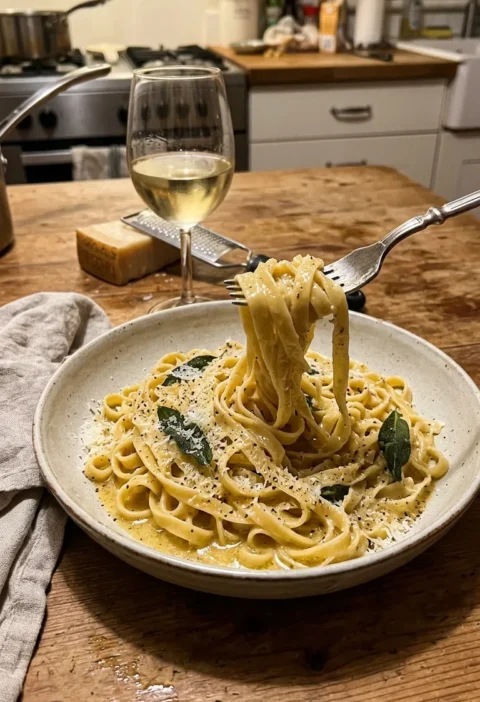
Doubled, yes, and it’s a quietly luxurious one. The quantities above dress two plates of fish; doubled, they coat enough pasta for two with a sauce that’s closer to a silky tomato cream than a marinara. Save a splash of pasta water to loosen it as you toss.
It reheats gently but hates boiling: the butter splits if it bubbles hard. Warm it low and whisk, and yesterday’s sauce comes back glossy. Two days in the fridge is its honest limit.
What else is it good on?
Anything pan-fried and a bit plain: chicken breast, white fish, even halloumi. It’s also very good spooned over roasted vegetables when you need a side to feel like a course.
For the rest of his sauce arsenal, from béarnaise to red wine jus, the classic sauces guide maps which sauce goes with what.